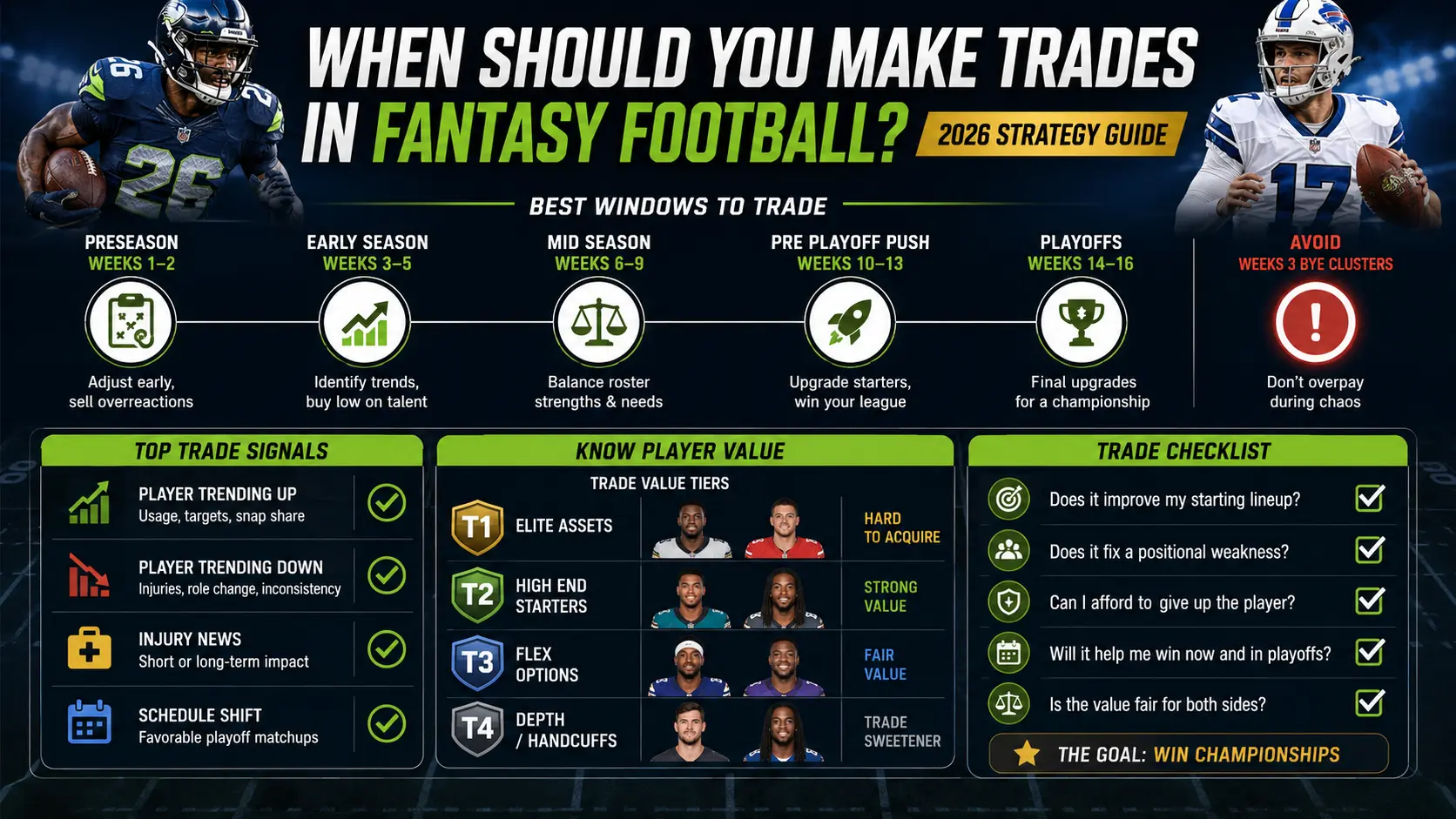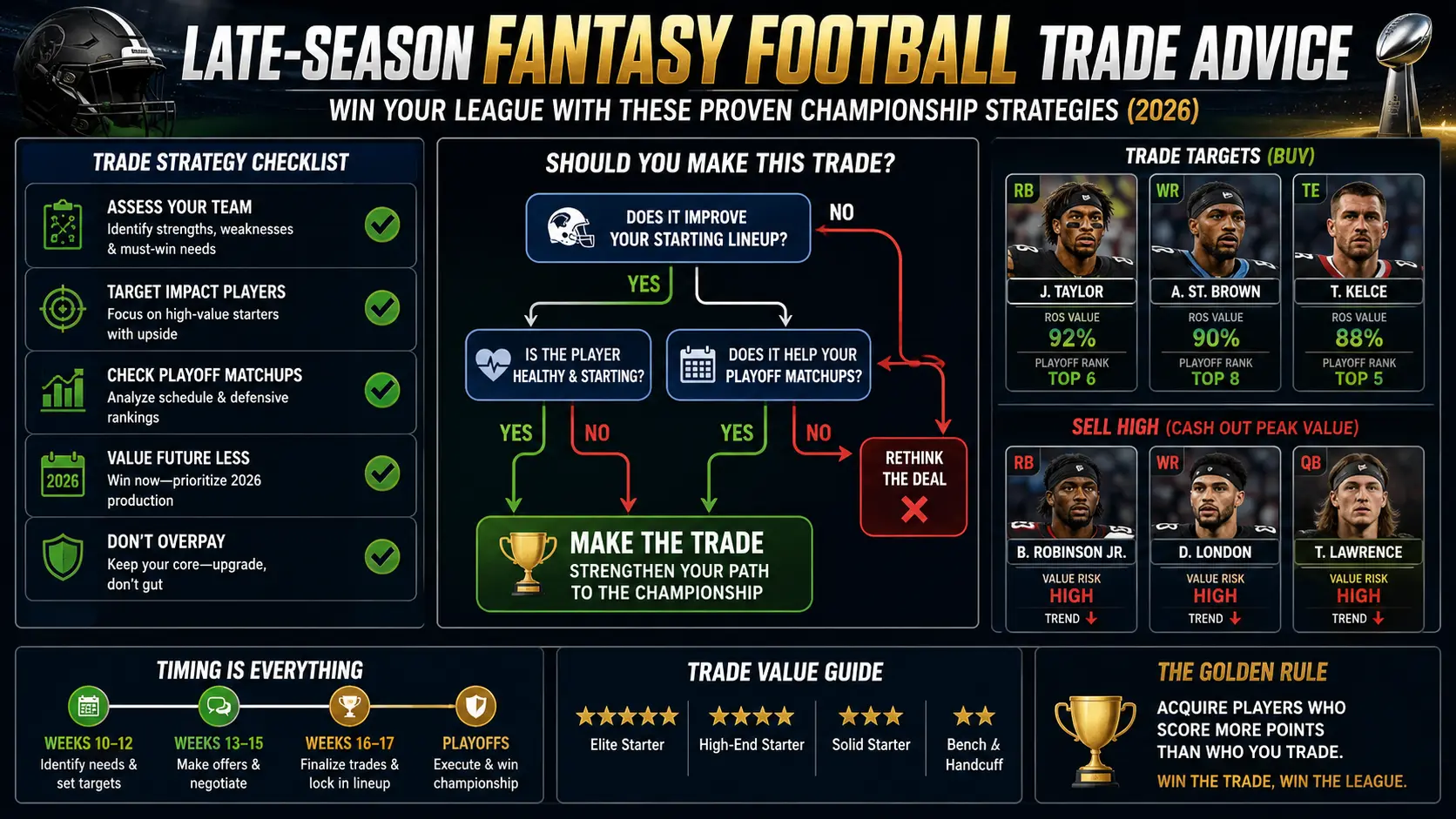
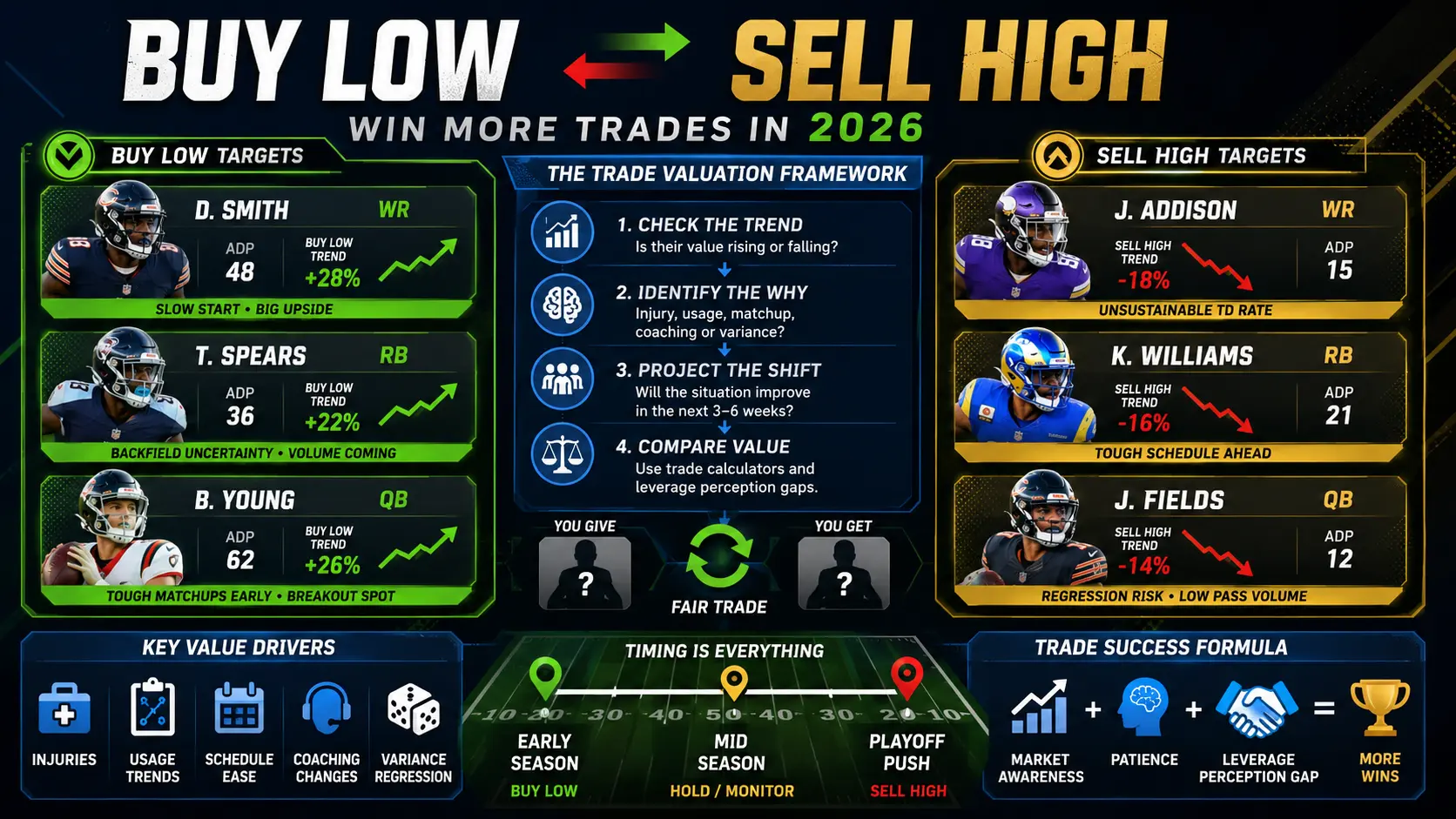
Fantasy football championships are rarely won on draft day they’re often won through smart trades. Learning how to identify buy low sell high fantasy football players gives you a long-term advantage over managers who react only to weekly box scores.
Instead of chasing last week’s top scorer, experienced managers focus on opportunity, usage, and future production. This guide explains what buying low and selling high really means, how to spot trade opportunities, and which metrics matter most before making a deal.
Table of Contents
- What Buy Low Sell High Means
- Why Player Value Changes
- How to Identify Buy-Low Players
- When to Sell High
- League Format Matters
- Trade Negotiation Tips
- Common Mistakes
- Best Tools
- FAQs
TL;DR
- Buy talented players whose value has temporarily dropped.
- Sell players whose production is outperforming their long-term outlook.
- Focus on usage metrics instead of fantasy points alone.
- Consider your league format before making trades.
- Successful trading requires timing and negotiation not just statistics.
What Does Buy Low Sell High Mean?
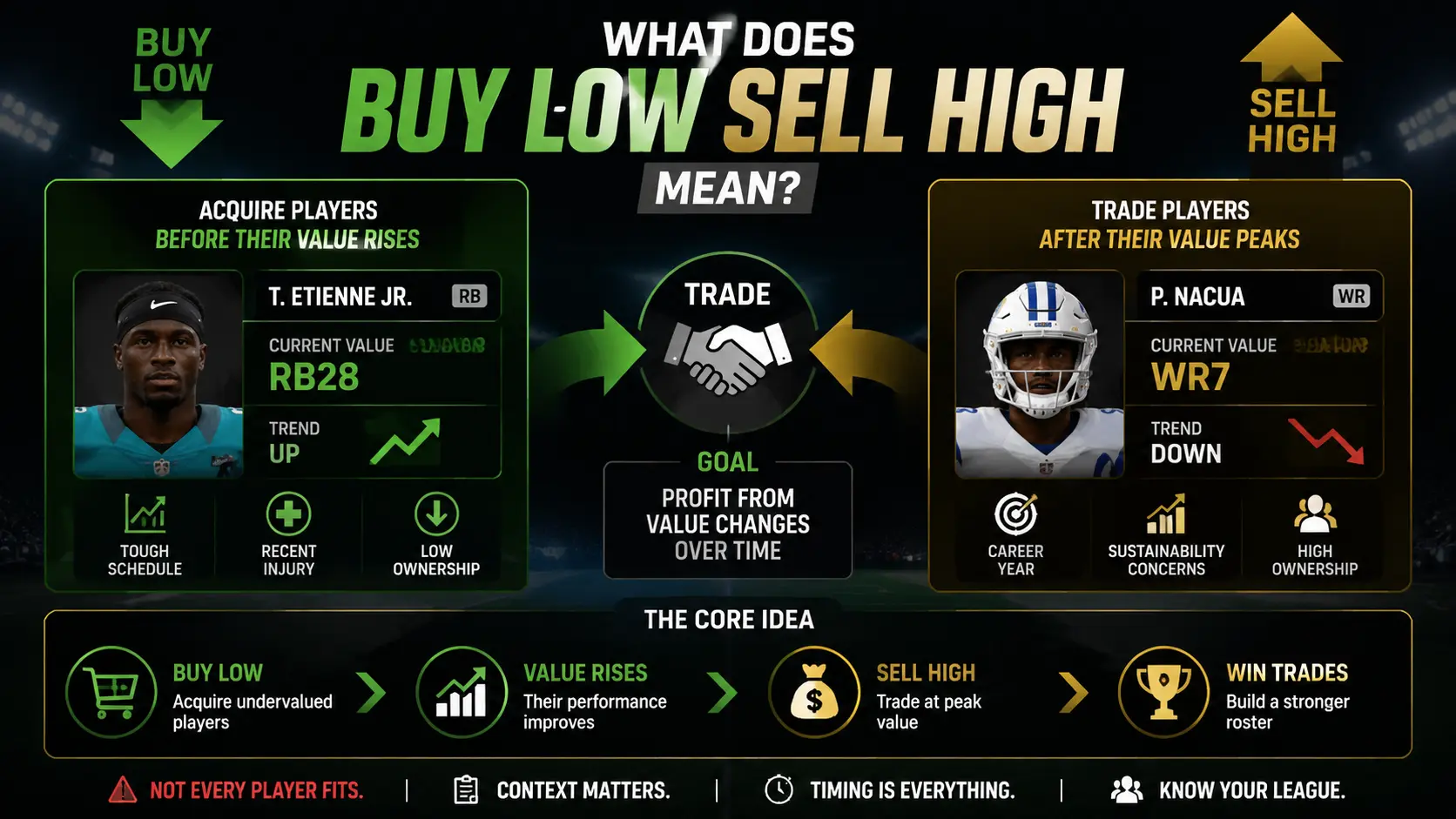
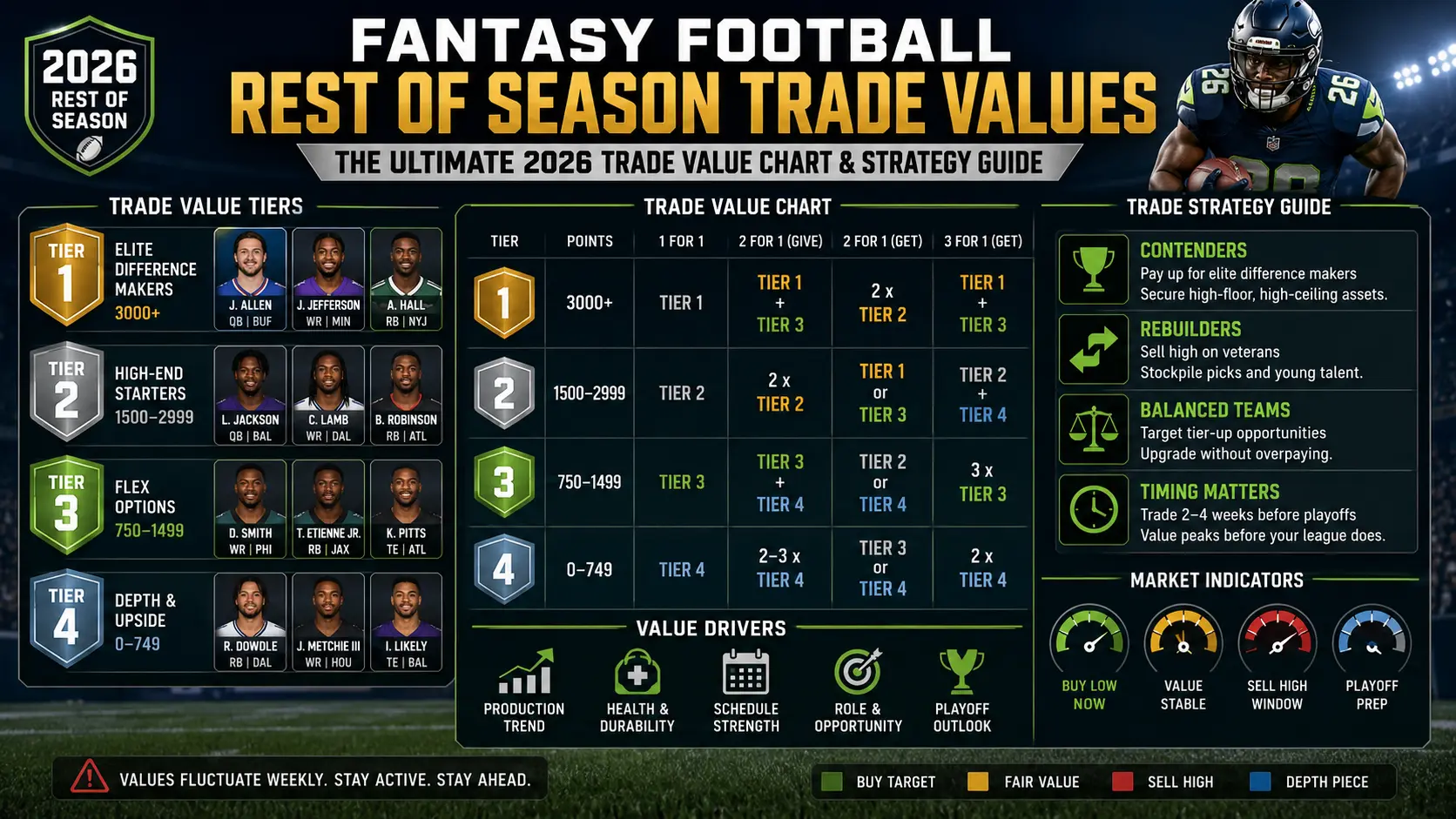
In fantasy football, buying low means acquiring a player whose market value has fallen because of poor recent performances, difficult matchups, or minor injuries even though their long-term outlook remains strong.
Selling high means trading away a player whose value is at its peak after an unsustainable hot streak before their production naturally declines.
Think of it like investing. Smart investors buy quality assets when prices fall and sell when demand is highest. Fantasy football works the same way.
Why Fantasy Football Player Values Change
Many fantasy managers overreact after one bad or one great week.
Player values typically change because of:
- Tough defensive matchups
- Touchdown luck
- Injuries
- Offensive scheme changes
- Quarterback changes
- Strength of schedule
- Media hype
- Public perception
One disappointing game rarely changes a player’s true talent level.
Instead of looking only at fantasy points, evaluate whether the player’s opportunity has actually changed.
How to Identify True Buy-Low Players
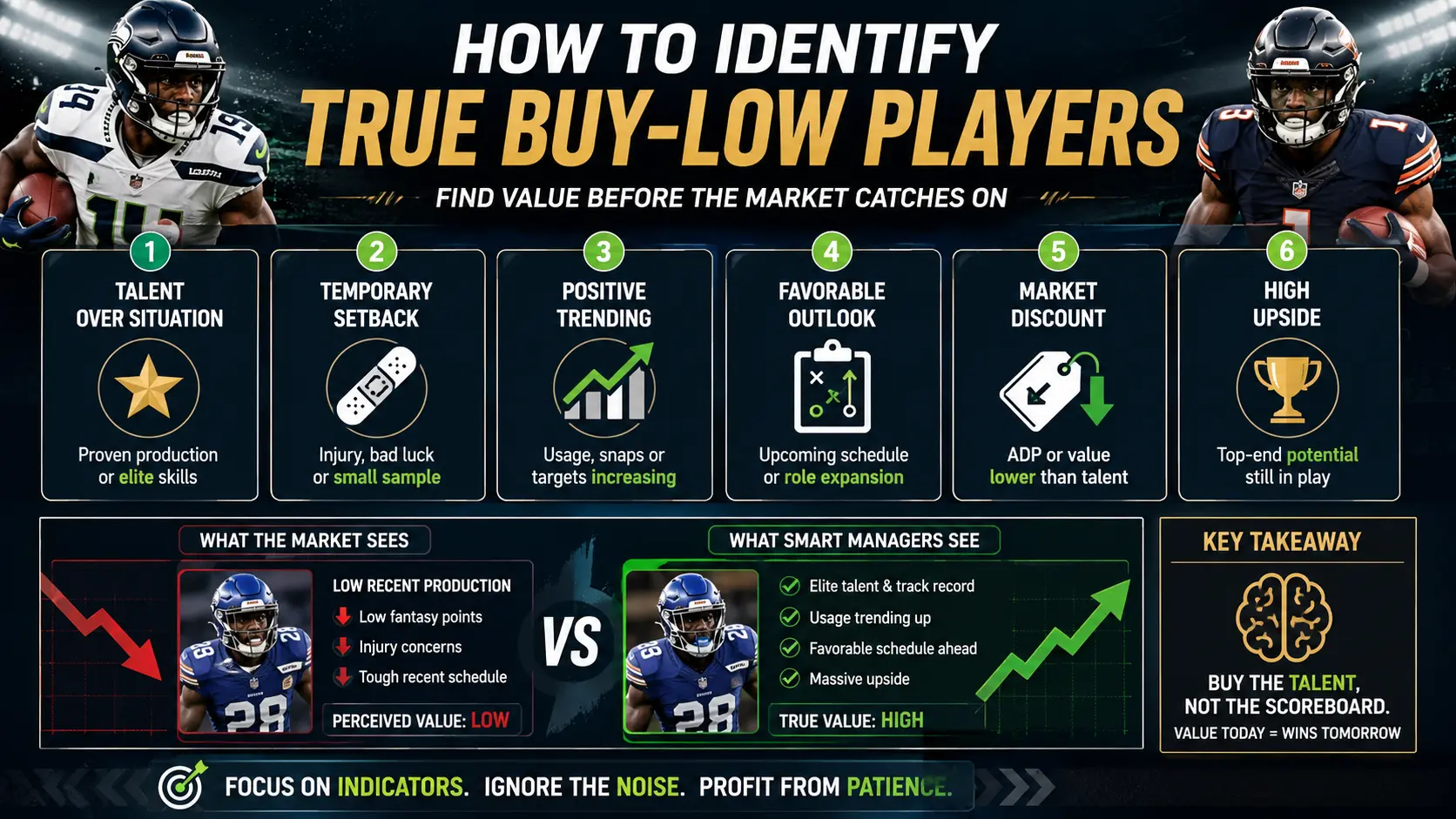
Not every struggling player is a buy-low target.
The best fantasy football players to buy low sell high usually have strong underlying usage despite disappointing fantasy production.
Check Opportunity Metrics
Look for players who still have:
- High snap percentage
- Strong target share
- Consistent route participation
- Red-zone opportunities
- High expected fantasy points (xFP)
If these metrics remain strong, better fantasy production usually follows.
Ignore Short-Term Variance
A wide receiver with:
- 10 targets
- 90 air yards
- No touchdown
may actually be a much better trade target than someone who caught two passes for two touchdowns.
Touchdowns fluctuate.
Volume is much more reliable.
Evaluate Upcoming Schedule
Managers should also study playoff matchups.
If Weeks 15–17 feature favorable defenses, that player becomes much more valuable for championship runs.
When Should You Sell High?
Selling high doesn’t mean trading away your best players.
It means maximizing value before production becomes difficult to sustain.
Warning signs include:
- Extremely high touchdown rate
- Limited playing time
- Low target share
- Unsustainable efficiency
- Favorable matchups ending soon
For example, a running back averaging two touchdowns every week despite limited touches is unlikely to maintain that pace all season.
Buy Low vs Sell High
| Buy Low | Sell High |
| Poor recent production | Career-best production |
| Strong opportunity | Limited opportunity |
| Bad touchdown luck | Unsustainable touchdown rate |
| Difficult schedule improving | Easy schedule ending |
| Market undervalued | Market overvalued |
League Format Changes Everything
One mistake many fantasy managers make is applying the same trade strategy to every league.
PPR Leagues
In buy low sell high fantasy football PPR formats, receivers with heavy target volume become much more valuable.
Even if touchdowns haven’t arrived yet, receptions provide a stable weekly floor.
Standard Scoring
Running backs with goal-line roles often gain more value than possession receivers.
Dynasty Leagues
Age becomes much more important.
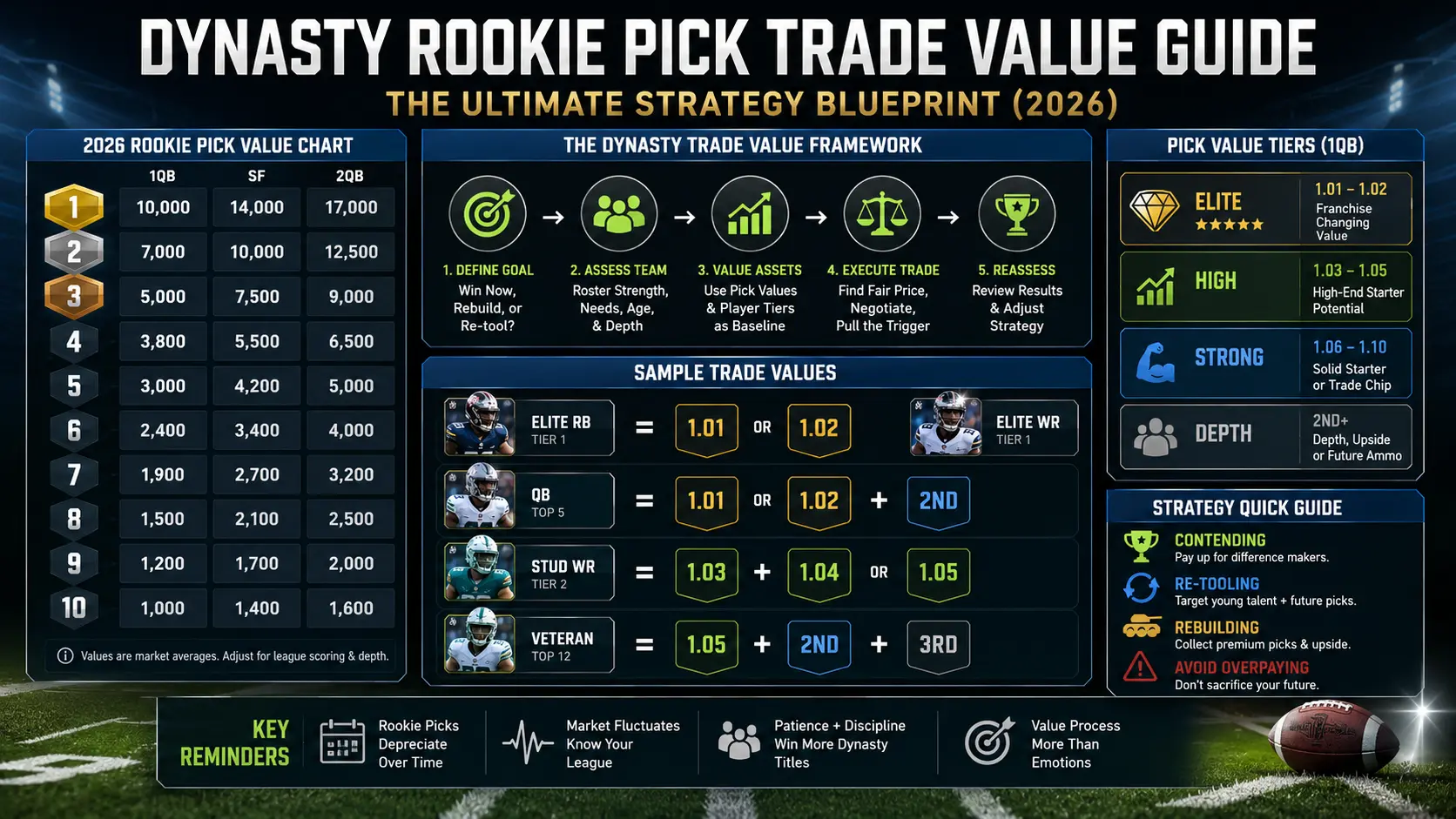
Veteran stars may be excellent sell-high candidates, while younger players with growing workloads become attractive buy-low investments.
Superflex
Quarterbacks carry premium value.
Trading away a starting quarterback requires significantly more compensation than in traditional one-QB leagues.
The Psychology Behind Fantasy Trades
Statistics matter.
Human psychology matters even more.
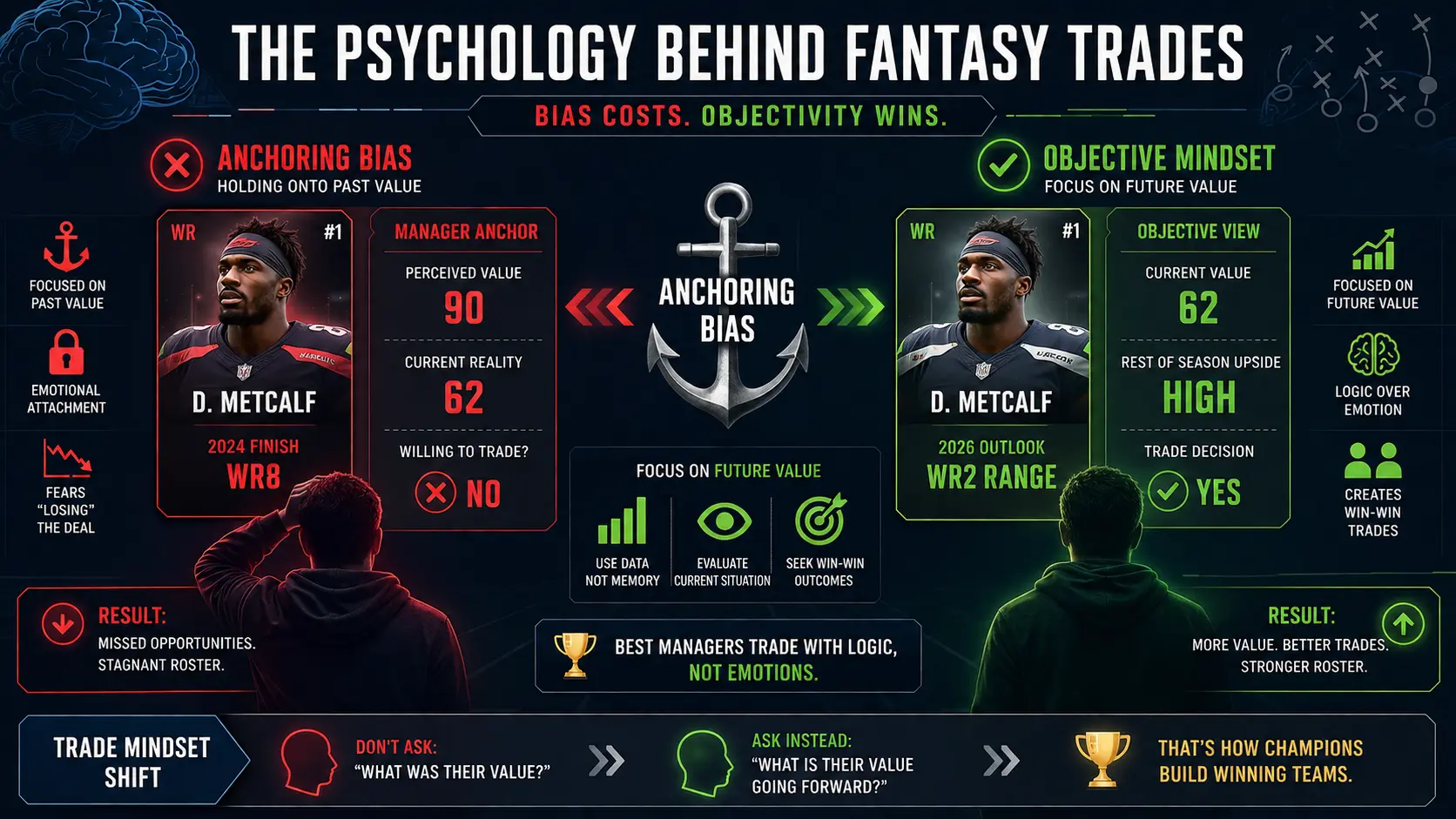
Many managers refuse to trade because they fear “losing” the deal.
This is called anchoring bias they still value players based on draft position rather than current market value.
To improve your trade success:
- Solve your trade partner’s roster problems.
- Avoid obviously one-sided offers.
- Explain why the trade benefits both teams.
- Target managers after disappointing weekly losses.
- Be patient during negotiations.
The best time to send many buy-low offers is often Tuesday morning after waiver claims begin and emotions remain high.
Beginner’s Fantasy Trading Checklist
Before accepting any trade, ask yourself:
✅ Has the player’s workload remained stable?
✅ Is the recent production caused by bad luck?
✅ Does the playoff schedule improve?
✅ Is this player healthy?
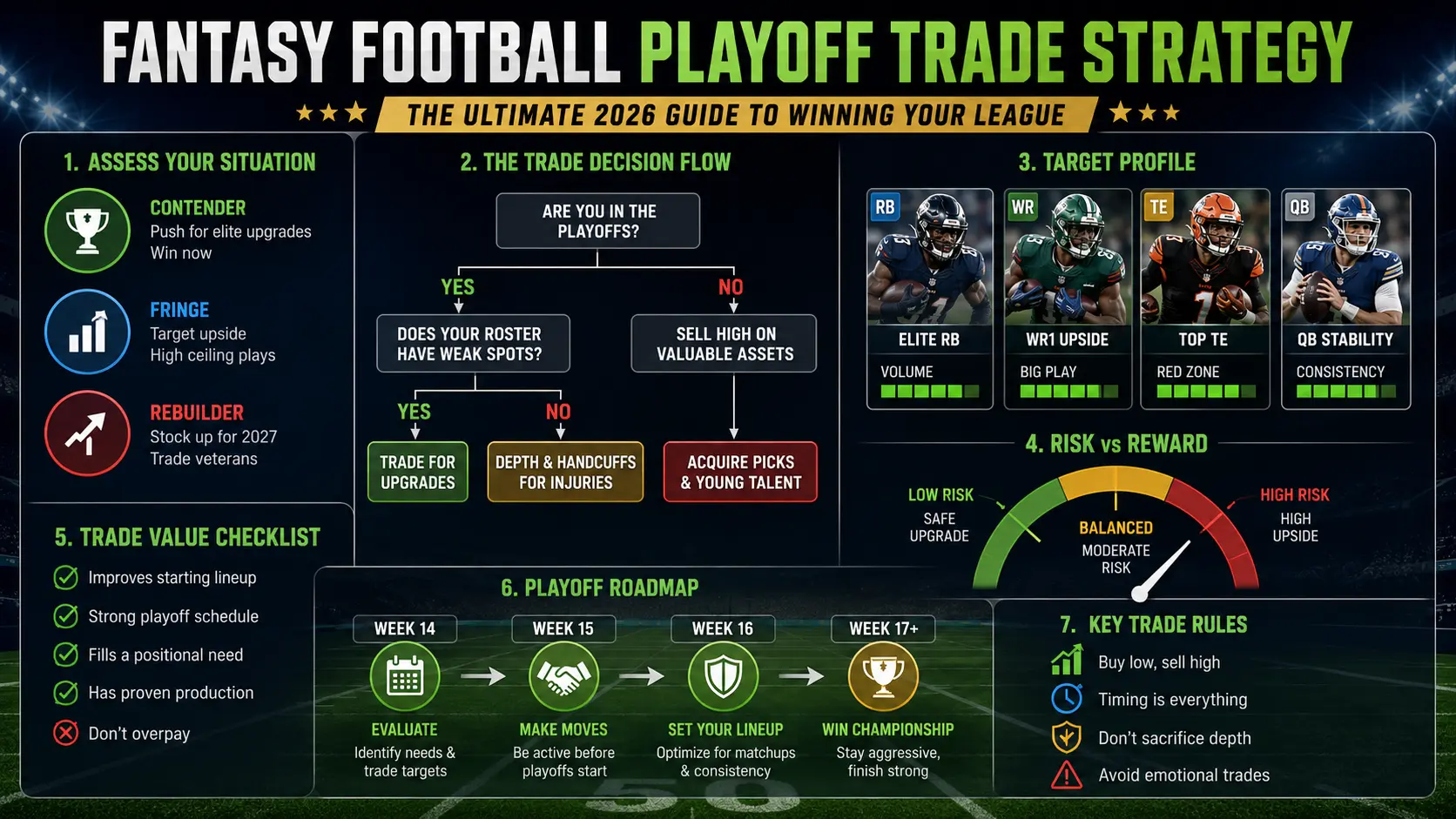
✅ Does this trade improve my starting lineup?
If you answer “yes” to most of these questions, the trade may provide long-term value.
Advanced Trading Strategy
Experienced fantasy managers treat their roster like an investment portfolio.
Instead of chasing weekly points, they evaluate:
- Expected Fantasy Points (xFP)
- Air Yards
- Target Share
- Snap Share
- Route Participation
- Offensive Line Quality
- Strength of Schedule
- Injury Risk
They also use 2-for-1 trades to consolidate multiple average players into one elite difference-maker while opening a valuable bench spot for waiver pickups.
Another overlooked strategy is buying injured stars if your team has a winning record. Managers sitting at 6–1 can afford to wait, while struggling teams often cannot.
Common Trading Mistakes
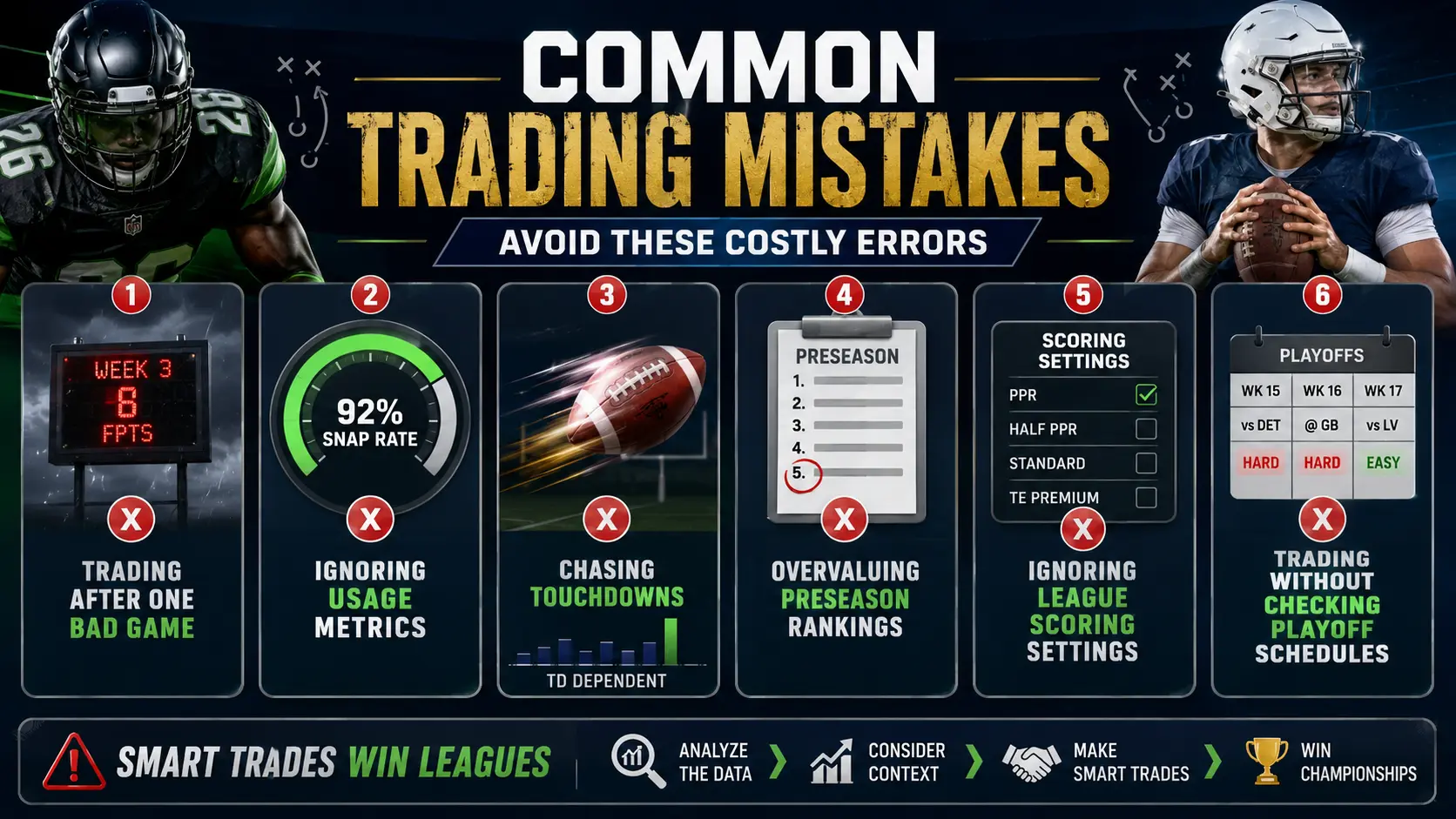
Avoid these costly errors:
- Trading after one bad game
- Ignoring usage metrics
- Chasing touchdowns
- Overvaluing preseason rankings
- Ignoring league scoring settings
- Trading without checking playoff schedules
- Sending unrealistic offers
- Forgetting roster depth
Winning fantasy managers stay objective instead of emotional.
Recommended Fantasy Football Tools
Several trusted resources can improve your trade decisions:
- Fantasy Trade Analyzer
- PlayerProfiler
- Pro Football Reference
- FantasyCalc
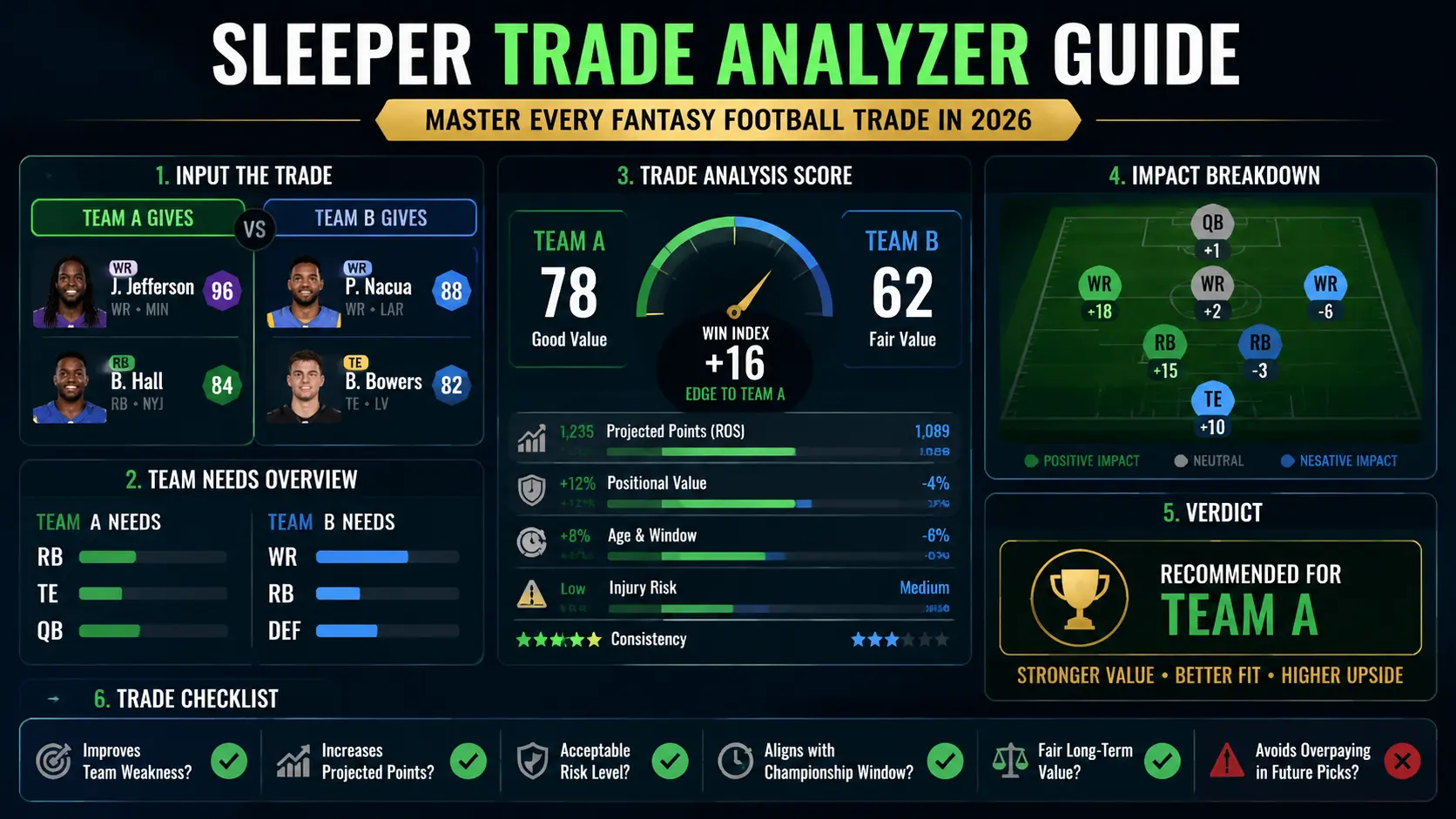
- Sleeper Trade Center
- ESPN Fantasy Football
- Yahoo Fantasy Sports
These tools provide valuable information about player usage, rankings, projections, and trade values.
Also Read: Fantasy Football Waiver Wire Guide
Future Trends
Fantasy football analysis continues to become more data-driven.
Advanced metrics such as Expected Fantasy Points (xFP), Weighted Opportunity Rating (WOPR), route participation, and red-zone opportunity tracking are becoming essential tools for serious fantasy managers.
Artificial intelligence, predictive analytics, and real-time player projections will likely play an even bigger role in identifying buy-low and sell-high opportunities over the next few seasons.
Conclusion
Mastering buy low sell high fantasy football players is about understanding value not simply reacting to weekly scores.
The best fantasy managers identify opportunity before everyone else. They study snap counts, target shares, schedules, and player usage instead of chasing touchdowns or highlight plays.
By focusing on long-term value, understanding league settings, and negotiating strategically, you’ll consistently make stronger trades and give yourself a better chance of competing for a fantasy football championship.
Frequently Asked Questions
What does buy low sell high mean in fantasy football?
Buying low means trading for a talented player whose value has temporarily dropped, while selling high means trading away a player whose value has peaked after unsustainable production.
How do I know if a player is a true buy-low candidate?
Look beyond fantasy points. Strong snap share, target share, expected fantasy points, and favorable upcoming schedules are better indicators than recent box scores.
Should I always sell players after a big game?
No. Only consider selling if the production appears unsustainable or the player’s underlying opportunity doesn’t support continued success.
Does PPR scoring change buy-low targets?
Yes. High-volume receivers gain significantly more value in full PPR leagues, making them attractive buy-low candidates.
When is the best time to send trade offers?
Tuesday morning is often ideal because managers are reacting to the previous week’s results and making roster adjustments.
What’s the biggest mistake fantasy managers make?
The most common mistake is judging players solely by recent fantasy points instead of evaluating usage, opportunity, and long-term trends.