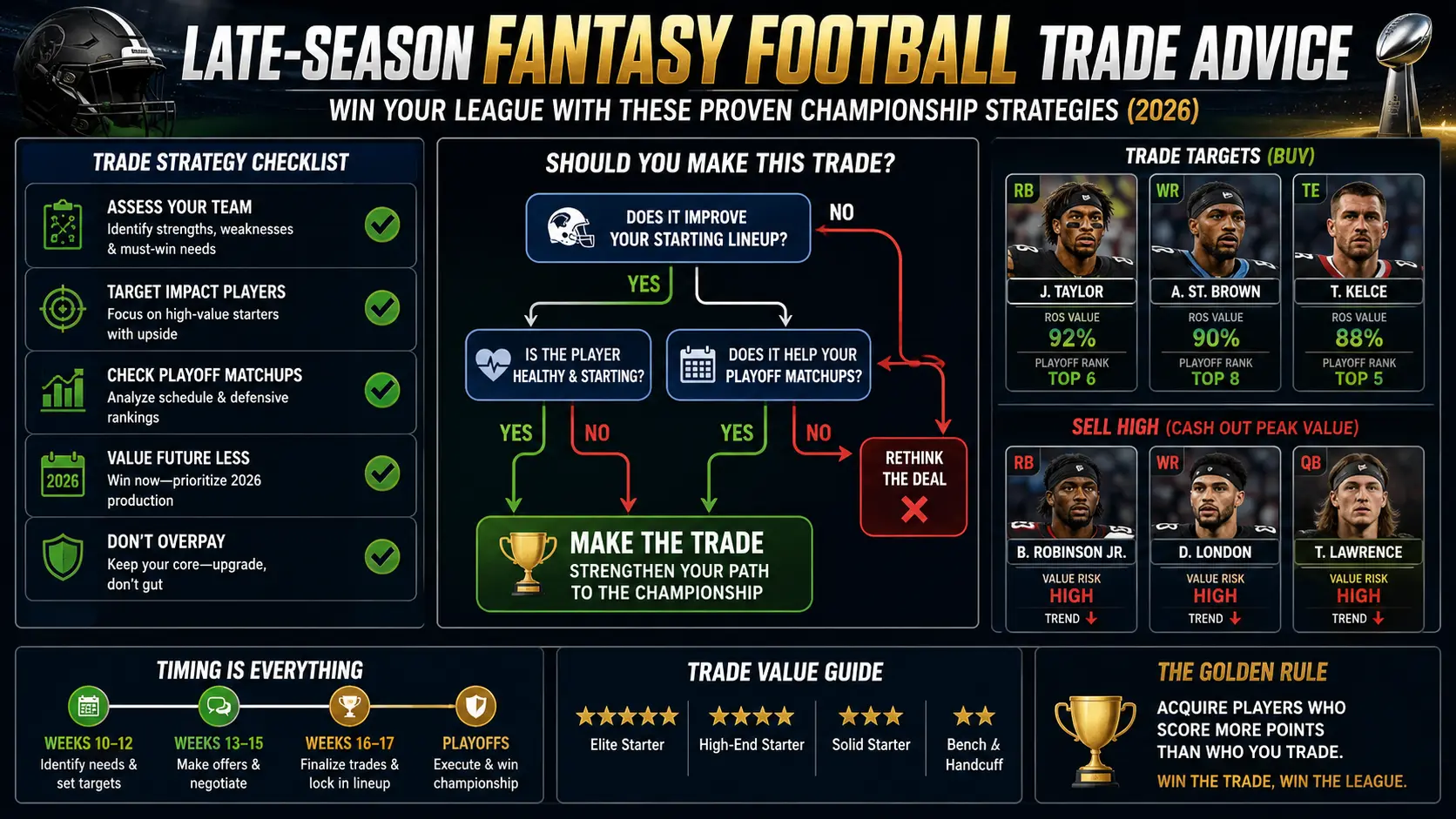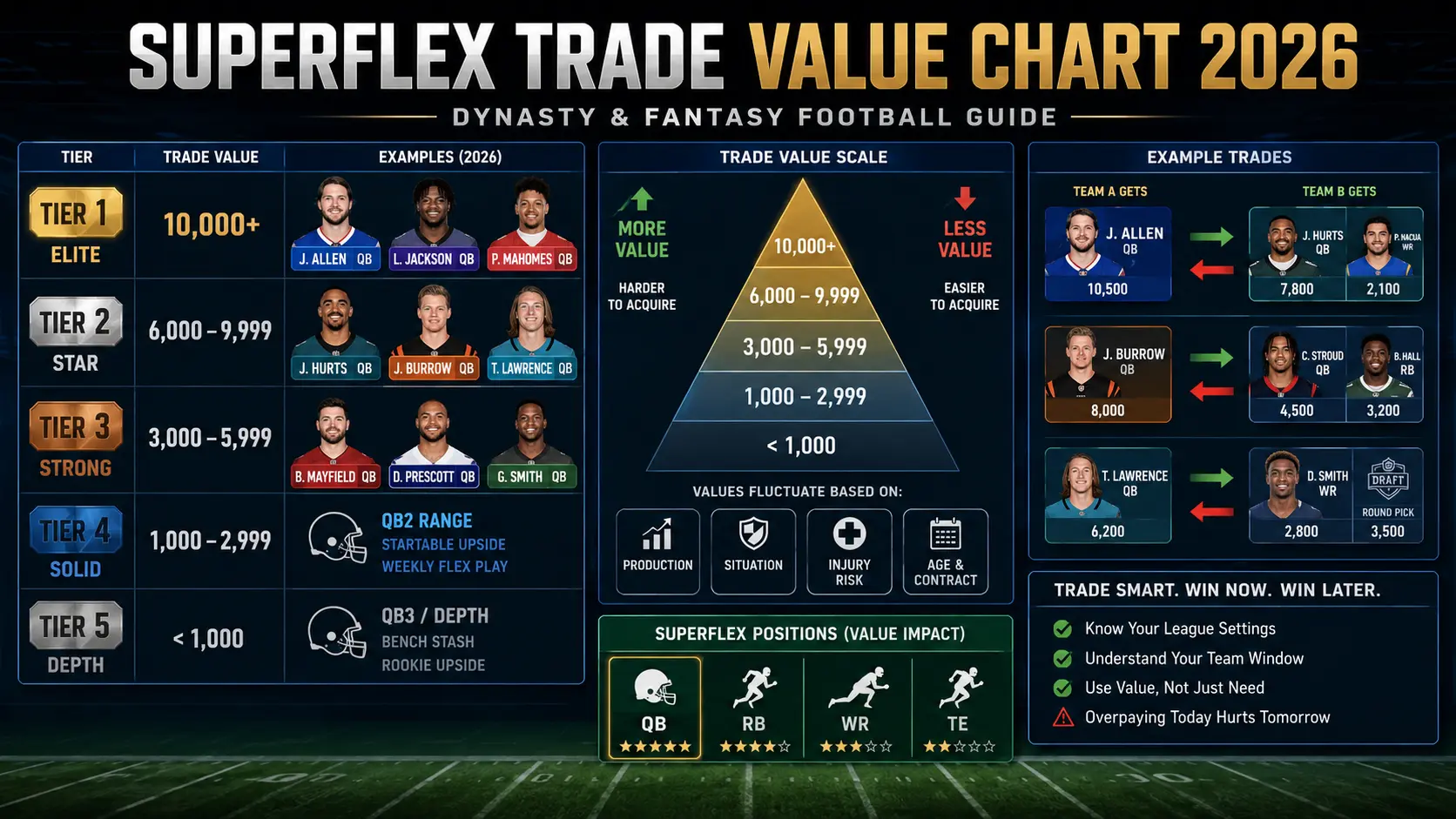
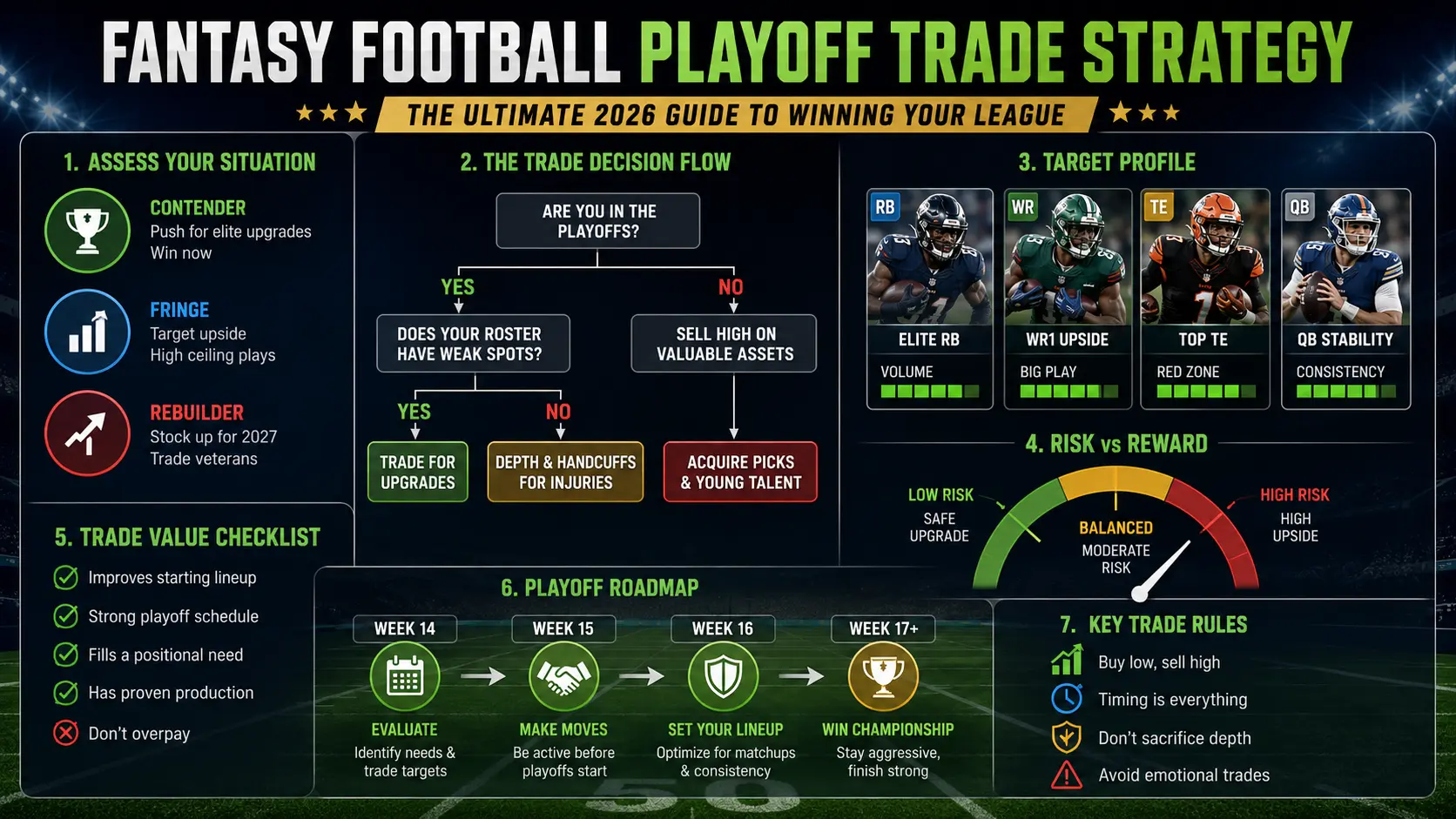
Introduction
Winning a fantasy football championship isn’t about having the best draft; it’s about building the best roster when the fantasy playoffs begin. That’s where a smart Fantasy Football Playoff Trade Strategy separates league champions from everyone else.
Many fantasy managers make one costly mistake: they continue trading as if every week is the same. In reality, Weeks 15, 16, and 17 require a completely different mindset. Regular-season depth becomes less valuable, while elite weekly starters, favorable playoff schedules, and roster flexibility become championship-winning assets.
Whether you’re already locked into the playoffs or fighting for the final postseason spot, your trades should now focus on maximizing your starting lineup rather than collecting bench depth. Understanding playoff schedules, weather conditions, league settings, and opponent weaknesses can provide the edge needed to win your league.
This guide explains the complete Fantasy Football Playoff Trade Strategy, including advanced roster construction, trade negotiation tactics, schedule analysis, and actionable trade ideas that outperform generic “buy low” advice.
Table of Contents
- TL;DR
- What Is Fantasy Football Playoff Trade Strategy?
- Why Most Managers Fail at Playoff Trading
- The Roster Consolidation Formula
- Bridge Trades vs. Championship Trades
- How to Analyze Fantasy Playoff Schedules
- Weather, Domes & Matchup Analysis
- Actionable Fantasy Football Playoff Trade Targets
- Platform-Specific Trade Tips
TL;DR
- Prioritize elite starters over bench depth before the fantasy playoffs.
- Execute 2-for-1 or 3-for-1 trades to strengthen your weekly lineup.
- Analyze Weeks 15–17 individually, not as one playoff schedule.
- Consider dome games, weather, offensive efficiency, and defensive matchups, not just Strength of Schedule.
- Adjust your strategy depending on whether you’ve clinched a playoff spot or are still fighting to qualify.
What Is Fantasy Football Playoff Trade Strategy?
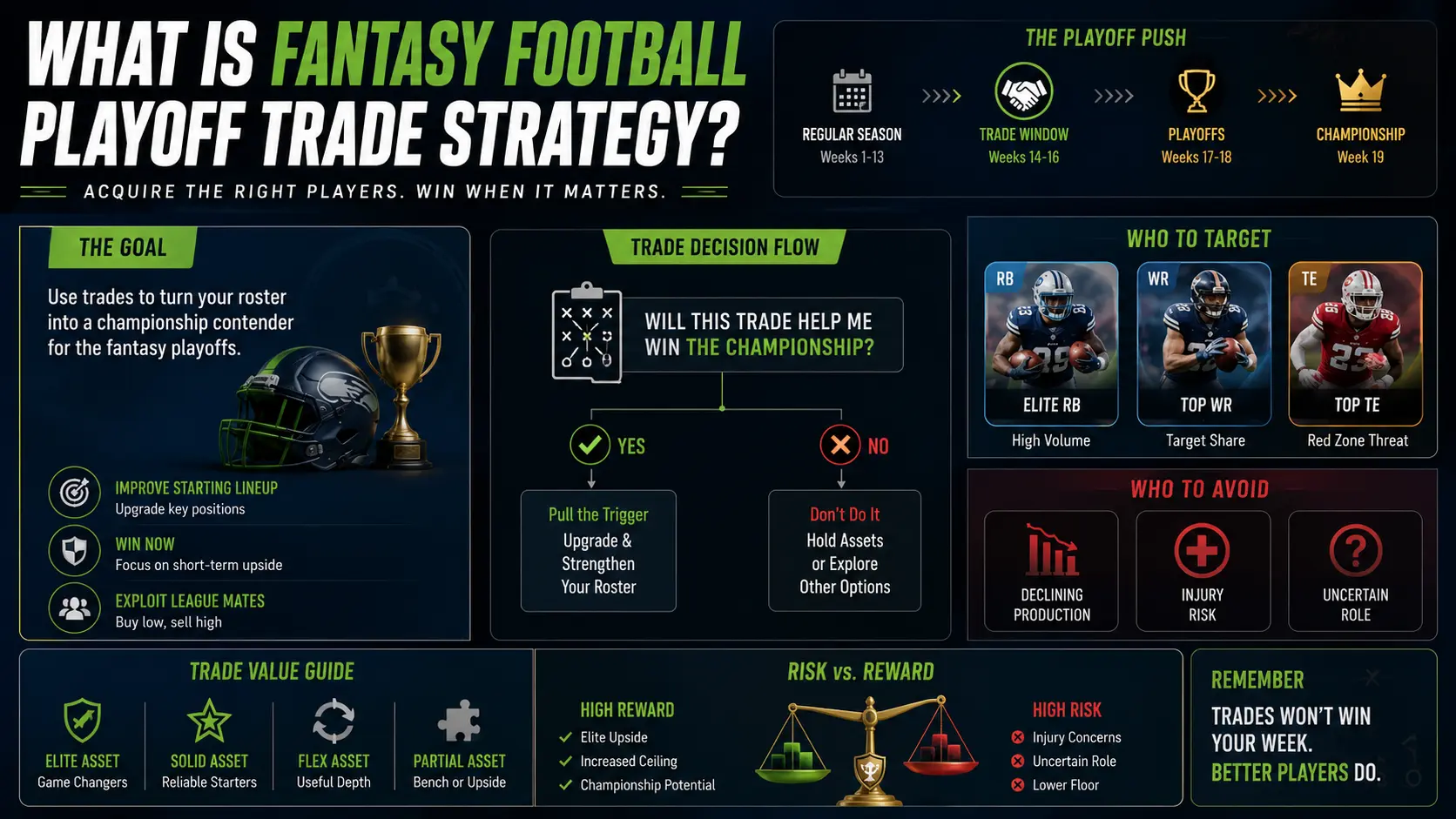
Fantasy Football Playoff Trade Strategy is the process of making trades specifically designed to maximize your chances of winning during the fantasy playoffs, rather than simply improving your overall roster.
Unlike regular-season trading, playoff-focused trading emphasizes:
- Elite weekly ceiling
- Favorable Weeks 15–17 matchups
- Consistent offensive volume
- Healthy players with secure roles
- Reduced reliance on bench depth
Instead of asking:
“Who scores more total fantasy points?”
You should ask:
“Who gives me the best chance to win my playoff matchup?”
That subtle difference changes every trade decision.
Why Most Fantasy Managers Lose Their League Before the Playoffs
Most fantasy managers approach November exactly like September.
That is a mistake.
Once the fantasy trade deadline approaches, your objective changes from building depth to building the strongest possible starting lineup.
Common mistakes include:
- Holding five usable wide receivers when only three can start.
- Ignoring playoff schedules.
- Trading based solely on season averages.
- Overvaluing bench players.
- Refusing to trade because a player has been productive all season.
Championship teams understand one simple principle:
Bench points don’t win playoff games.
Elite starters do.
The Championship Mindset: Why Roster Consolidation Wins Titles
One of the biggest competitive advantages is roster consolidation.
Instead of having:
- WR22
- WR27
- RB24
You combine those assets into:
- WR6
Your starting lineup immediately becomes stronger.
Why 2-for-1 Trades Work
Late in the season, waiver wires usually contain replacement-level players who can fill your bench.
That means your extra depth has declining value.
The manager receiving two players may gain depth.
The manager receiving one elite player gains weekly upside.
Championships are won with elite weekly production, not by having the deepest bench.
Example
Give
- WR18
- RB24
Receive
- WR7
Although trade calculators may show equal value, your weekly starting lineup often improves significantly.
Simple Roster Consolidation Formula
Think about every trade like this:
Current Weekly Starters
- WR18
- RB24
↓
After Trade
- WR7
- Best Waiver Replacement
If the improvement from WR18 to WR7 is larger than the downgrade from RB24 to the waiver replacement, you’ve improved your playoff roster.
This simple concept is one of the biggest content gaps found in most fantasy football trade advice and is often overlooked by casual managers.
Bridge Trades vs. Championship Trades
Not every fantasy team should make the same trades.
Your current league position determines your strategy.
Scenario 1: You’re Fighting for a Playoff Spot
If you’re one loss away from elimination:
Don’t chase Week 17 matchups.
Instead:
- Target healthy players.
- Avoid risky injured stars.
- Prioritize weekly consistency.
- Trade for immediate production.
These are called Bridge Trades because they help you reach the playoffs.
Scenario 2: You’ve Already Clinched
Now your strategy completely changes.
Instead of maximizing Week 12 or Week 13 points, you should aggressively target:
- Elite playoff schedules
- High-volume offenses
- Dome teams
- Healthy offensive lines
- Players with massive weekly ceilings
Now you’re making Championship Trades.
Championship Window Strategy
Once you’ve secured a playoff spot:
- Trade future depth.
- Package multiple starters.
- Acquire elite talent.
- Free roster spots for waiver pickups.
- Build the strongest possible playoff lineup.
Think of your bench as trade currency.
How to Analyze Fantasy Football Playoff Schedules Like an Expert
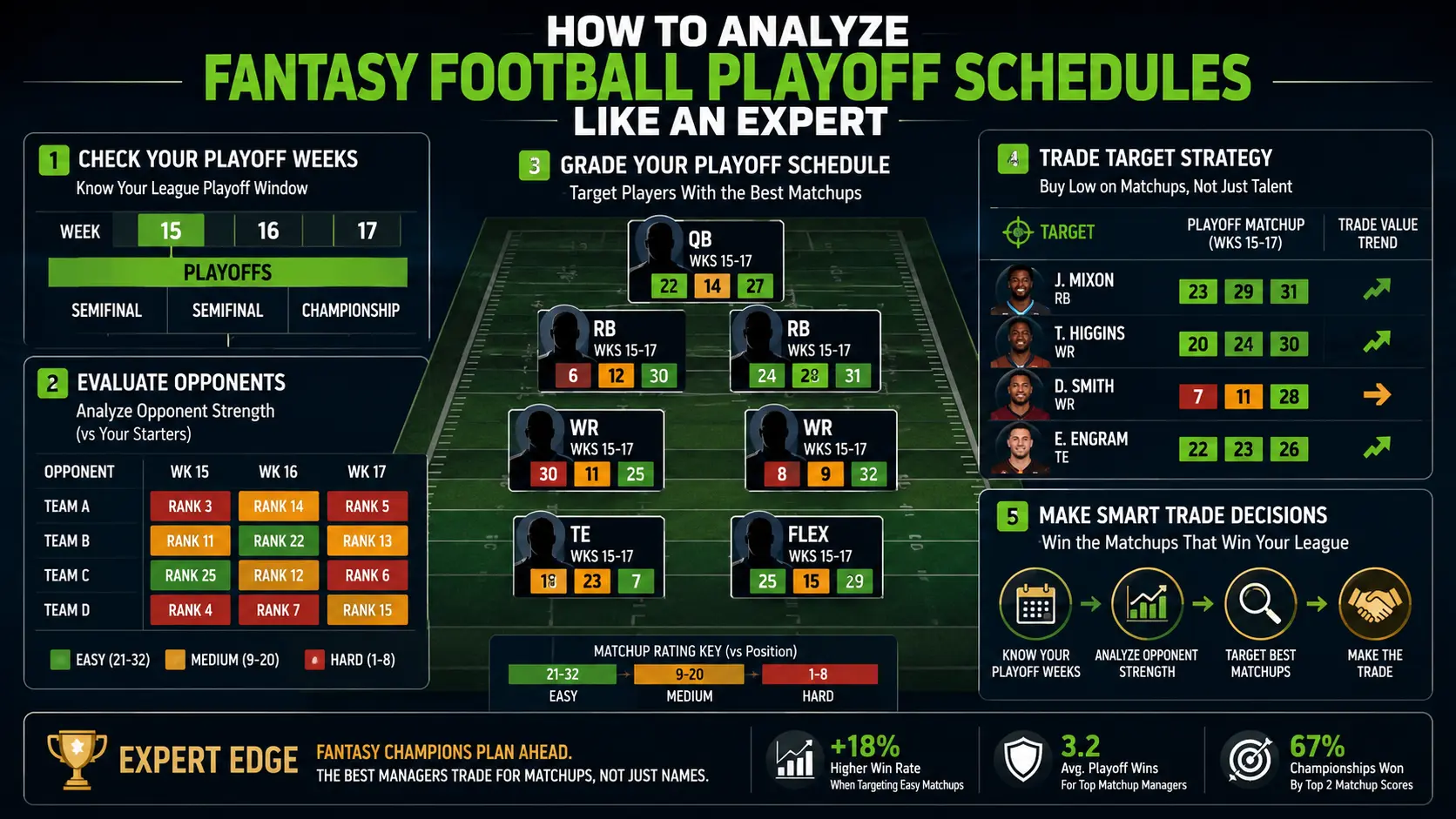
Many fantasy managers simply search:
“Fantasy football playoff schedule rankings”
Then trade accordingly.
Unfortunately, that’s only half the story.
Instead of looking at one overall playoff ranking, evaluate each week individually.
Week 15 Is Different From Week 17
Imagine this schedule.
| Week | Opponent Difficulty | Importance |
| Week 15 | Very Difficult | Win or go home |
| Week 16 | Easy | Semifinal |
| Week 17 | Easy | Championship |
Many managers only notice Weeks 16 and 17.
But a brutal Week 15 matchup can eliminate you before those games even matter.
Always analyze playoff schedules week by week.
Don’t Trust Basic Strength of Schedule
Traditional Strength of Schedule (SoS) rankings often use full-season defensive statistics.
Those numbers become misleading late in the year.
Instead, consider:
- Defensive injuries
- Coaching changes
- Recent fantasy points allowed
- Offensive pace
- Red-zone efficiency
- Target share trends
- Route participation
- Snap share
- Expected Fantasy Points (xFP)
These advanced indicators provide a more accurate picture of playoff matchups than raw season-long rankings.
Weather and Dome Games Can Decide Championships
One underrated element of every successful Fantasy Football Playoff Trade Strategy is weather.
December football is very different from September football.
Cold temperatures, snow, freezing rain, and strong winds can reduce passing efficiency and increase rushing volume.
Dome Teams Often Provide Safer Passing Floors
Quarterbacks and wide receivers playing indoors generally avoid weather-related volatility.
Advantages include:
- Better passing efficiency
- More consistent fantasy production
- Higher touchdown potential
- Fewer weather surprises
This doesn’t mean every dome player is automatically a buy, but when comparing similar players, indoor environments can provide a meaningful edge during the fantasy playoffs.
Offensive Environment Matters More Than Easy Defenses
Another common mistake is targeting players solely because they face weak defenses.
Instead, prioritize players on efficient offenses that consistently create scoring opportunities.
Look for:
- High implied team totals
- Strong quarterback play
- Heavy red-zone usage
- Stable target shares
- Positive game scripts
A talented player on an elite offense often outperforms a mediocre player with an easier matchup.
Early Fantasy Football Playoff Trade Targets
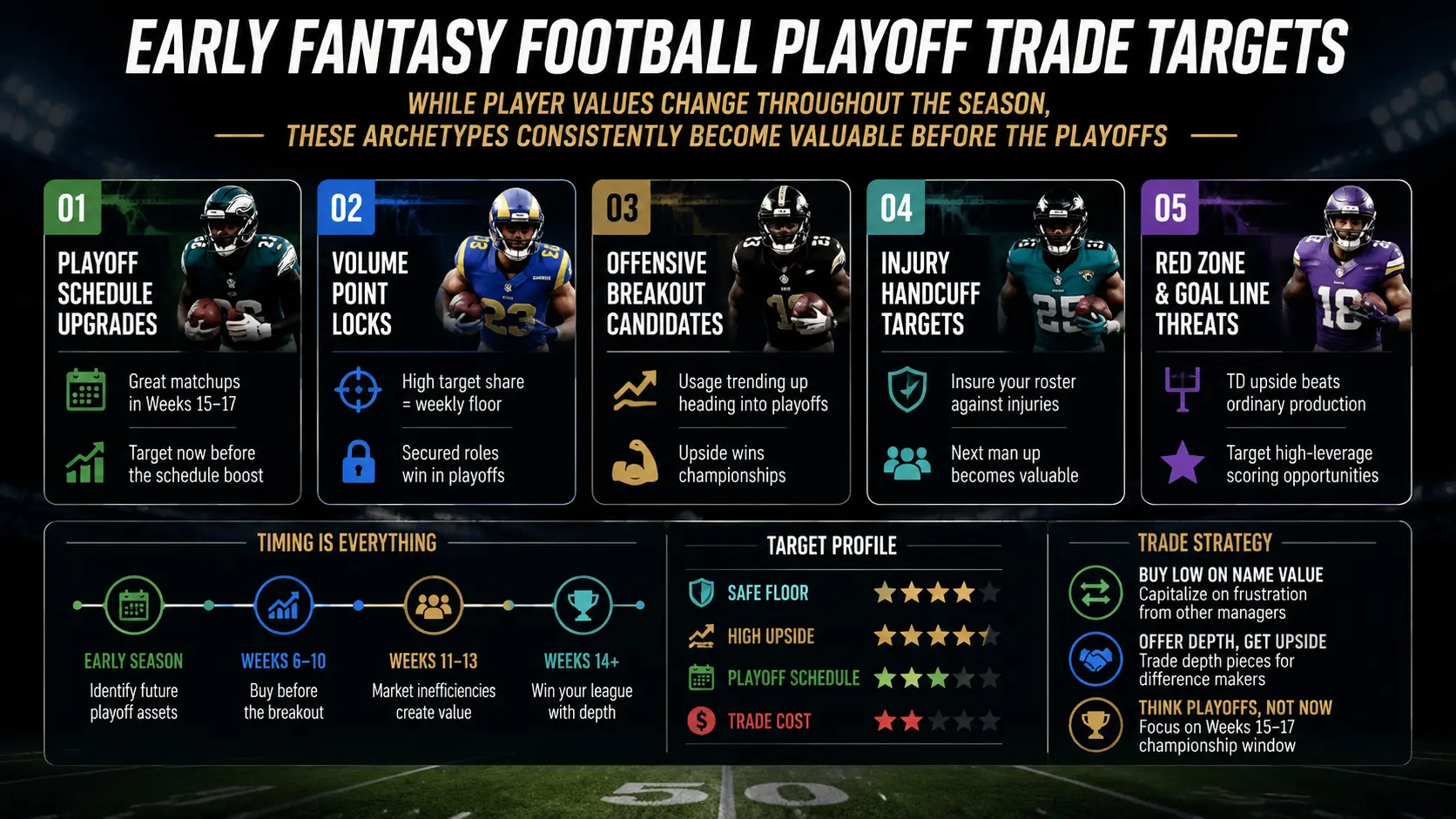
While player values change throughout the season, these archetypes consistently become valuable before the playoffs:
| Target Type | Why They’re Valuable |
| Workhorse Running Backs | Reliable volume and touchdown opportunities |
| Elite WR1s | High weekly ceiling in elimination games |
| Mobile Quarterbacks | Stable rushing floor and explosive upside |
| Top Tight Ends | Positional advantage over streaming options |
| High-Scoring Offenses | More touchdown opportunities during the fantasy playoffs |
Avoid chasing one-week breakout performances. Instead, focus on players with sustainable usage, consistent snap shares, and favorable offensive environments.
Fantasy Football Playoff Trade Targets by Position
Finding the right fantasy football playoff trade targets isn’t about chasing last week’s highest scorer. It’s about identifying players with secure roles, favorable playoff schedules, and offenses that can consistently produce fantasy points when it matters most.
Quarterbacks
A playoff fantasy QB should offer both a safe floor and league-winning upside.
Prioritize quarterbacks who have:
- High passing volume
- Rushing ability
- Favorable Weeks 15–17 matchups
- Stable offensive line play
- Indoor or warm-weather games when possible
Avoid overreacting to one difficult matchup if the quarterback has elite rushing production.
Running Backs
Running backs remain the most valuable playoff assets because volume wins championships.
Target backs who have:
- Goal-line carries
- Receiving work in PPR leagues
- 65%+ snap share
- Heavy red-zone usage
Veteran backs on playoff-contending NFL teams often become premium fantasy football players to trade for playoffs because coaches rely on them during meaningful games.
Wide Receivers
Wide receivers with consistent target volume generally outperform boom-or-bust serious threats during the fantasy playoffs.
Look for:
- 25%+ target share
- Strong route participation
- High yards per route run
- Quarterback stability
These receivers make excellent fantasy playoff trade targets because opportunity is more predictable than touchdowns.
Tight Ends
If your league has a clear top-tier tight end available, consider paying a premium.
Elite tight ends create a weekly positional advantage that streaming rarely matches.
Otherwise, avoid overpaying and continue streaming favorable matchups.
Defense & Special Teams
Many managers ignore DST trades.
That’s a mistake.
If another manager has two quality defenses, consider trading a depth player for one with an excellent playoff schedule.
Streaming defenses against backup quarterbacks or struggling offenses can swing close playoff matchups.
Trade Strategy by League Format
Your Fantasy Football Playoff Trade Strategy should change depending on league settings.
| League Type | Best Strategy |
| Redraft | Trade future depth for elite starters. |
| Dynasty | Balance playoff push with long-term value. |
| Superflex | Premium quarterbacks become even more valuable. |
| Full PPR | Prioritize target volume and pass-catching RBs. |
| Standard | Focus on touchdown upside and rushing volume. |
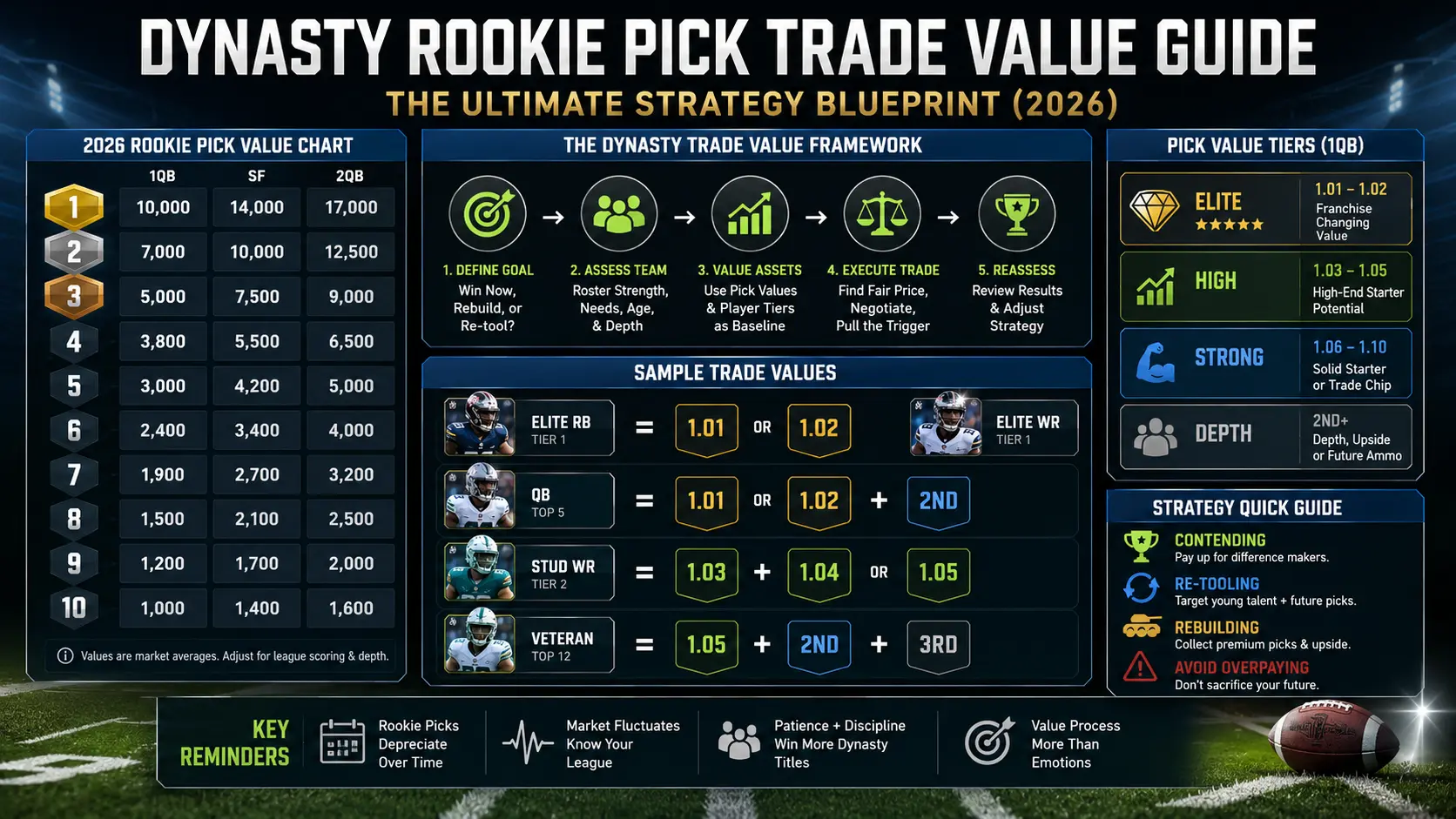
Managers in fantasy football dynasty leagues shouldn’t completely sacrifice future rookie picks unless they’re legitimate championship contenders. Conversely, redraft managers should maximize short-term production because future value doesn’t exist beyond the current season.
ESPN, Yahoo & Sleeper Trade Tips
League platform settings can dramatically impact your strategy.
ESPN Fantasy Football Playoffs Explained
Many ESPN leagues use:
- 4-team playoff format
- 6-team playoff format
- Custom commissioner settings
Before making a blockbuster trade, verify:
- Trade deadline
- Playoff weeks
- Tiebreakers
- Waiver priority
- Trade review period
Understanding the ESPN fantasy football playoffs explained helps avoid surprises that could derail your playoff run.
Yahoo Fantasy Football Trade Process
The Yahoo fantasy football trade process varies depending on league settings.
Commissioners may use:
- Commissioner approval
- League vote
- Automatic processing
Always account for the trade processing window. A deal accepted on Friday may not become official until after Sunday’s games, depending on your league configuration.
Likewise, review your Yahoo fantasy football playoff structure before targeting players with favorable Week 15–17 schedules.
Sleeper Platform
Sleeper offers more customizable league options, including:
- Dynasty leagues
- Keeper leagues
- Superflex formats
- No trade deadline leagues
- Future rookie pick trading
Because league rules differ, always check your commissioner settings before assuming trades are allowed during the playoffs.
Psychology Wins More Trades Than Calculators
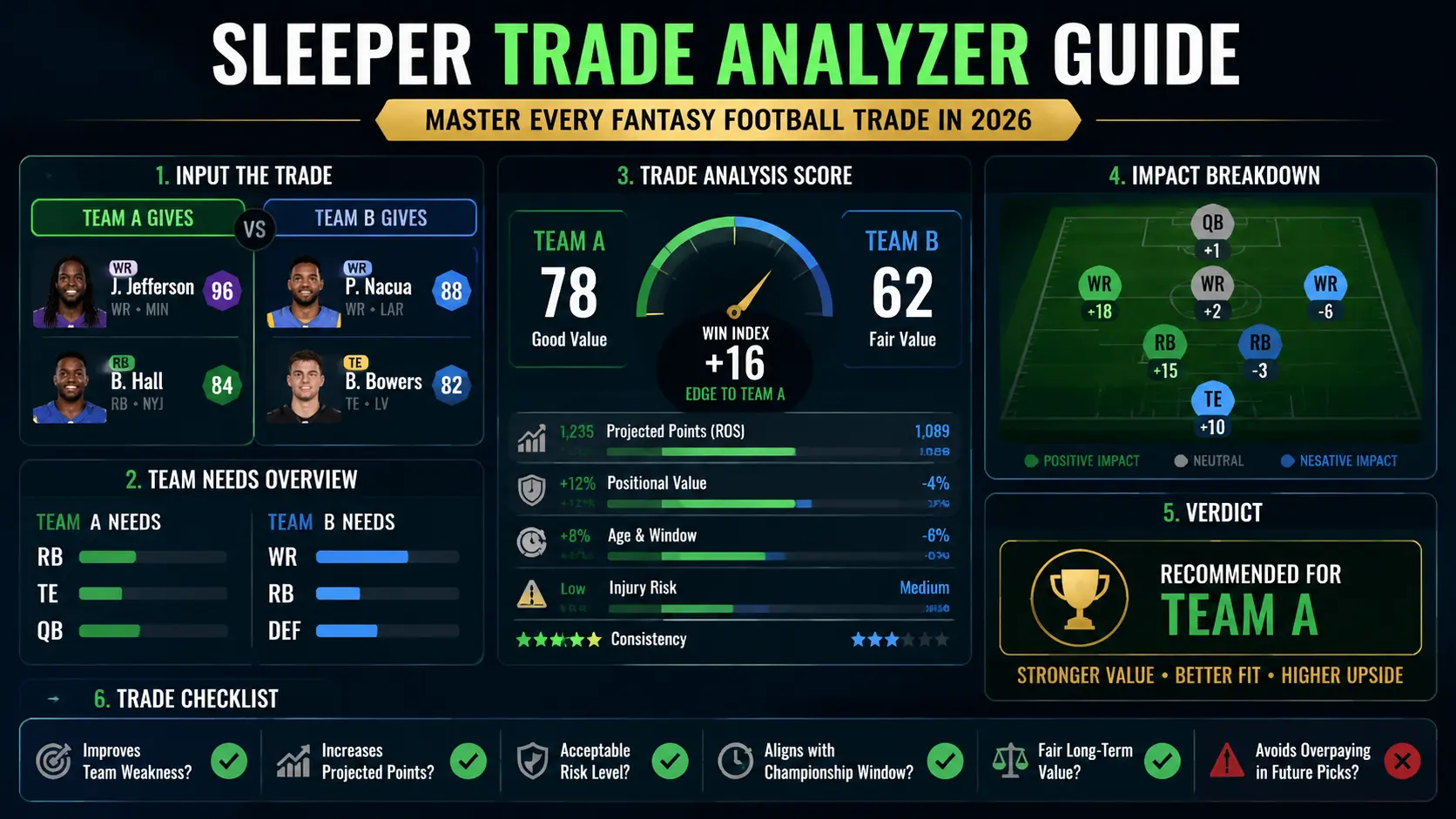
Trade analyzers are valuable, but managers don’t accept trades because a calculator says they should.
People accept trades because they solve problems.
Identify Your Opponent’s Needs
Ask yourself:
- Do they need immediate wins?
- Are they desperate for a running back?
- Did injuries destroy their lineup?
- Are they overloaded at wide receiver?
A trade that solves their biggest weakness has a much higher acceptance rate.
Use the “Bridge Trade” Concept
If another manager is fighting for the final playoff spot, offer productive players who help them win immediately.
Meanwhile, you acquire the player with the better fantasy playoff schedule.
Both managers improve at different timelines.
Avoid Sending Random Offers
Instead of sending five lowball offers:
- Start a conversation.
- Ask which positions they need.
- Explain your reasoning.
- Offer multiple options.
- Be willing to negotiate.
Good communication often succeeds where trade calculators fail.
Advanced Fantasy Football Playoff Trade Strategy
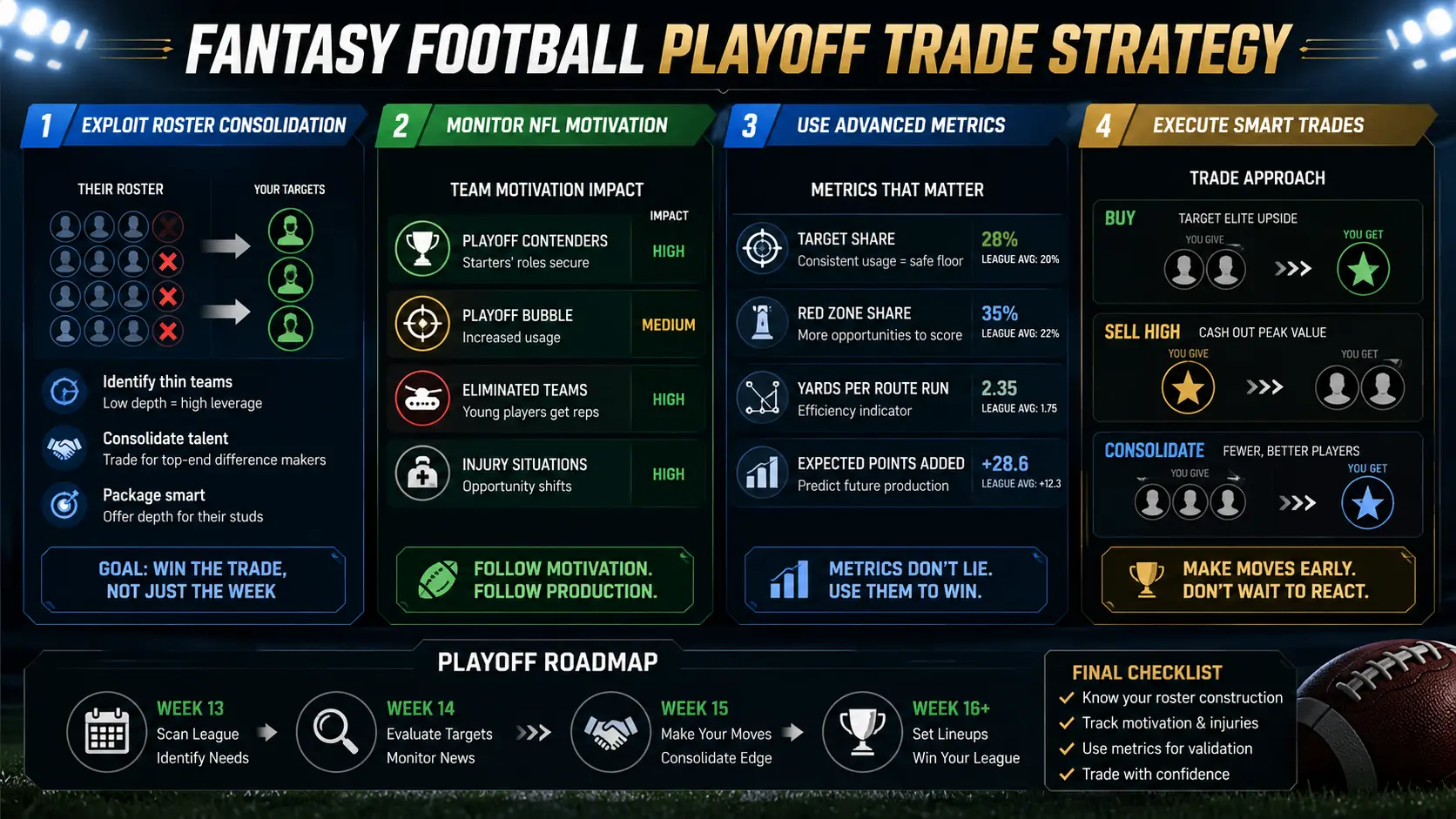
Experienced managers can gain additional edges by thinking beyond standard trade values.
Exploit Roster Consolidation
Late in the season, a 2-for-1 fantasy football trade often benefits the manager receiving the elite player because only starters score meaningful points during playoff matchups.
If adding one star also frees a bench spot for a high-upside waiver pickup or handcuff, the deal becomes even more valuable.
Monitor NFL Motivation
Not every NFL team approaches Weeks 16 and 17 the same way.
Consider:
- Teams fighting for playoff seeding
- Teams resting veterans
- Eliminated teams evaluating younger players
- Coaching changes affecting offensive usage
Player motivation and team context can shift fantasy value more than season-long averages.
Use Advanced Metrics
Instead of relying only on fantasy points per game, evaluate:
- Snap Share
- Target Per Route Run (TPRR)
- Route Participation
- Red-Zone Opportunities
- Green Zone Touches
- Expected Fantasy Points (xFP)
- Game Script Trends
- Touchdown Regression
These metrics often identify future breakout candidates before the rest of your league notices.
Common Mistakes to Avoid
Many managers sabotage their playoff chances with avoidable errors.
- Holding too much bench depth instead of upgrading starters.
- Ignoring Week 15 matchups while focusing only on championship week.
- Trusting outdated season-long Strength of Schedule rankings.
- Refusing fair trades because a calculator shows a slight value loss.
- Overreacting to one explosive performance.
- Ignoring league-specific trade deadlines.
- Forgetting weather and stadium environments.
- Waiting until the final week before the deadline to negotiate.
Avoiding these mistakes can be just as valuable as making the perfect trade.
Recommended Tools & Resources
The following resources can improve your decision-making throughout the fantasy season:
- FantasyTradeAnalyzers Trade Analyzer – Compare player values and evaluate trade fairness.
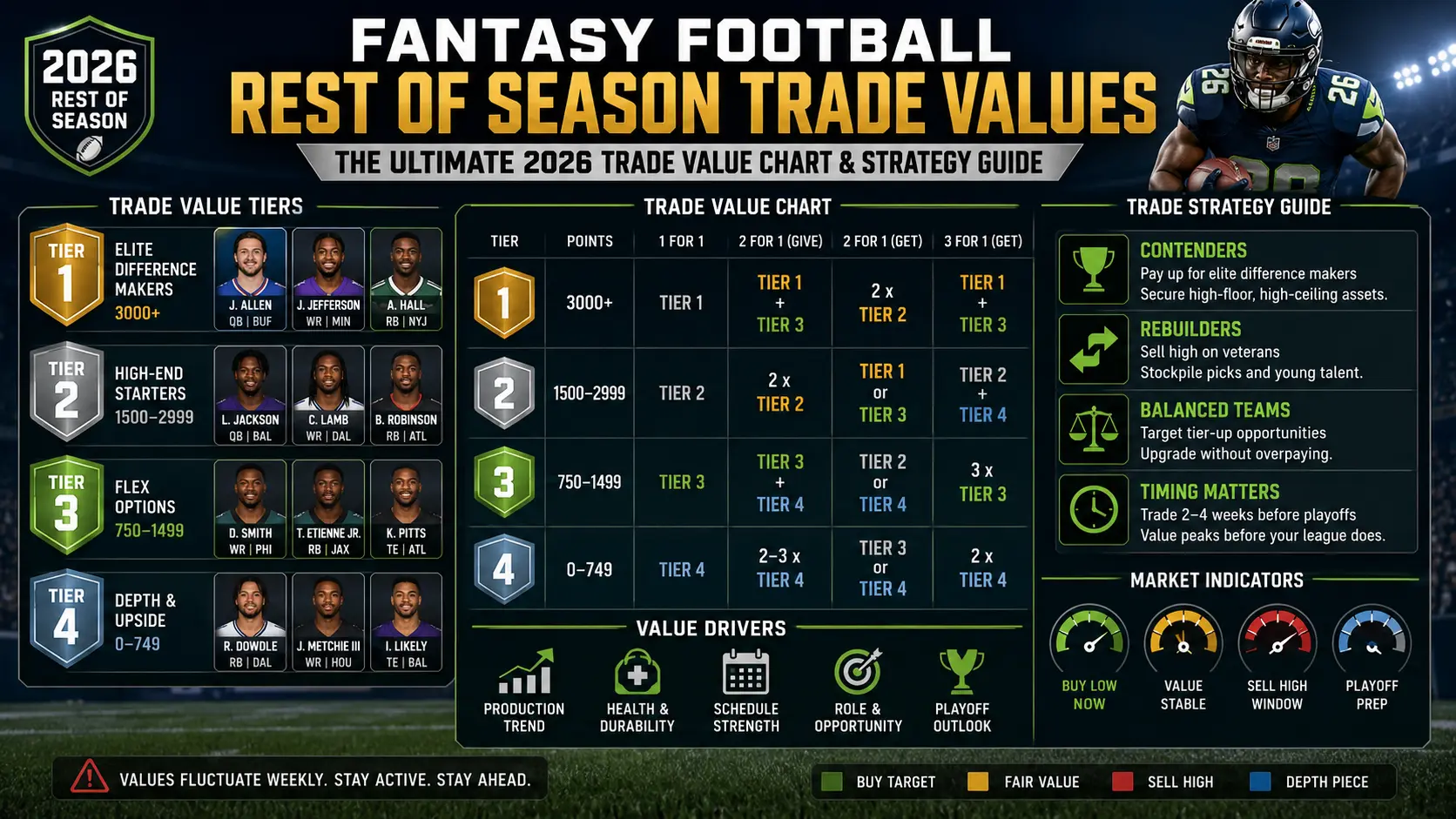
- Trade Value Charts – Track weekly market value changes.
- Strength of Schedule Tools – Analyze Weeks 15–17 matchups.
- Snap Count & Usage Reports – Monitor player roles and opportunities.
- NFL Injury Reports – Stay informed about injuries and expected returns.
- Weather Forecasts – Identify games that could affect passing or kicking production.
Also Read: Buy Low, Sell High Fantasy Football Players
Future Trends
Fantasy football strategy continues to evolve.
Expect future trade analysis to rely more heavily on:
- AI-powered trade analyzers
- Expected Fantasy Points (xFP)
- Machine learning projections
- Real-time injury probabilities
- Player tracking data
- Weekly matchup simulations
- Custom league-specific trade values
Managers who adapt to these tools will gain a competitive edge over those relying solely on traditional rankings.
Conclusion
A successful Fantasy Football Playoff Trade Strategy isn’t about making the most trades; it’s about making the right ones.
As the playoffs approach, shift your focus from building depth to building the strongest starting lineup possible. Consolidate your roster through smart 2-for-1 deals, evaluate Weeks 15–17 individually, and prioritize players with stable roles, favorable matchups, and high-volume opportunities.
Don’t overlook league settings, trade deadlines, weather conditions, or team motivation. Small details often decide championship matchups.
Finally, remember that every league is different. Use trade calculators as a guide, but always consider your scoring format, roster construction, and playoff path before making a deal.
With careful planning and disciplined decision-making, you’ll give yourself the best chance to turn a good season into a fantasy football championship.
Frequently Asked Questions
1. What is the best fantasy football playoff trade strategy?
The best Fantasy Football Playoff Trade Strategy is to consolidate bench depth into elite starters, target favorable Weeks 15–17 matchups, and prioritize players with consistent volume rather than relying solely on season-long rankings.
2. When should I start trading for the fantasy playoffs?
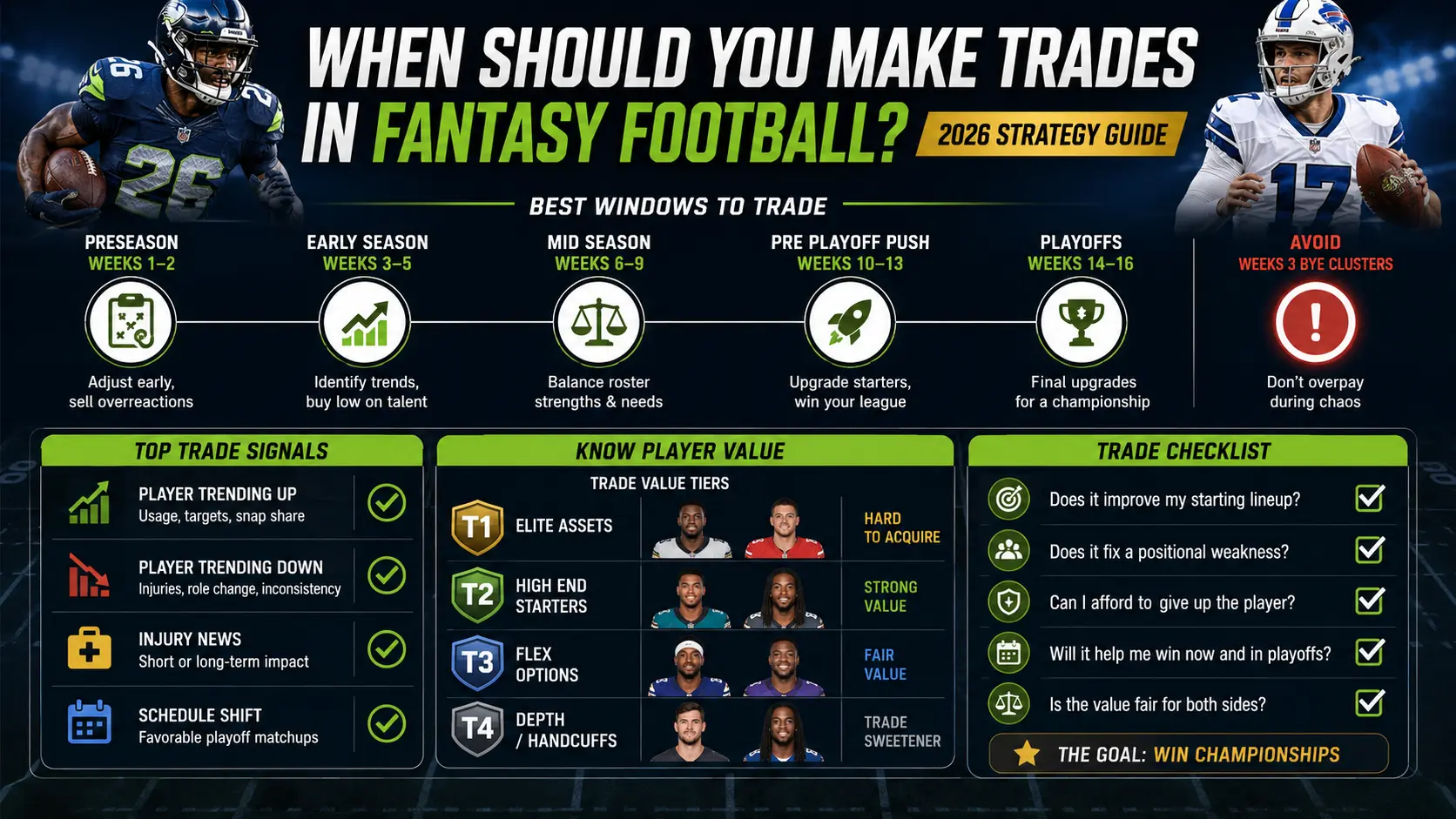
Ideally, begin evaluating playoff trades three to five weeks before your league’s trade deadline. This gives you enough time to improve your roster before postseason matchups begin.
3. Should I make a 2-for-1 fantasy football trade?
Yes, if the trade upgrades your starting lineup. During the playoffs, elite weekly production is generally more valuable than extra bench players.
4. Should I trade for players with easier playoff schedules?
Yes, but don’t rely only on Strength of Schedule. Consider offensive quality, player usage, weather, injuries, and recent defensive performance alongside matchup data.
5. Can I trade in fantasy with players out of the playoffs?
It depends on your league rules. Some leagues allow eliminated managers to trade until the deadline, while others restrict transactions. Always check your commissioner settings.
6. How important is weather during the fantasy playoffs?
Weather can significantly impact passing efficiency, especially in outdoor stadiums during December. Indoor games generally provide more stable conditions for quarterbacks and wide receivers.
7. Are trade analyzers always accurate?
No. Trade analyzers provide a useful baseline, but they can’t account for league settings, playoff schedules, roster needs, or manager behavior. Use them as one tool, not the final decision-maker.
8. Should dynasty managers use the same playoff trade strategy?
Not necessarily. Dynasty managers should balance their championship push with future asset value, while redraft managers can afford to trade future considerations for immediate production if it increases their odds of winning the title.