Introduction
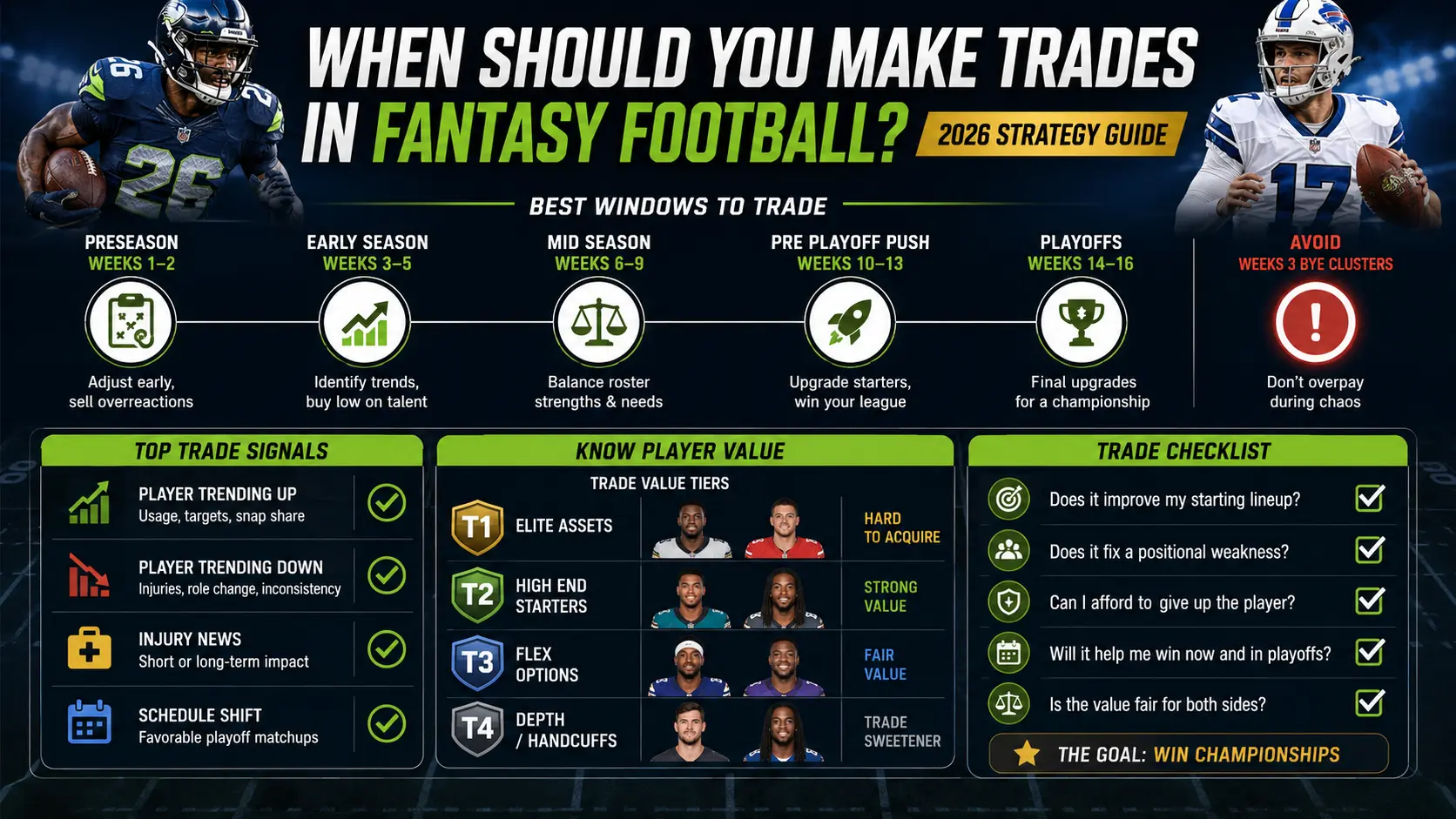
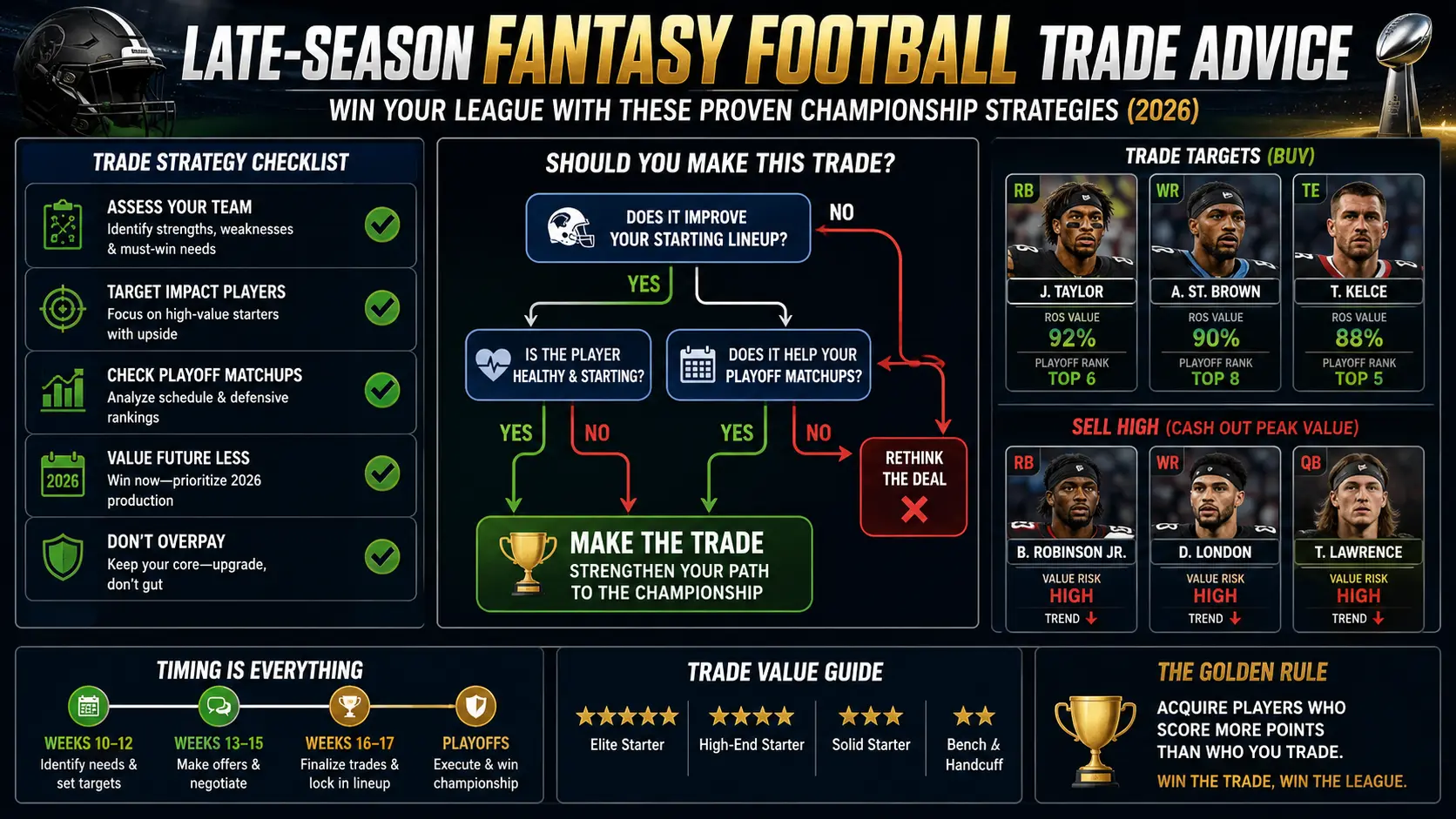
Winning your fantasy football league isn’t just about drafting well; it’s about making the right moves when the season reaches its most important stretch. Late-season fantasy football trade advice becomes significantly more valuable once injuries pile up, bye weeks disappear, playoff races tighten, and league trade deadlines approach.
Many fantasy managers make the mistake of evaluating trades based only on recent fantasy points. Championship-winning managers think differently. They study playoff schedules, analyze opportunity metrics instead of touchdowns, identify desperate league mates, and build a roster designed specifically for Weeks 15–17 rather than Week 8.
Whether you’re comfortably sitting atop the standings or fighting for the final playoff spot, your trade strategy should be completely different from everyone else’s. This guide will show you exactly how to approach late-season trades using proven frameworks, advanced analytics, negotiation tactics, and roster-building strategies that most fantasy articles never discuss.
Table of Contents
- TL;DR
- What Is Late-Season Fantasy Football Trade Advice?
- Understanding Fantasy Football Trade Deadlines
- Assess Your Team Before Making Any Trade
- Bubble Team Strategy vs Championship Contender Strategy
- How to Find Winning Trade Targets
- Advanced Analytics That Smart Managers Use
- Playoff Schedule Strategy
- Advanced Championship Tactics
- Common Mistakes
- Recommended Tools
- Future Trends
- FAQs
TL;DR
- Trade for future playoff production, not last week’s fantasy points.
- Your league standing should determine your trade strategy.
- Prioritize players with favorable Weeks 15–17 schedules.
- Consolidate bench depth into elite starters before the trade deadline.
- Use advanced metrics like target share and Expected Fantasy Points (xFP) instead of touchdowns alone.
- Always understand your platform’s trade deadline and processing rules before making offers.
What Is Late-Season Fantasy Football Trade Advice?
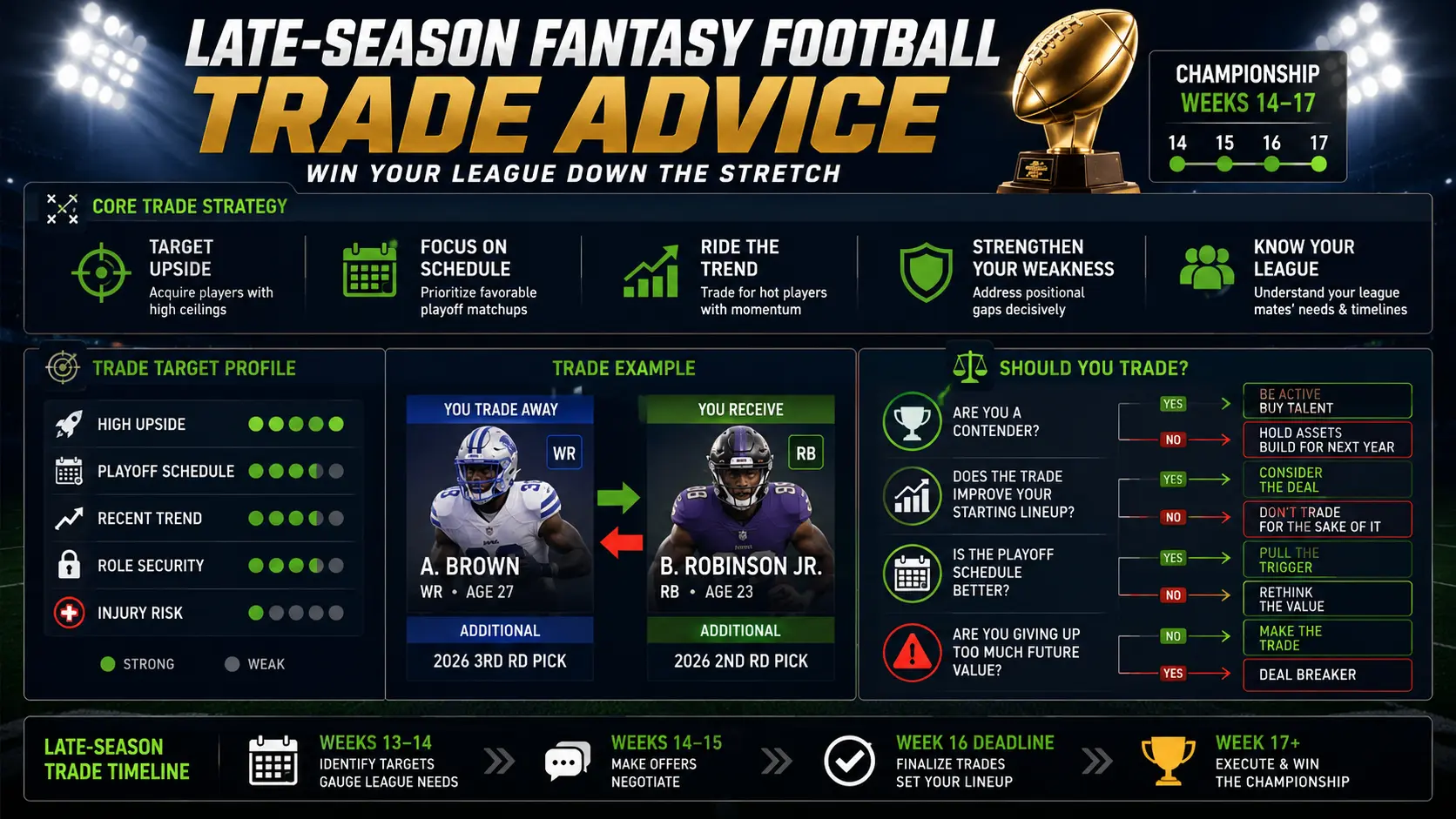
Late-season fantasy football trade advice refers to strategic recommendations for improving your roster during the final weeks before your league’s trade deadline. Instead of focusing on season-long value, managers shift their attention toward playoff matchups, roster construction, injury insurance, and maximizing championship odds.
Unlike early-season trades, these moves are about solving immediate problems while preparing for fantasy playoff weeks.
Good late-season trades help you:
- Improve your starting lineup
- Eliminate weak bench players
- Add playoff upside
- Protect against injuries
- Exploit favorable remaining schedules
- Increase weekly scoring consistency
The best fantasy managers understand that championships are rarely won on draft day; they’re won through smart in-season roster management.
Understanding Fantasy Football Trade Deadlines
One of the biggest mistakes managers make is waiting too long.
Most leagues establish a hard trade deadline, usually between NFL Weeks 10 and 13. Once it passes, trades can no longer be completed.
Different fantasy platforms have different default settings, including:
| Platform | Typical Trade Deadline |
| ESPN Fantasy | League configurable |
| Yahoo Fantasy | League configurable |
| Sleeper | League configurable |
| CBS Fantasy | League configurable |
Always verify:
- Trade deadline date
- Processing period
- League veto rules
- Commissioner approval settings
Don’t Ignore the Processing Window
Many managers assume that accepting a trade before kickoff guarantees completion.
That’s not always true.
Some leagues require:
- 24-hour review
- 48-hour review
- League vote
- Commissioner approval
A trade accepted too close to kickoff may not process until after the games begin.
That could mean missing the fantasy playoffs with an otherwise perfect deal.
Key Takeaway: Never wait until the final day to negotiate.
Assess Your Team Before Making Any Trade
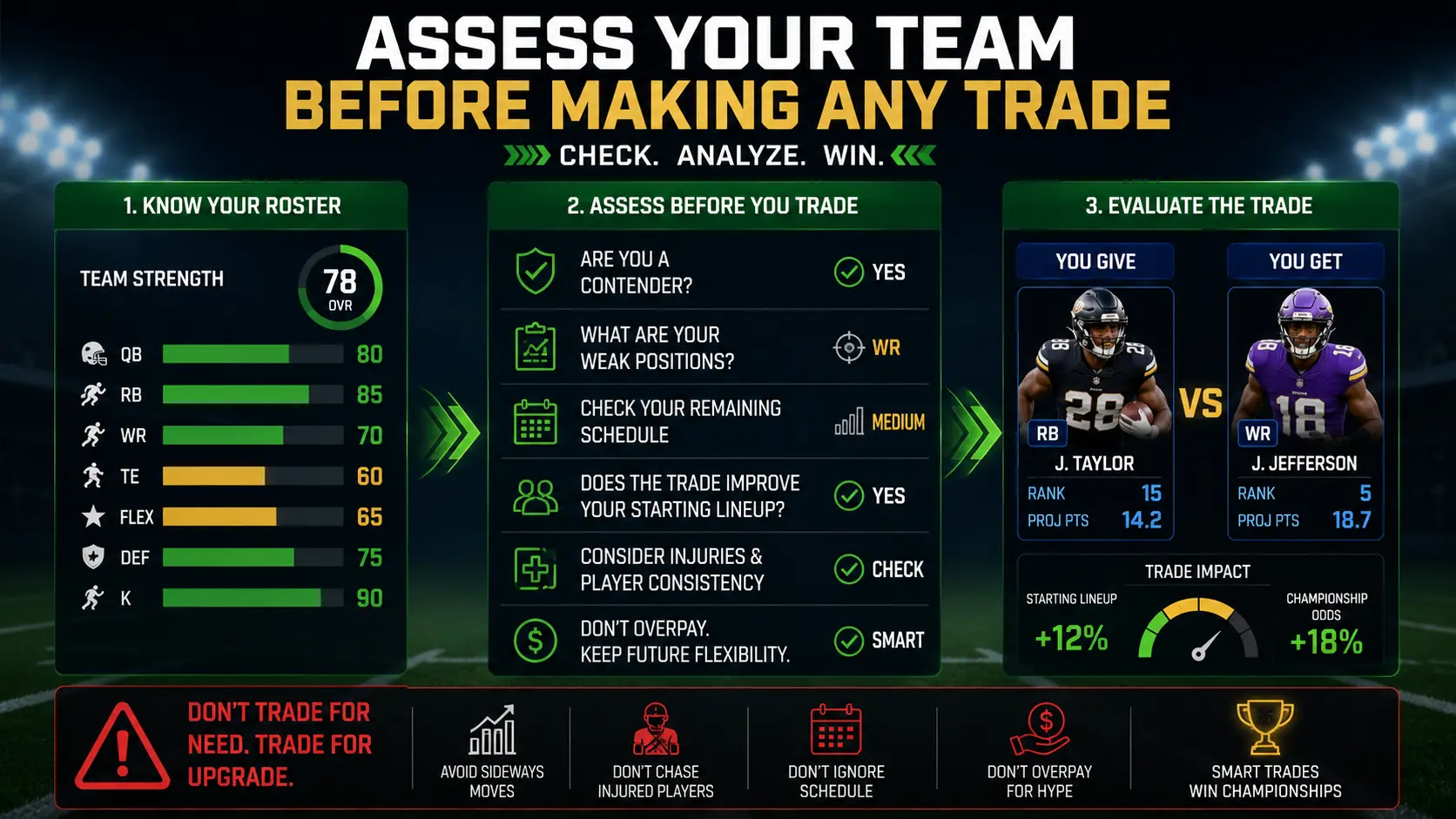
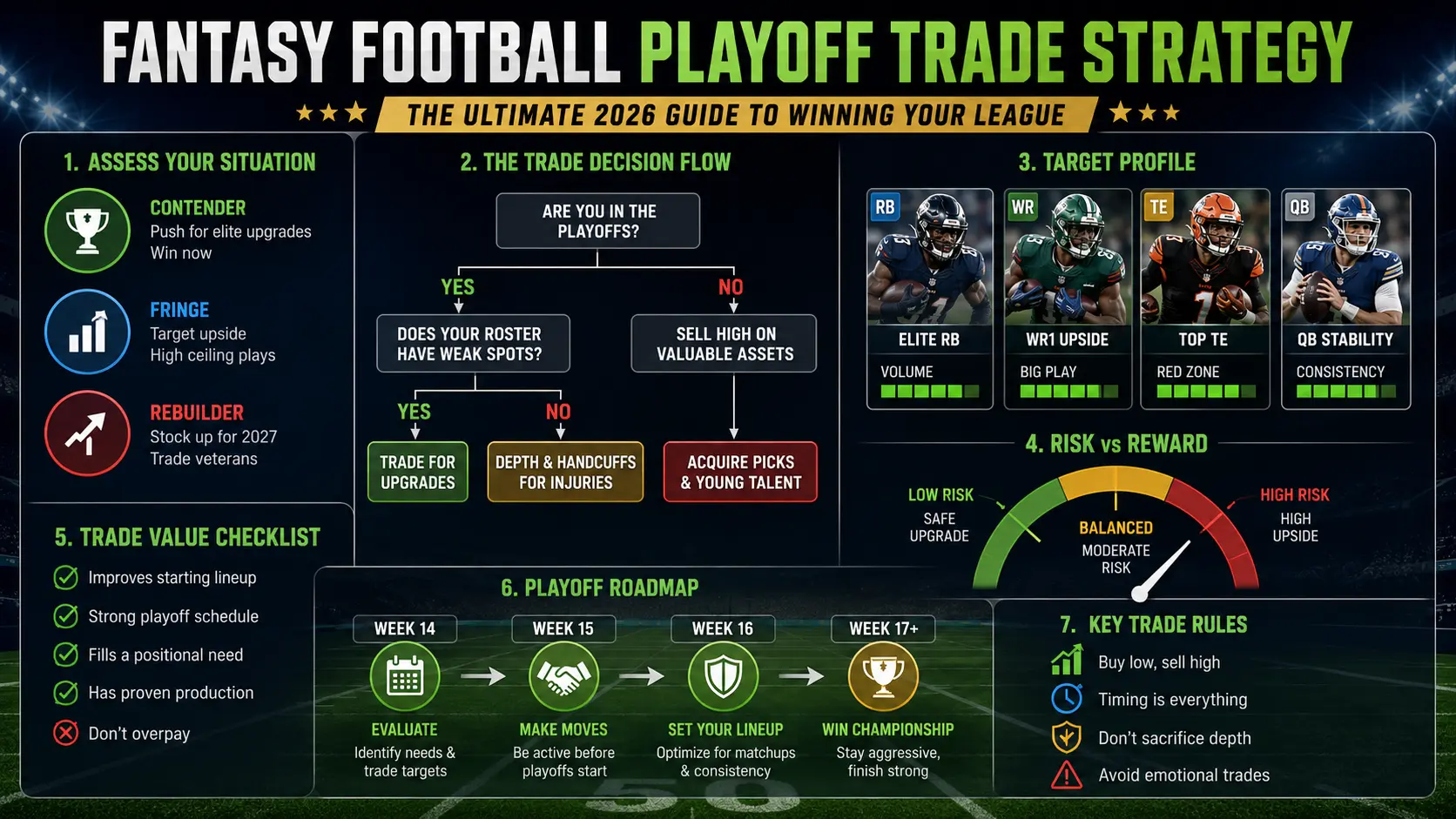
Not every fantasy team should follow the same strategy.
Before sending offers, perform a complete roster assessment.
Step 1: Evaluate Your Record
Ask yourself:
- Am I already locked into the playoffs?
- Am I fighting for a playoff spot?
- Am I rebuilding in a dynasty league?
- Can I afford one bad week?
Your answers determine every trade decision.
Step 2: Identify Your Biggest Weakness
Instead of chasing star names, identify where you’re actually losing weekly points.
Common weaknesses include:
- Weak RB2
- Inconsistent WR3
- Streaming quarterback
- Low-upside flex
- Poor tight end production
- Lack of depth after injuries
Trading simply because a player is popular rarely improves your lineup.
Step 3: Study Your League
Successful managers trade based on opponents’ needs, not their own opinions.
Look for managers who:
- Need running backs
- Lost players to injury
- Have multiple quarterbacks
- Need immediate wins
- Have excess depth at your weakest position
The best trade is one that improves both teams.
The “Fair Trade” Myth
Many fantasy managers reject perfectly reasonable offers because they don’t look equal on paper.
In reality:
A successful trade isn’t one where both players have identical value.
It’s one where both starting lineups become stronger.
Example:
Manager A desperately needs a running back.
Manager B desperately needs wide receiver depth.
A trade may appear uneven according to trade calculators, but it still helps both teams score more fantasy points each week.
Always evaluate trades in the context of roster construction, not just player rankings.
Bubble Team Strategy vs Championship Contender Strategy
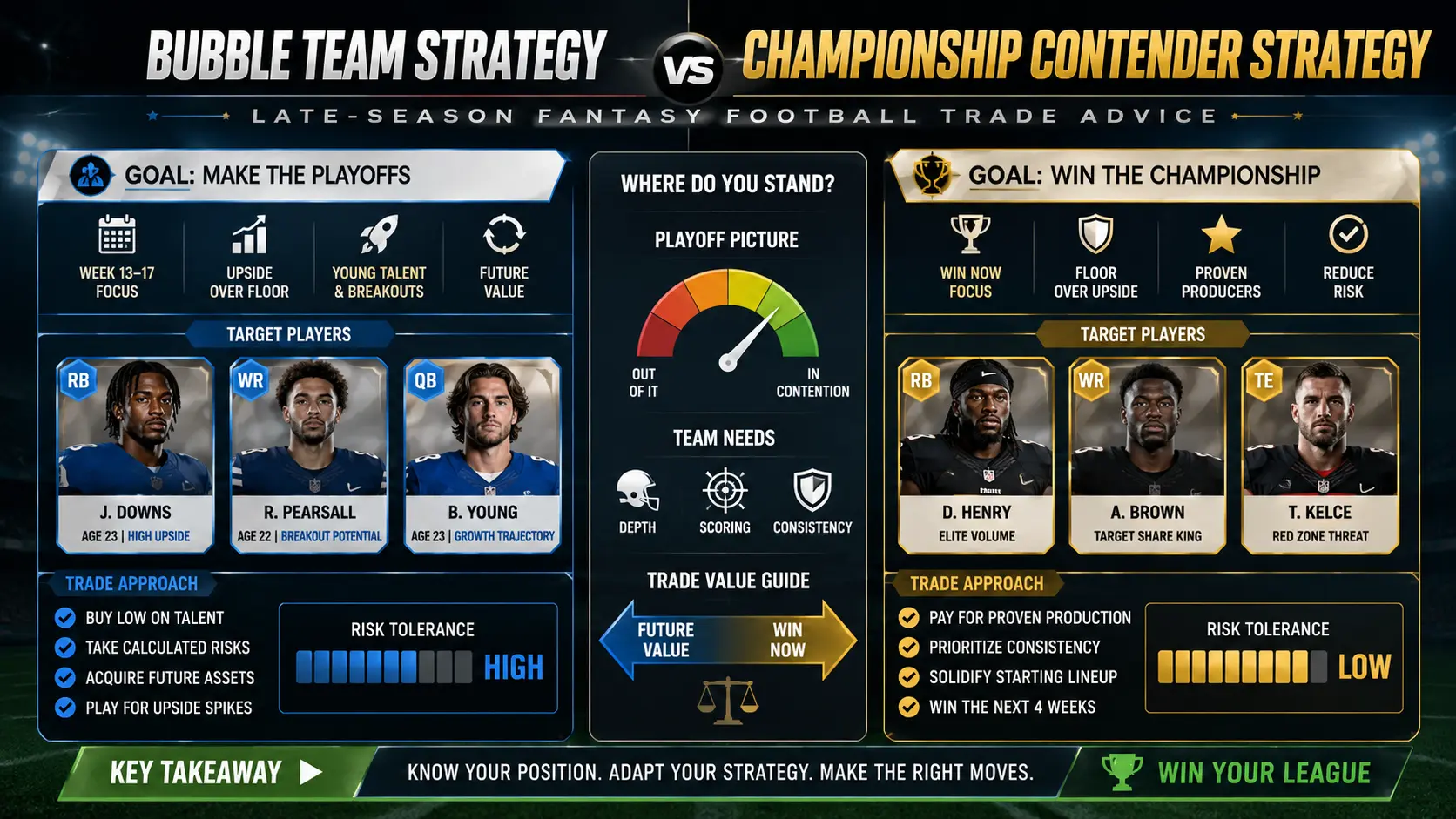
One of the biggest mistakes fantasy managers make is copying advice that doesn’t match their situation.
A manager sitting at 9–1 should trade very differently from someone at 5–5.
Bubble Team Strategy (Need Wins Immediately)
If you’re barely holding onto a playoff spot, future upside matters less than immediate production.
Your priorities should include:
- Consistent weekly starters
- Reliable workloads
- Healthy veterans
- High-floor players
- Avoiding upcoming bye weeks
Target Players Who:
- Receive steady touches
- Rarely leave the field
- Have predictable usage
- Play in productive offenses
Avoid:
- Injured stars
- Long-term stash players
- Boom-or-bust options
- Developmental rookies
Your goal is simple:
Survive long enough to reach the playoffs.
Championship Contender Strategy
Managers comfortably in a playoff position should think completely differently.
Once your postseason berth is secure, the weekly floor becomes less important than the playoff ceiling.
Instead of collecting depth, focus on building an elite starting lineup.
Priorities include:
- Superstar upgrades
- Elite playoff schedules
- High-upside injured players nearing return
- Premium handcuffs
- Multiple playoff defenses
Bench points don’t win championships.
Elite starters do.
Bubble Team vs Contender Strategy
| Strategy | Bubble Team | Contender |
| Main Goal | Win now | Win Weeks 15–17 |
| Best Targets | Reliable starters | League-winning upside |
| Bye Weeks | Avoid | Can tolerate |
| Bench Depth | Important | Less valuable |
| Trade Style | Add multiple contributors | Consolidate into stars |
How to Find Winning Trade Targets
The best late-season fantasy football trade advice isn’t about chasing players who scored 30 fantasy points last week.
It’s about identifying future production before everyone else notices.
Look Beyond Fantasy Points
Fantasy points often hide what’s actually happening.
Instead, evaluate opportunity.
Examples include:
- Snap share
- Route participation
- Target share
- Red-zone opportunities
- Goal-line carries
- Air yards
- Expected Fantasy Points (xFP)
Players producing strong opportunities with disappointing fantasy totals often become the best buy-low candidates.
Study Offensive Trends
Don’t just evaluate players.
Evaluate offenses.
Ask:
- Is the offensive line improving?
- Has the quarterback returned from injury?
- Are coaching tendencies changing?
- Is the pace increasing?
- Are more red-zone trips occurring?
Sometimes the offense improves before fantasy production catches up.
Smart managers buy before the breakout.
Identify Rookie Breakouts
Late in the season, rookie usage often increases dramatically.
Watch for:
- Rising snap percentages
- Increased route participation
- Expanded red-zone usage
- Growing target share
These indicators frequently predict fantasy breakouts before box scores do.
Exploit Opponent Psychology
Fantasy football is as much psychology as statistics.
Many managers refuse to trade players they drafted early, even when evidence suggests declining value.
This is known as the anchoring effect.
You can use it to your advantage by:
- Targeting frustrated managers after poor performances.
- Buying talented players coming off difficult defensive matchups.
- Selling overperforming players after unsustainable touchdown streaks.
- Offering solutions to managers dealing with multiple injuries or bye-week issues.
Successful negotiation isn’t about “winning” a trade; it’s about solving another manager’s problem while improving your own roster.
Advanced Analytics That Smart Managers Use Before Trading
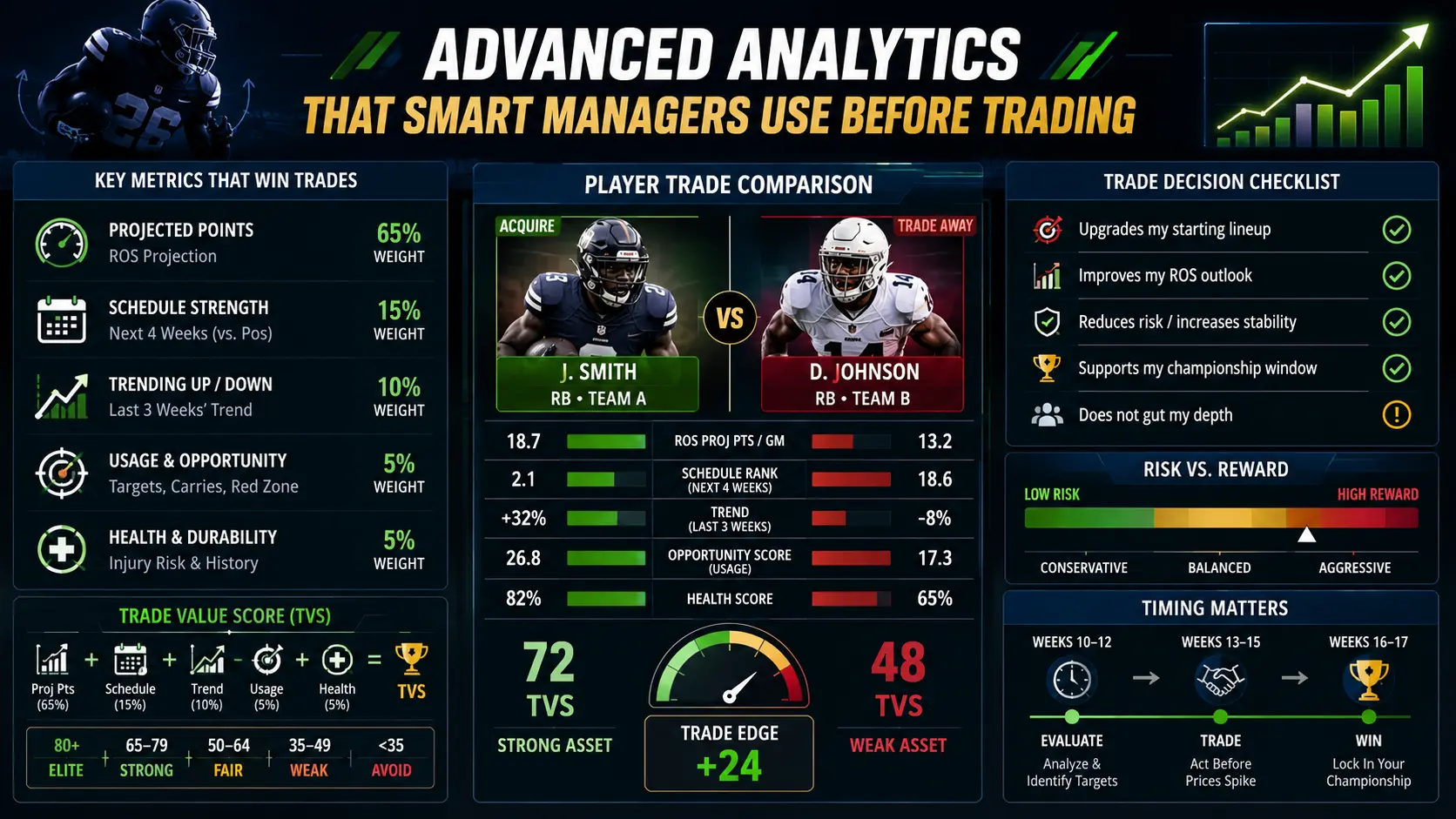
One of the biggest differences between casual fantasy managers and league champions is how they evaluate players. Most people look at last week’s fantasy points. Experienced managers dig into the metrics that predict future production.
If you want the best late-season fantasy football trade advice, stop chasing box scores and start analyzing opportunity.
Expected Fantasy Points (xFP)
Expected Fantasy Points (xFP) estimate how many fantasy points a player should have scored based on their workload rather than actual results.
A player with 20 expected points but only 11 fantasy points may be an excellent buy-low target because poor touchdown luck or game script is masking strong usage.
Look for players who consistently outperform their opportunity rather than relying on unsustainable big plays.
| Metric | What It Measures | How to Use It |
| Expected Fantasy Points (xFP) | Underlying opportunity | Buy players whose actual points trail xFP |
| Target Share | Percentage of team targets | A higher share usually means stable production |
| Route Participation | Routes run on passing plays | Identifies receivers with expanding roles |
| Red Zone Opportunities | Scoring chances | Predict future touchdowns |
| Yards Per Route Run (YPRR) | Receiver efficiency | Great for spotting breakout WRs |
| High-Value Touches | Goal-line carries + receptions | More valuable than empty rushing volume |
Key Takeaway
Opportunity is more predictive than touchdowns. Touchdowns fluctuate, but usage tends to remain stable.
Watch for Target Share Growth
Instead of asking:
“Did this receiver score?”
Ask:
“Did this receiver become more involved?”
A wide receiver sees:
- 28% target share
- Full-time routes
- Multiple red-zone targets
is often a better trade target than someone living off one long touchdown every week.
Don’t Ignore Offensive Line Trends
Running backs are heavily influenced by offensive line play.
Pay attention to:
- Injured linemen returning
- Improved run-blocking grades
- Increased rushing efficiency
- Better red-zone success
An improving offensive line can dramatically increase a running back’s fantasy value during the playoff push.
Spot Rookie Breakouts Before Everyone Else
Late in the NFL season is when many rookie players finally earn larger roles.
Watch for:
- Rising snap counts
- More route participation
- Increased red-zone involvement
- Better quarterback chemistry
- Higher usage on third downs
These trends often appear two or three weeks before fantasy production explodes.
Buying early is how championships are won.
Evaluate Playoff Schedules, Not Just Season Rankings
Many fantasy managers trade for the biggest names without checking who those players face during the fantasy playoffs.
That mistake can cost championships.
Why Weeks 15–17 Matter Most
Fantasy championships are usually decided during Weeks 15–17.
A superstar facing three elite defenses may score fewer points than a slightly lower-ranked player with favorable matchups.
Always compare:
- Run defense rankings
- Pass defense rankings
- Pressure rates
- Weather conditions
- Dome vs. outdoor games
Dome Games vs Outdoor Games
Late-season weather becomes a significant factor.
Outdoor games may include:
- Snow
- Heavy wind
- Freezing temperatures
- Rain
These conditions often reduce passing efficiency while increasing rushing volume.
Meanwhile, dome teams enjoy consistent offensive environments throughout the fantasy playoffs.
If two players have similar value, the player with indoor playoff games may offer a higher weekly ceiling.
Bye Weeks Still Matter
Even late in the season, bye weeks can influence trade decisions.
Bubble Teams
Avoid acquiring players who still have an upcoming bye unless the upgrade is substantial.
Contenders
You can often buy stars during their bye week because frustrated managers need immediate points.
That temporary discount creates value.
Championship Optimization Tactics
Once you’ve secured a playoff spot, your strategy should shift from surviving to maximizing championship odds.
The goal is no longer accumulating depth.
The goal is to build the strongest possible starting lineup.
Use Consolidation Trades
One of the most effective late-season fantasy football trade advice strategies is consolidating depth.
Instead of keeping five good bench players who rarely start, package them into one elite player.
Example
Instead of holding:
- WR24
- RB26
Trade both for:
- RB8
Although the trade calculator may say you “overpaid,” your weekly lineup becomes stronger.
Bench points don’t count.
Elite starters do.
The Portfolio Consolidation Framework
Use this simple checklist before every trade.
Step 1
Identify players who rarely start.
Step 2
Package two quality assets together.
Step 3
Target the manager lacking depth.
Step 4
Acquire the best player in the deal.
Step 5
Use the newly opened roster spot to claim a high-upside waiver player.
This strategy increases lineup efficiency while creating flexibility.
High-Value Handcuff Strategy
Early in the season, handcuffs are optional.
Late in the season, they’re league winners.
Elite backup running backs become incredibly valuable because:
- Injuries increase
- Workloads rise
- The weather favors rushing
- Playoff volume becomes more predictable
Whenever possible, roster premium backups tied to elite rushing offenses.
Playoff DST Stacking
Most fantasy managers stream one defense every week.
Championship contenders think several weeks ahead.
Instead of carrying one defense, consider rostering two defenses with favorable playoff schedules.
Benefits
- Avoid terrible matchups
- Maximize weekly defensive scoring
- Prevent opponents from claiming elite streaming options
This strategy becomes especially valuable once bye weeks have ended.
Negotiate Smarter Trades
Fantasy football is a people game as much as a numbers game.
The best managers understand how to negotiate.
Target the Right Manager
Don’t blindly send offers to everyone.
Instead, identify league mates who:
- Need immediate wins
- Lost a starter to injury
- Have excess depth
- Need a quarterback
- Need running backs
- Are overloaded at one position
Trading becomes much easier when you’re solving another manager’s problem.
Use the Trade Block
Many fantasy platforms allow managers to place players on a public trade block.
Use this feature strategically.
Instead of negotiating privately with one manager, create competition.
Multiple interested managers often increase the value of your player.
Avoid the Sunk Cost Fallacy
One of the biggest late-season mistakes is refusing to move disappointing stars simply because you drafted them early.
Draft position no longer matters.
Only future fantasy production matters.
Ask yourself:
“If this player were on waivers today, would I still value him this highly?”
If the answer is no, don’t let draft capital influence your decision.
Consider League Politics
Not every league operates the same way.
Some leagues have:
- Commissioner approval
- League voting
- Trade veto periods
- Anti-tanking rules
Communicate openly when proposing larger trades.
Transparent discussions reduce unnecessary vetoes and build trust throughout the league.
Advanced Tips for Experienced Fantasy Managers
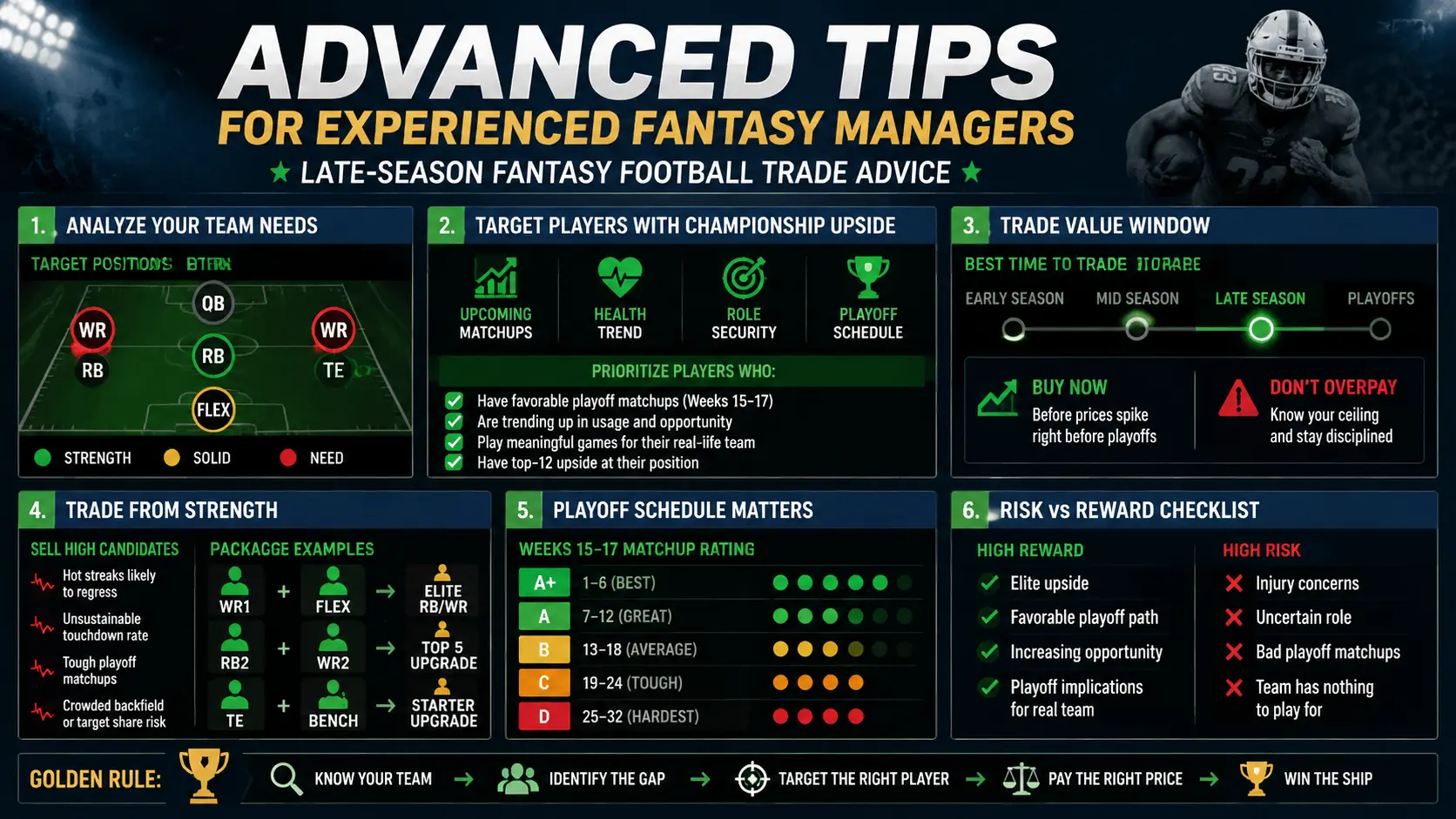
If you’re a regular playoff contender, the basic buy-low and sell-high advice isn’t enough. The biggest edge comes from understanding game theory, roster construction, and timing.
Buy Future Production, Not Past Results
Many managers overreact to one bad game or one monster performance.
Instead, target players who have:
- Stable snap counts
- Consistent target share
- Strong playoff schedules
- Improving offensive situations
- Positive regression candidates
Likewise, consider selling players whose fantasy value depends on an unsustainable touchdown streak rather than consistent opportunity.
Use the “Roster Runway Assessment” Framework
Before making any trade, ask these five questions:
- Does this player improve my starting lineup?
- Will I realistically start this player during Weeks 15–17?
- Does this trade free up a bench spot?
- Does it improve my playoff ceiling?
- Does it protect me from injuries?
If the answer is “yes” to at least four questions, the trade is usually worth pursuing.
Adapt to League Format
Not every fantasy football league values players the same way.
Redraft Leagues
- Prioritize immediate production.
- Don’t worry about long-term value.
- Be aggressive before the trade deadline.
Dynasty Leagues
If you’re rebuilding:
- Trade aging veterans for future draft picks.
- Target injured young stars at discounted prices.
- Accumulate long-term assets.
If you’re contending:
- Don’t be afraid to trade future picks for elite veterans if they significantly improve your championship odds.
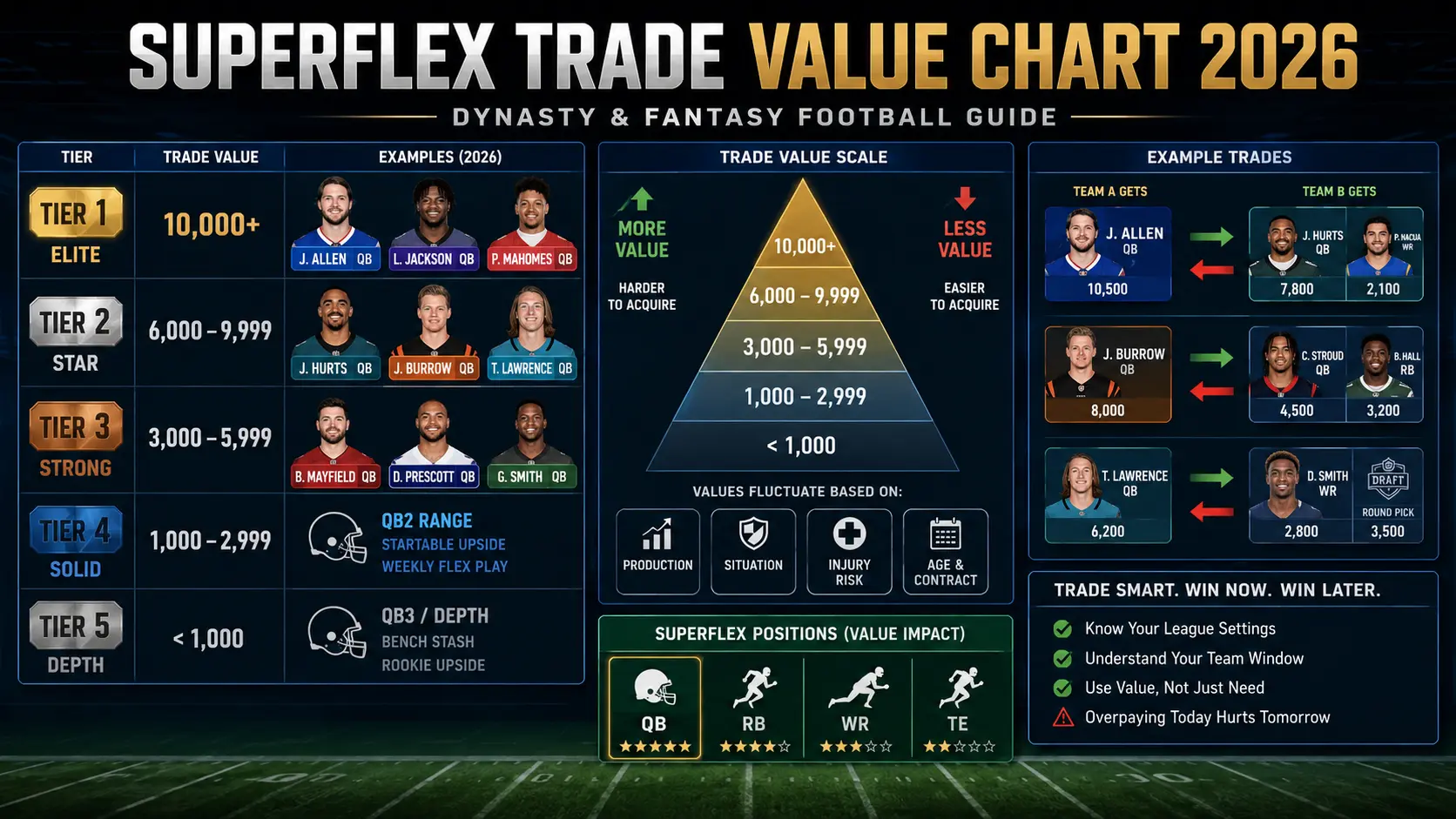
Superflex Leagues
Quarterbacks carry much more value.
Even backup quarterbacks can become valuable trade targets late in the season if injuries create new starters.
Avoid trading away quarterback depth unless you’re receiving a premium return.
Common Mistakes to Avoid
Even experienced managers make costly mistakes during the fantasy trade season.
Here are the biggest ones.
1. Waiting Until the Last Minute
The closer you get to the fantasy football trade deadline, the fewer opportunities you’ll have.
Start discussions at least one or two weeks before your deadline.
2. Chasing Last Week’s Points
One explosive game doesn’t necessarily signal a breakout.
Always examine:
- Snap share
- Usage
- Matchups
- Target share
- Offensive role
before making a trade.
3. Ignoring Playoff Schedules
Many managers acquire stars without considering Weeks 15–17.
A slightly lower-ranked player with excellent playoff matchups can easily outperform a superstar facing elite defenses.
4. Refusing to Consolidate Depth
Keeping six good bench players rarely helps during the fantasy playoffs.
Package depth into elite starters whenever possible.
5. Forgetting About Handcuffs
Losing your RB1 during the fantasy playoffs can destroy your championship hopes.
If possible, roster elite backup running backs, especially those behind high-volume rushing attacks.
6. Trusting Trade Calculators Blindly
Trade calculators provide useful estimates, but they don’t account for:
- Team needs
- League settings
- Playoff schedules
- Injury risk
- Positional scarcity
Use them as a guide, not as the final answer.
7. Trading Based on Emotion
Avoid making trades because:
- You’re frustrated.
- A player disappointed you.
- You lost a close matchup.
- A league mate is hyping someone.
Make decisions using data, not emotion.
Recommended Tools and Resources
The following tools can help you make smarter late-season trade decisions.
| Tool | Best For |
| FantasyPros Trade Analyzer | Evaluating trade offers |
| KeepTradeCut | Dynasty trade values |
| PlayerProfiler | Advanced player metrics |
| Pro Football Focus (PFF) | Offensive line and player grades |
| Pro Football Reference | Historical statistics |
| NFL Injury Report | Injury updates |
| FantasyCalc | Community trade values |
Use multiple resources instead of relying on a single ranking system.
Future Trends in Fantasy Football Trading
Fantasy football strategy continues to evolve.
Over the next few seasons, expect more managers to rely on:
- AI-powered trade analyzers
- Predictive player usage models
- Advanced metrics such as xFP and target share
- Strength-of-schedule forecasting
- Automated lineup optimization
- Injury probability models
- Real-time trade value adjustments
Managers who understand these tools early will gain a competitive advantage over leagues that still rely on traditional rankings.
Conclusion
Great fantasy managers don’t win. They draft perfectly, they win because they adapt.
The best late-season fantasy football trade advice focuses on future opportunity rather than past production. Before making any trade, evaluate your league standing, understand your trade deadline, analyze playoff schedules, and prioritize players with strong underlying usage instead of recent touchdowns.
If you’re fighting for a playoff spot, seek reliable weekly contributors who can help you qualify. If you’ve already secured a postseason berth, consolidate bench depth into elite starters, stash high-upside handcuffs, and prepare for Weeks 15–17.
Remember, every trade should strengthen your starting lineup, not simply add recognizable names. By combining smart analytics, strategic negotiation, and disciplined roster management, you’ll put yourself in the best position to compete for a fantasy football championship.
Frequently Asked Questions
1. When should I stop making trades in fantasy football?
Ideally, complete your major trades one to two weeks before your league’s trade deadline. This gives enough time for trades to process and avoids missing the deadline because of league review periods.
2. Is it too late to trade in fantasy football?
Not necessarily. As long as your league’s trade deadline hasn’t passed, late-season trades can significantly improve your playoff chances. Focus on players with favorable remaining schedules and clear starting roles.
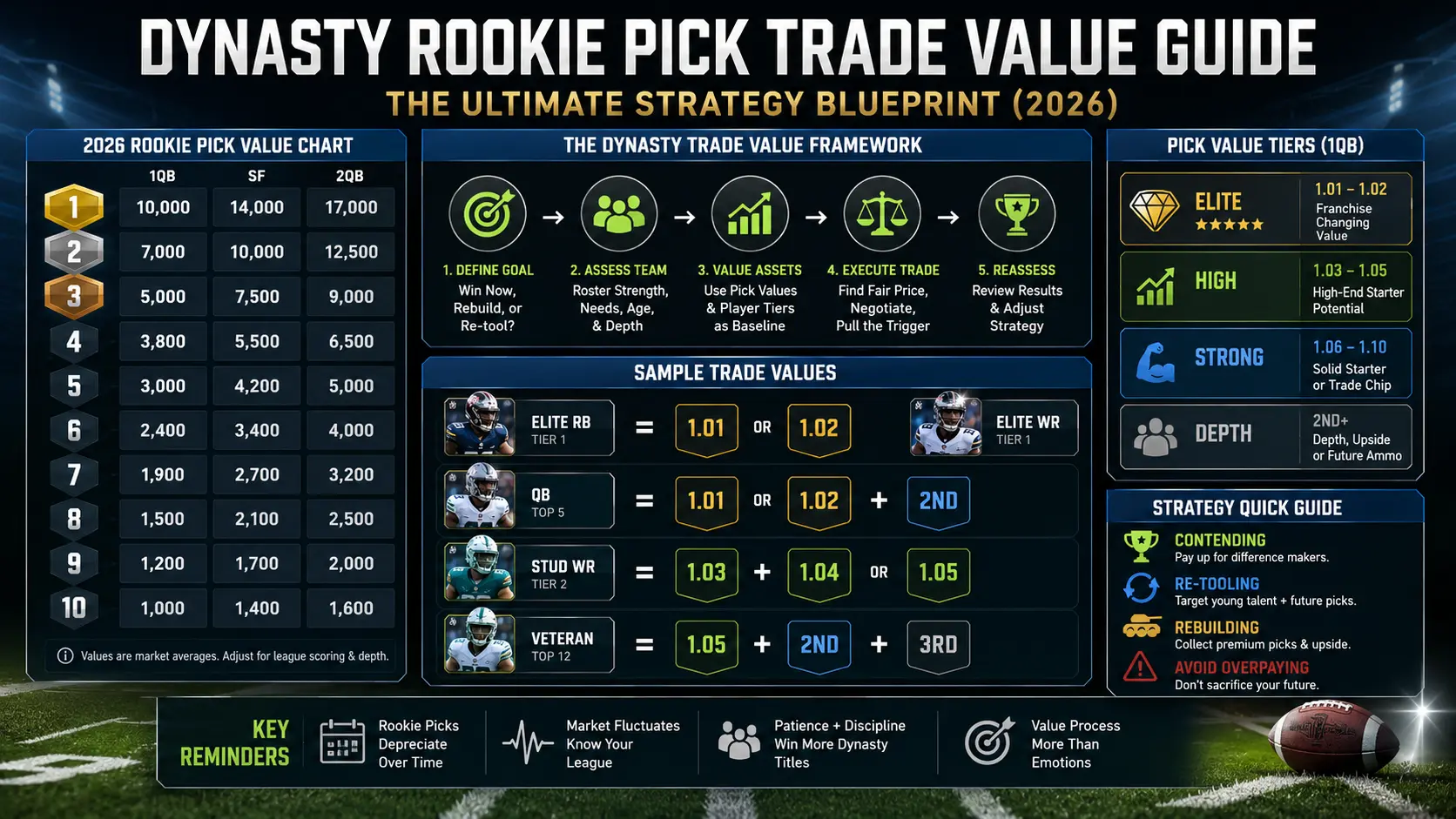
3. Should I trade future draft picks in a dynasty league?
If you’re a legitimate championship contender, trading future picks for elite veterans can be worthwhile. Rebuilding teams, however, should prioritize acquiring draft capital and younger players with long-term upside.
4. What is the best late-season fantasy football trade strategy?
The best strategy depends on your record. Bubble teams should target reliable, high-floor players who can deliver immediate points, while contenders should consolidate depth into elite starters and prepare for favorable playoff matchups.
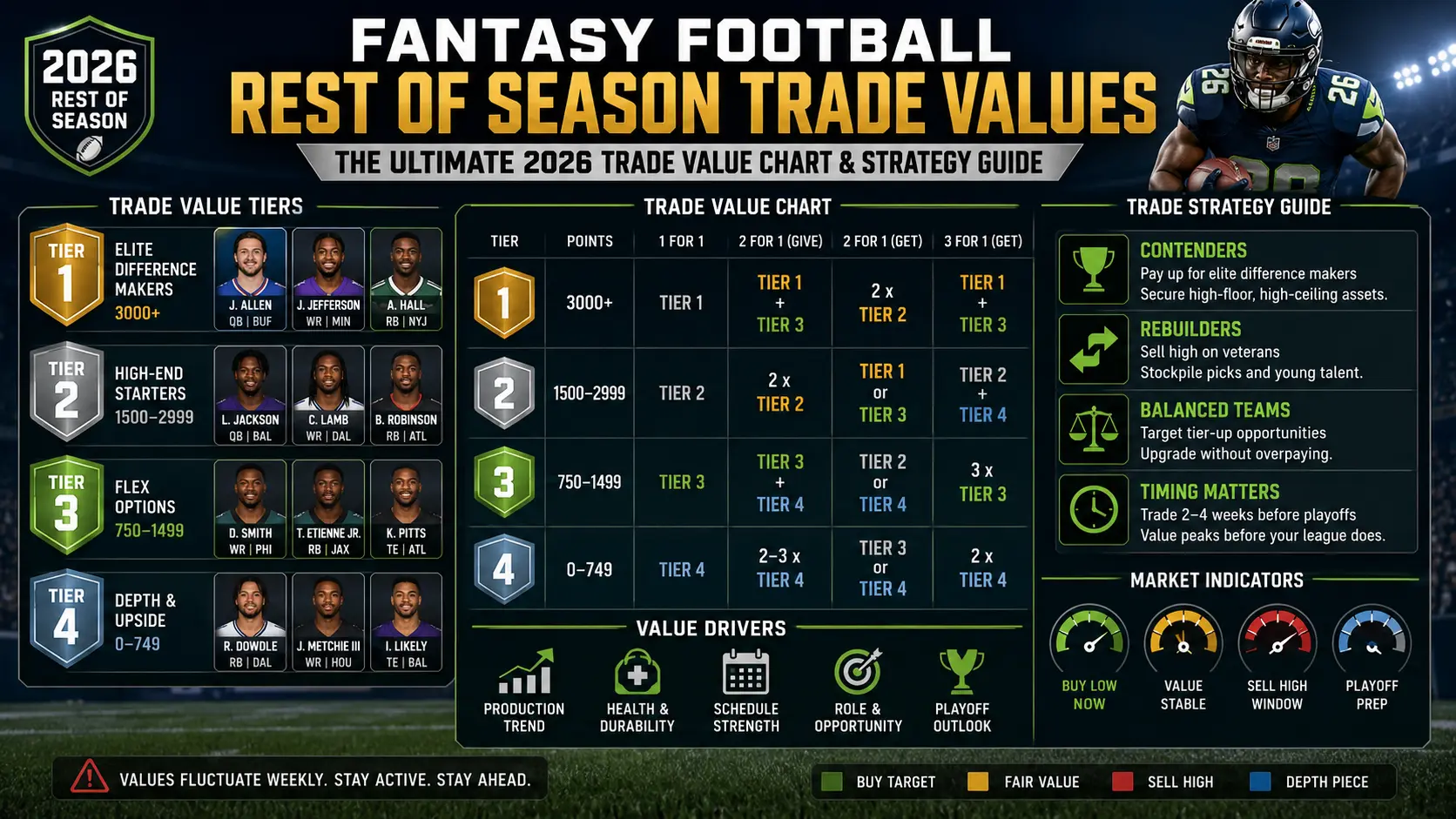
5. Are 2-for-1 trades worth it?
Yes, especially for contenders. Trading two good bench players for one elite starter improves your weekly lineup and opens an extra roster spot for waiver pickups or valuable handcuffs.
6. How important are playoff schedules?
Very important. Fantasy championships are often decided during Weeks 15–17, so targeting players with favorable playoff matchups can provide a significant edge over managers focused only on season-long rankings.
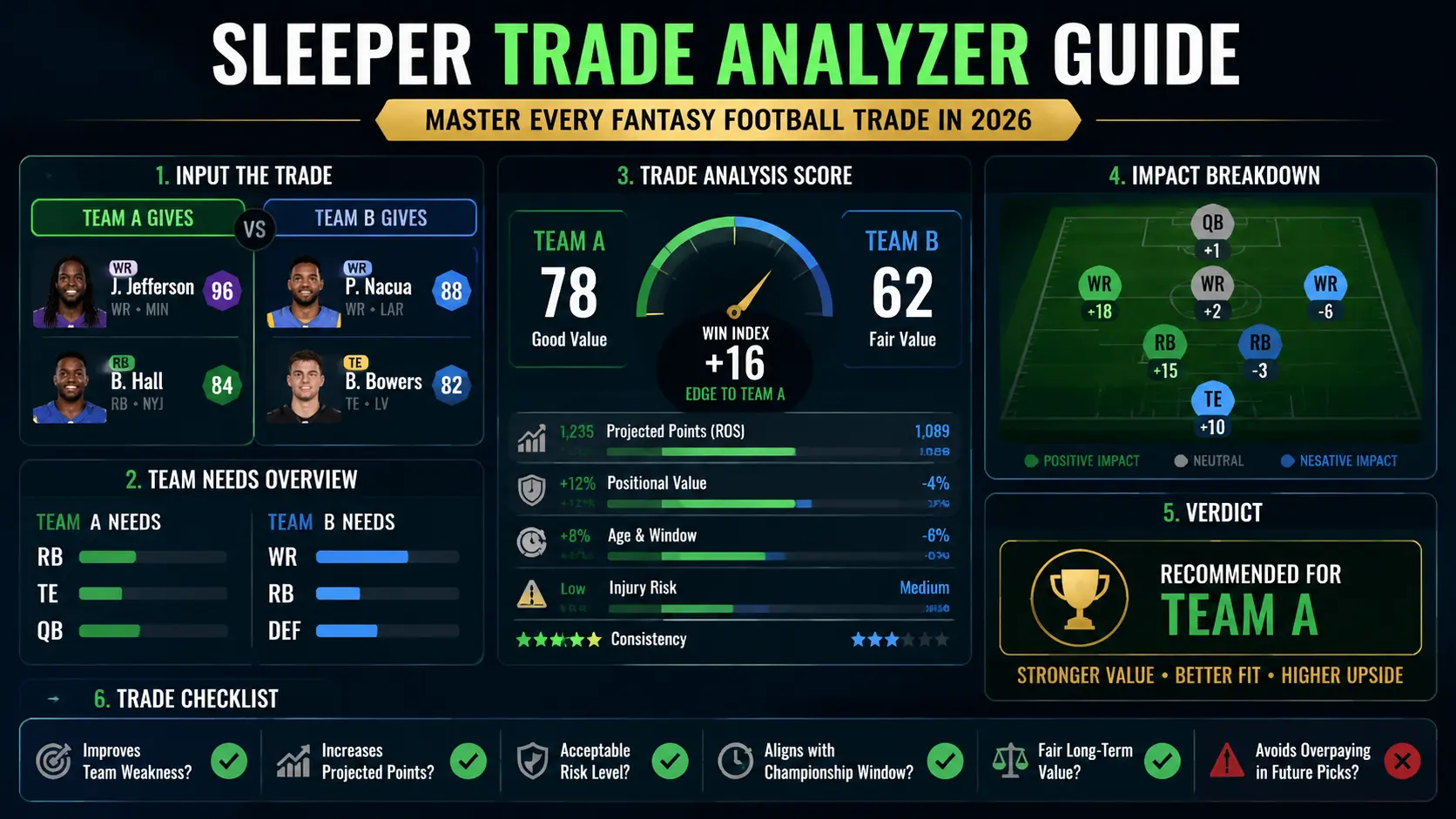
7. Should I trust fantasy football trade calculators?
Trade calculators are helpful starting points, but they don’t account for league settings, roster needs, playoff schedules, or positional scarcity. Always use them alongside your own analysis.
8. What metrics should I prioritize before making a trade?
Focus on predictive metrics such as Expected Fantasy Points (xFP), target share, route participation, red-zone opportunities, snap percentage, and offensive trends. These indicators provide a clearer picture of future fantasy production than recent box scores alone.