Introduction
Winning dynasty fantasy football leagues isn’t just about drafting elite rookies it’s about understanding when rookie picks gain value, when they lose value, and how to trade them more effectively than your league mates. That’s exactly where a Dynasty Rookie Pick Trade Value Guide becomes one of the most valuable tools in your arsenal.
Many fantasy managers rely solely on a static dynasty rookie pick value chart, assuming every first-round pick is worth the same throughout the year. In reality, rookie picks behave much like financial assets. Their value constantly changes based on the NFL calendar, league format, draft hype, team needs, and market psychology.
Understanding dynasty rookie pick trade value means looking beyond numbers on a calculator. You must consider league size, Superflex scoring, Tight End Premium, future draft class strength, roster construction, and even the timing of your trade. A manager who buys rookie picks during the regular season often pays far less than one who waits until draft weekend.
This Dynasty Rookie Pick Trade Value Guide explains how to evaluate rookie selections like an experienced dynasty manager. You’ll learn how to maximize draft capital, avoid common valuation mistakes, exploit market inefficiencies, and make smarter trades that strengthen your roster for years to come.
Whether you’re rebuilding with multiple first-round picks or pushing for a championship, this guide will help you turn draft capital into long-term dynasty success.
Table of Contents
- What Is a Dynasty Rookie Pick Trade Value Guide?
- Understanding Rookie Pick Value as an Asset
- The Rookie Pick Value Curve
- Master Dynasty Rookie Pick Value Chart
- League Format Adjustments
- Superflex vs 1QB Values
- Trading Future Picks
- Advanced Trade Strategies
- Common Mistakes
- Expert Tips
- FAQs
TL;DR
- Rookie picks reach their highest value during the NFL Draft and lowest value during the fantasy regular season.
- Never evaluate picks using a static dynasty rookie trade value chart alone.
- Superflex, Tight End Premium, league size, and roster depth dramatically change pick values.
- Future first-round picks should always be adjusted based on projected team strength.
- Successful dynasty managers buy picks cheaply during the season and sell them when market demand peaks.
What Is a Dynasty Rookie Pick Trade Value Guide?
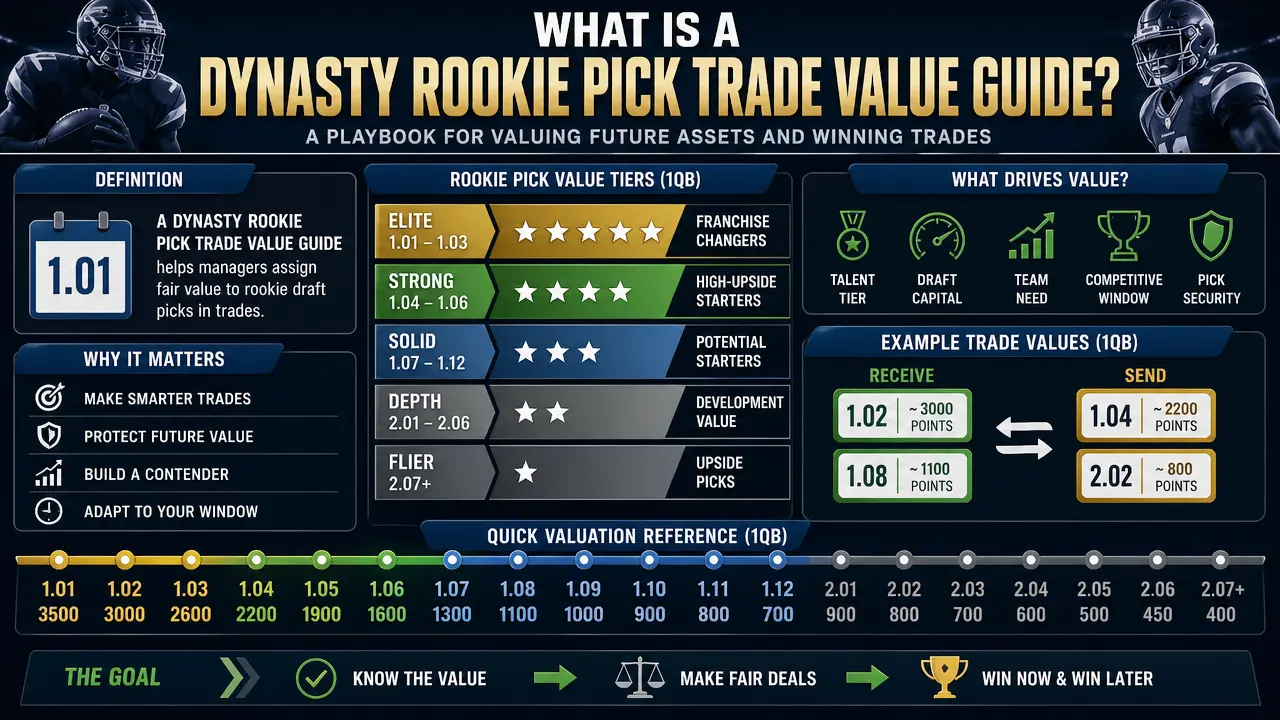
A Dynasty Rookie Pick Trade Value Guide is a framework used by fantasy football managers to estimate the market value of rookie draft selections. Unlike traditional trade charts, it adjusts values based on league format, draft class strength, roster construction, timing, and market demand to help managers make smarter dynasty trades.
Think of rookie picks as investments rather than guaranteed players.
When you own the 1.03, you don’t actually own a rookie you own the right to draft one. That flexibility is valuable because every manager in your league values prospects differently.
This is why experienced dynasty players often refer to rookie picks as the most liquid assets in fantasy football.
Unlike veterans:
- Rookie picks don’t get injured.
- Rookie picks don’t lose playing time.
- Rookie picks don’t age.
- Rookie picks increase in value as the draft approaches.
Understanding this concept is the foundation of every successful dynasty rookie pick trade value guide.
The Core Economics of Dynasty Draft Capital
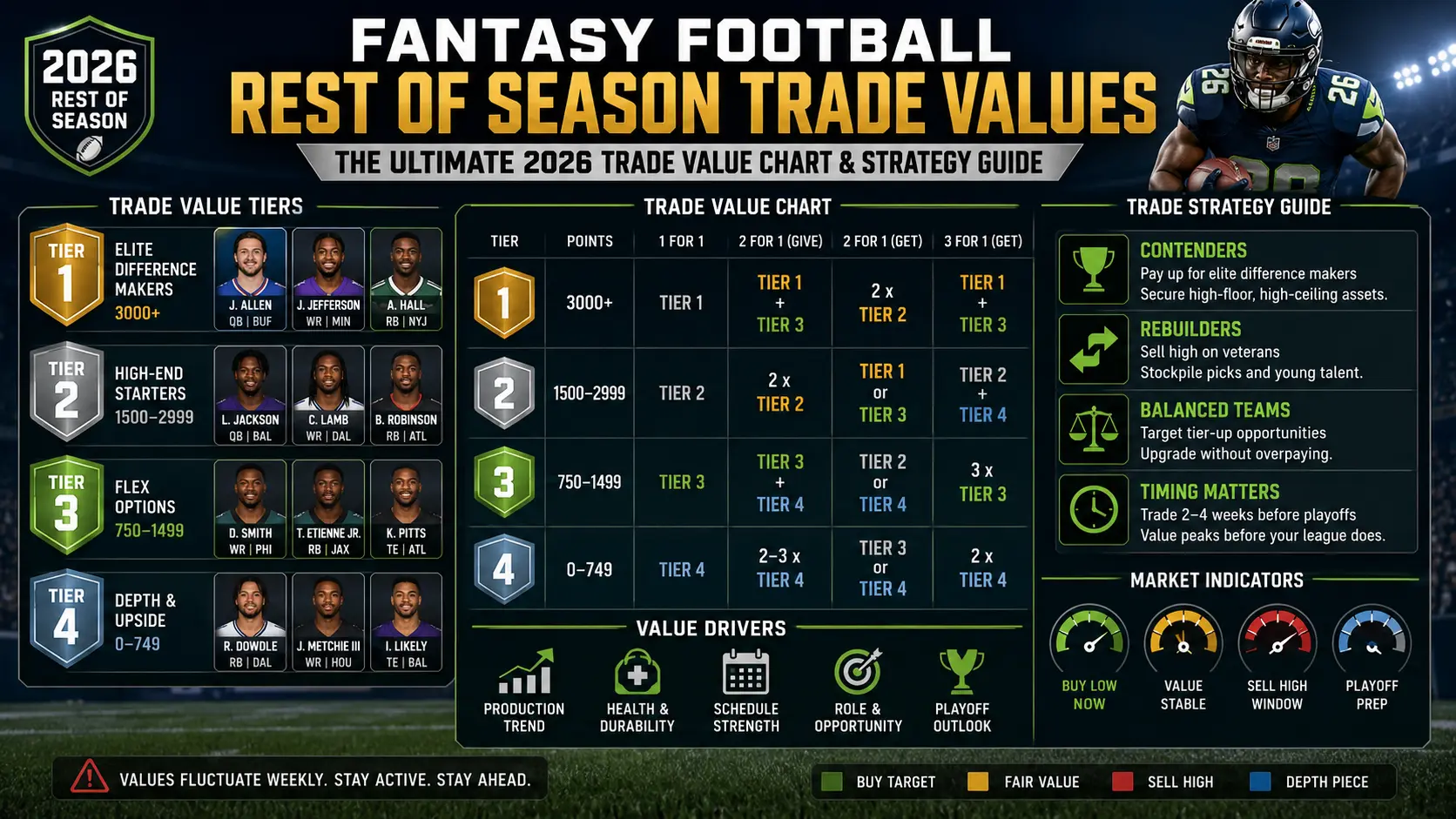
Most websites publish a simple dynasty rookie pick value chart with assigned numbers for each draft selection.
While useful as a starting point, these charts ignore the economic principles that truly drive dynasty markets.
Elite dynasty managers evaluate draft picks based on four core factors:
| Factor | Why It Matters |
| Scarcity | Elite picks are limited every season. |
| Timing | Pick values change throughout the year. |
| Market Demand | Draft hype creates price inflation. |
| League Context | Different league formats produce different values. |
Instead of asking:
“What is Pick 1.05 worth?”
Ask:
“What is Pick 1.05 worth today, in my league, to this manager?”
That subtle shift separates average dynasty players from championship contenders.
Understanding Time-Decay Asset Pricing
One of the biggest content gaps across most dynasty rookie draft pick trade value chart articles is failing to explain why pick values constantly change.
Imagine rookie picks as stock options.
Their price fluctuates throughout the year.
Annual Rookie Pick Value Cycle
| Time of Year | Pick Value |
| May (NFL Draft) | ★★★★★ Highest |
| June | ★★★★☆ |
| July | ★★★★☆ |
| August | ★★★☆☆ |
| September | ★★☆☆☆ |
| October | ★☆☆☆☆ Lowest |
| November | ★★☆☆☆ |
| December | ★★★☆☆ |
| January | ★★★★☆ |
| February | ★★★★☆ |
| March | ★★★★★ |
| April | ★★★★★ Peak |
This simple cycle explains why experienced dynasty managers buy future picks during the fantasy season rather than waiting until rookie fever inflates prices.
Why Rookie Picks Peak Before the Draft
Every offseason follows the same pattern.
NFL Combine performances create excitement.
Mock drafts dominate fantasy discussions.
Prospect rankings change weekly.
Fantasy podcasts hype sleepers.
By April and May, managers become emotionally attached to prospects they’ve never seen play an NFL snap.
That emotional demand drives rookie pick prices to their annual high.
This is why championship contenders often trade future first-round picks during the regular season, while rebuilding teams patiently hold them until draft season.
The Biggest Mistake Dynasty Managers Make
One of the costliest mistakes is trading rookie picks based solely on today’s production needs.
For example:
You are 6–1 and need a running back.
Another manager offers a veteran RB for your future first-round pick.
Many managers accept immediately.
However, history shows that future first-round picks usually appreciate over the next six to eight months. Unless that veteran significantly increases your championship odds, you’re likely selling an appreciating asset at its annual low.
The best dynasty managers think like investors, not gamblers.
They ask:
- Is this pick likely to gain value?
- Can I wait until draft season?
- Does this trade improve my championship probability enough to justify losing future flexibility?
Those questions often prevent costly mistakes.
Master Dynasty Rookie Pick Value Chart
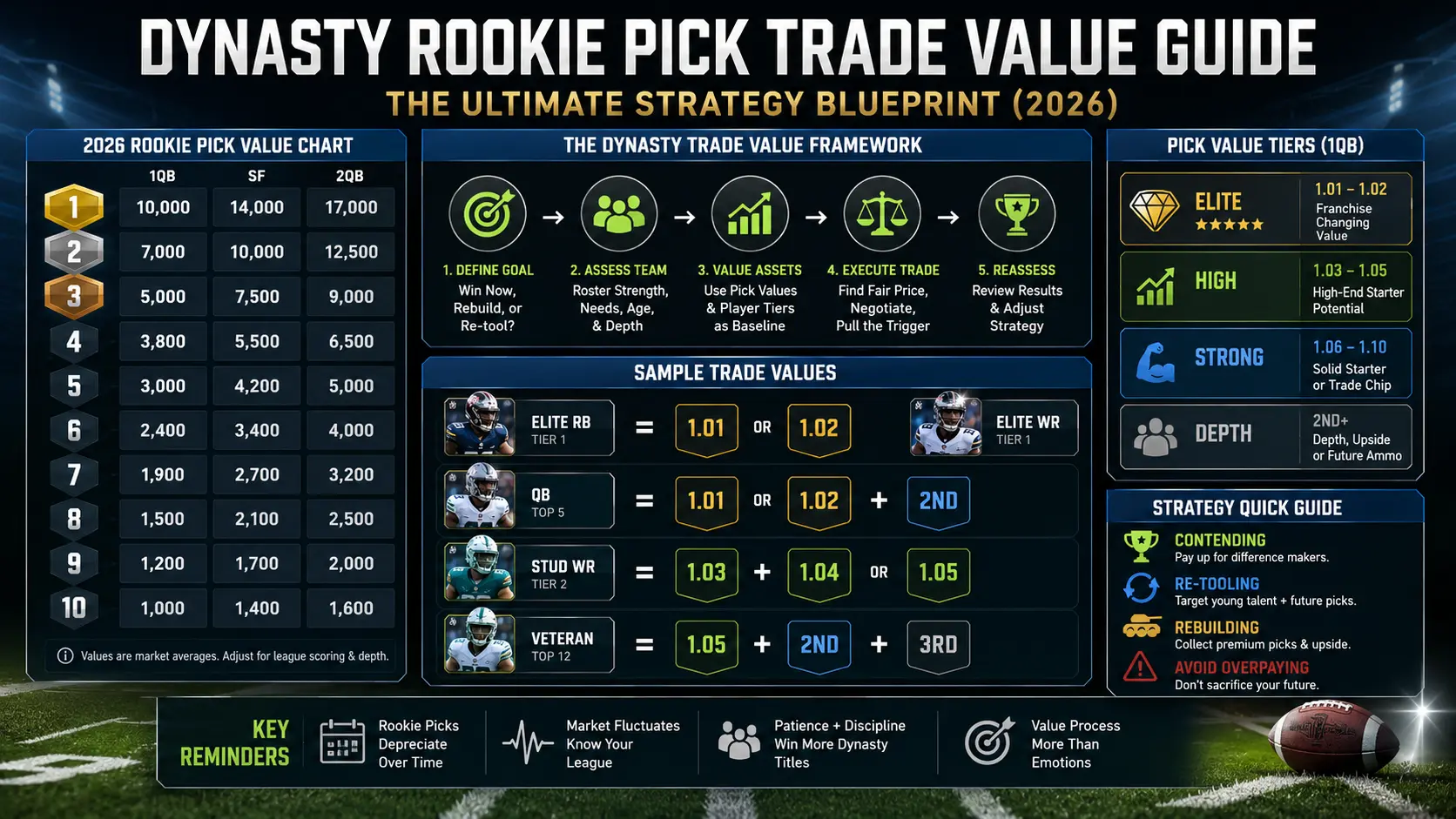
Every dynasty rookie pick trade value guide should begin with a baseline value chart. However, remember that these numbers are starting points not absolute truths. Your league settings, roster construction, and market conditions should always influence the final valuation.
Baseline Dynasty Rookie Pick Value Chart (12-Team League)
| Rookie Pick Tier | Trade Value | Typical Equivalent |
| 1.01–1.03 | Elite | Franchise QB or young WR1 |
| 1.04–1.06 | Very High | Young top-20 dynasty asset |
| 1.07–1.09 | High | Proven starter or future 1st + player |
| 1.10–1.12 | Strong | Reliable veteran with upside |
| Early 2nd | Medium | Flex-level starter |
| Mid 2nd | Moderate | Young breakout candidate |
| Late 2nd | Depth | Bench contributor |
| 3rd Round | Low | Developmental prospect |
| 4th Round | Lottery Ticket | Taxi squad stash |
Key Takeaway: The gap between tiers is often more important than the gap between individual picks. A move from 1.03 to 1.06 may cost far more than moving from 1.08 to 1.10 because elite prospect tiers typically end early.
League Size Adjustments: Why One Chart Doesn’t Fit Every League
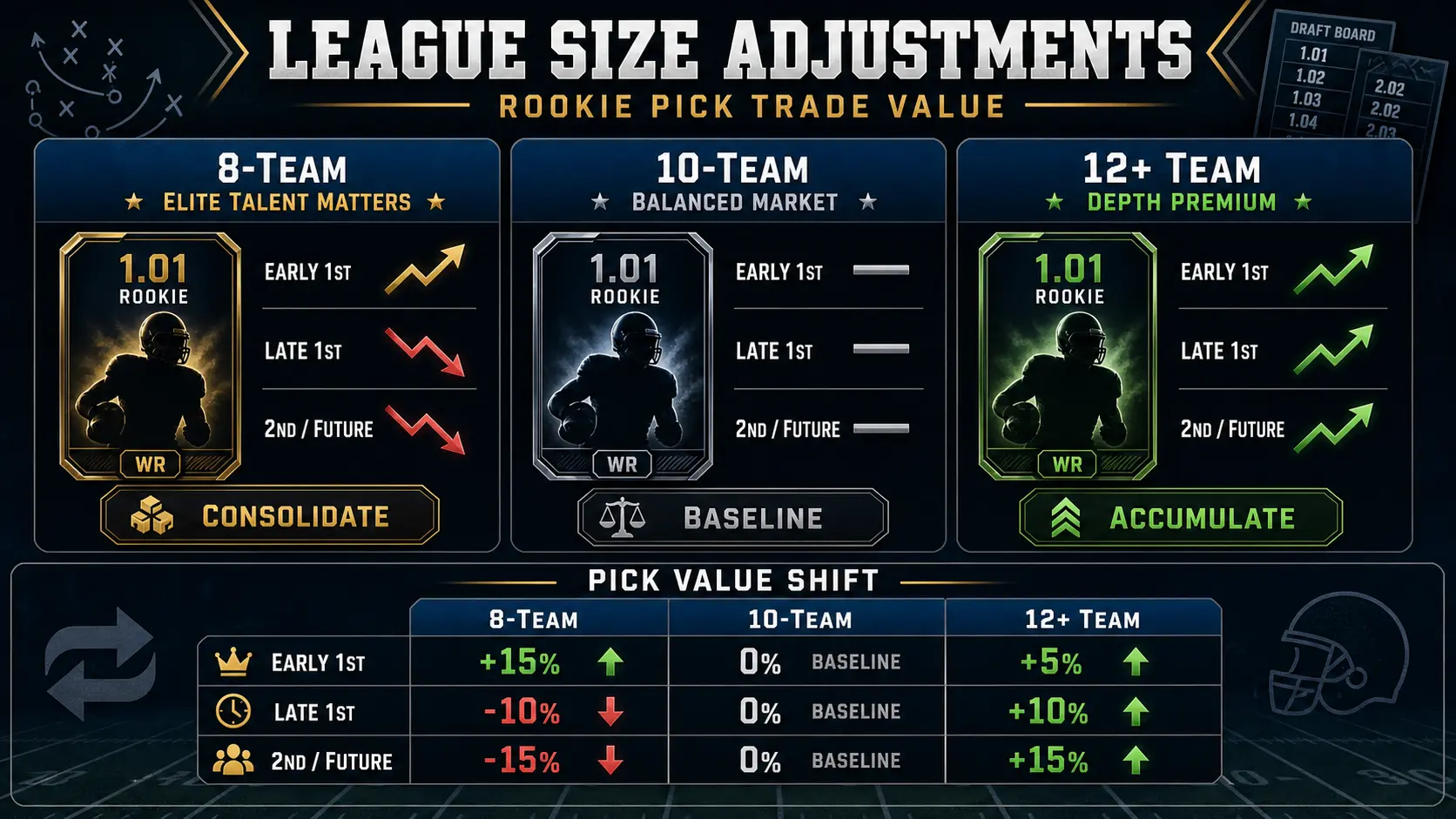
Most dynasty rookie trade value charts assume a 12-team league, but league size dramatically changes rookie pick values.
10-Team Leagues
Elite players dominate smaller leagues, making early first-round selections even more valuable.
Strategy
- Prioritize elite talent over depth.
- Avoid trading premium picks for multiple mid-round selections.
- Consolidate assets whenever possible.
12-Team Leagues
This is the standard environment used by most dynasty trade calculators.
- Balance elite players with quality depth.
- Mid-first-round picks retain strong liquidity.
- Package trades become more common.
14-Team Leagues
Depth becomes increasingly valuable because quality starters are harder to replace.
Managers should:
- Place greater value on second-round selections.
- Hold extra rookie picks longer.
- Avoid overpaying for aging veterans.
League Size Conversion Matrix
| League Size | Early 1st | Mid 1st | Late 1st | 2nd Round |
| 10 Teams | ▲ Higher Value | ▲ Slight Increase | ▲ Increase | Standard |
| 12 Teams | Baseline | Baseline | Baseline | Baseline |
| 14 Teams | Standard | ▲ Slight Increase | ▲ Higher Value | ▲ Higher Value |
The Superflex Modifier: Why Quarterbacks Change Everything
One of the biggest mistakes fantasy managers make is using a standard rookie dynasty trade value chart in a Superflex league.
Quarterbacks become the most valuable position because every team can start two.
As a result:
- Picks that can land elite rookie quarterbacks gain significant value.
- The first three rookie selections usually command a premium.
- Once the top quarterback tier is gone, values often flatten.
Understanding the Quarterback Cliff
The “Quarterback Cliff” occurs when the elite QB prospects are off the board.
For example:
Tier 1
- Elite QB Prospect A
- Elite QB Prospect B
- Elite QB Prospect C
Tier 2
- Developmental quarterbacks
- Running backs
- Wide receivers
If you’re holding Pick 1.03 and only one elite quarterback remains, that pick may be worth substantially more than Pick 1.04.
That’s why experienced managers often trade into the top three before rookie drafts.
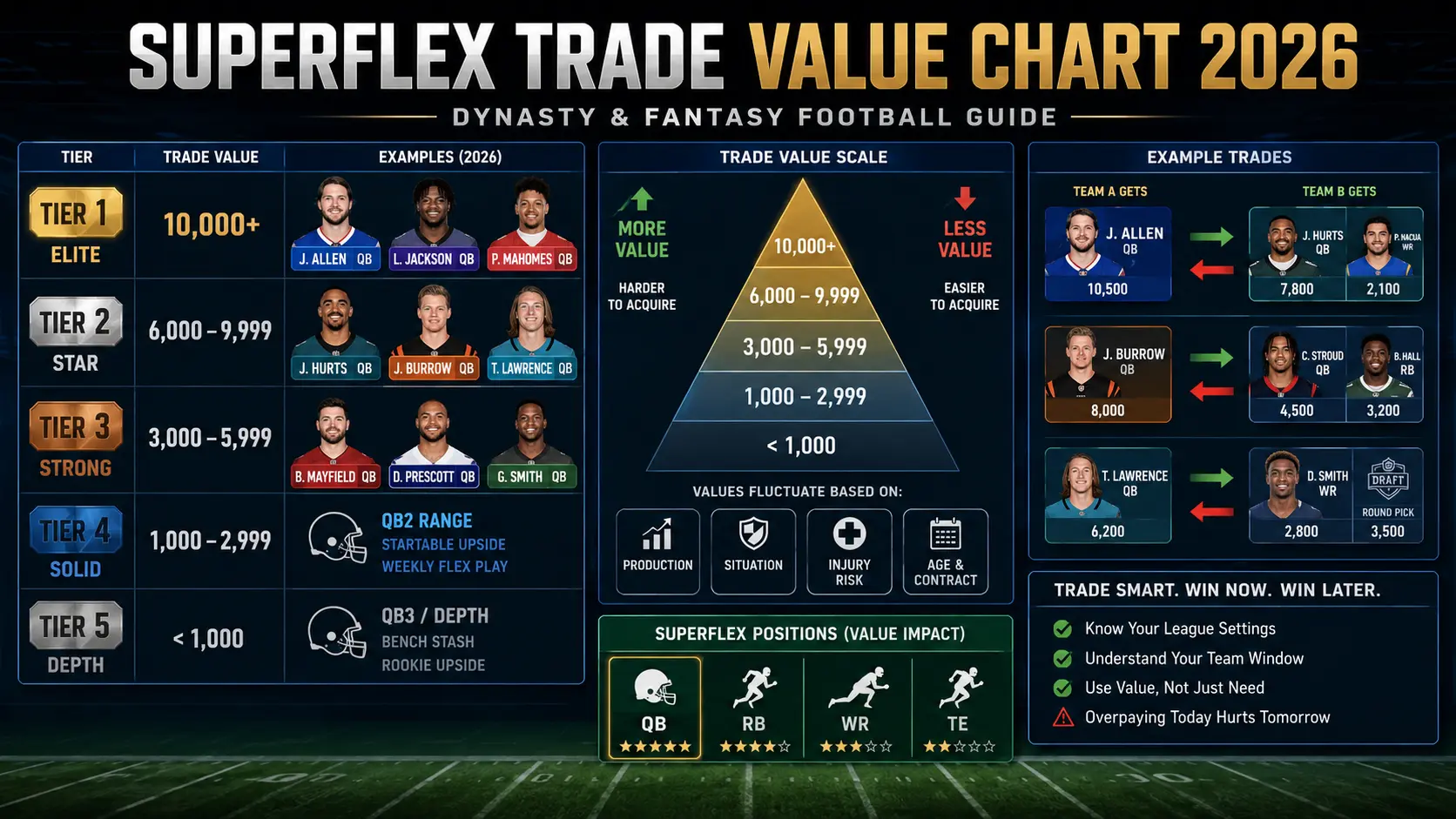
Superflex Pick Value Guide
| Pick Range | Superflex Impact |
| 1.01–1.03 | Massive premium |
| 1.04–1.06 | Strong premium |
| 1.07–1.12 | Moderate premium |
| 2nd Round | Slight increase |
Pro Tip: Never rely on a generic dynasty rookie pick value chart in Superflex formats. Always adjust based on quarterback scarcity and the current rookie class.
Tight End Premium (TEP) Adjustments
In Tight End Premium (TEP) leagues, elite receiving tight ends become far more valuable.
That changes how you should view rookie picks.
If the draft includes a highly regarded tight end prospect, late first-round selections often gain value because managers expect that player to remain available.
General TEP Guidelines
- Elite TE prospects increase late first-round value.
- Mid-second-round picks become more attractive.
- Young tight ends appreciate faster than in standard formats.
Example
In a standard league:
- Pick 1.10 may equal a veteran WR2.
In a 2.0 TEP league:
- Pick 1.10 could reasonably command a younger player with long-term upside because elite tight ends carry additional scoring value.
Always adjust your dynasty rookie draft pick value chart to reflect the scoring system rather than using standard rankings.
How to Value Future Rookie Picks
Future draft picks are among the hardest assets to evaluate because you don’t know their exact draft position.
The safest approach is to begin with a mid-round assumption and then adjust based on the projected strength of the manager’s roster.
Default Framework
| Future Pick | Initial Assumption |
| Future 1st | Mid 1st |
| Future 2nd | Mid 2nd |
| Future 3rd | Mid 3rd |
From there, evaluate the roster.
Upgrade the Value If
- The team has an aging roster.
- Multiple starters are nearing retirement.
- Quarterback uncertainty exists.
- The roster lacks depth.
- The manager is rebuilding unsuccessfully.
Downgrade the Value If
- The roster is young.
- Elite quarterbacks are already secured.
- Multiple first-round talents are under contract.
- The team is projected to contend for a championship.
This process helps you estimate dynasty rookie draft trade value more accurately than treating every future first as equal.
Draft Class Strength Matters
A common flaw in many dynasty rookie pick values articles is assuming every future draft class is identical.
They’re not.
Some classes are loaded with franchise quarterbacks and elite wide receivers, while others may be thinner at premium positions.
Before trading future picks, ask yourself:
- Is the upcoming class considered deep?
- Does it feature multiple elite quarterbacks?
- Are there several first-round-caliber wide receivers?
- Does the class match my team’s positional needs?
A stronger draft class increases the value of early and mid-first-round selections because managers know more impact players should be available.
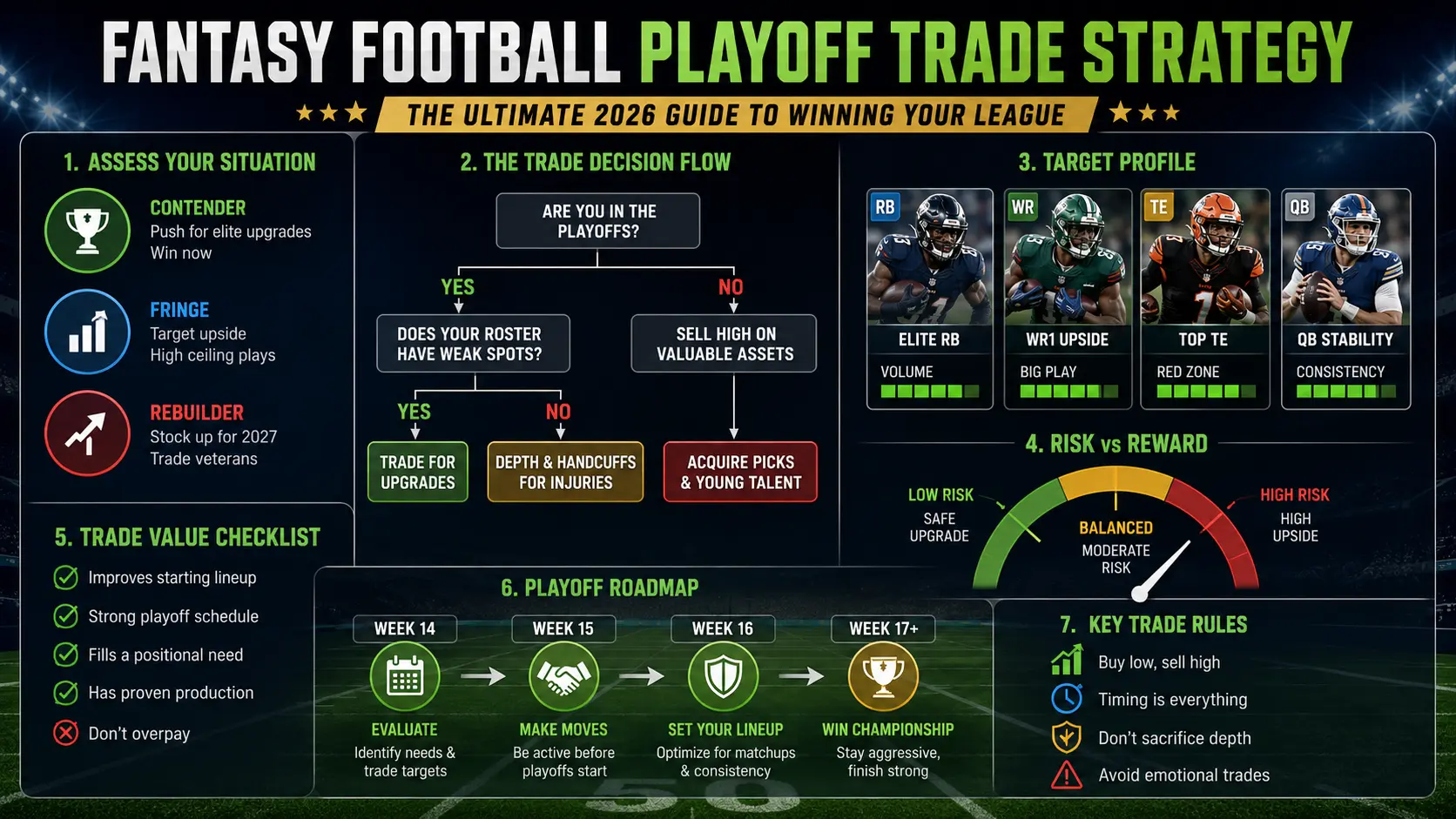
Contender vs. Rebuilder Strategy Matrix
Your team’s competitive window should influence every rookie pick decision.
| Asset | Contender | Rebuilder |
| Early 1st | Trade only for elite difference-makers | Build around it |
| Mid 1st | Hold unless acquiring proven production | Target aggressively |
| Late 1st | Consider moving for immediate starters | Accumulate where possible |
| Early 2nd | Use to upgrade weak positions | Draft high-upside prospects |
| 3rd Round | Trade as a deal sweetener | Take developmental swings |
A rebuilding roster should generally prioritize accumulating first-round picks and letting them appreciate. Contenders, meanwhile, can justify moving late firsts for proven veterans if the deal meaningfully improves championship odds.
Also Read
- Dynasty Superflex Startup Strategy
- Historical Dynasty Rookie Hit Rates
- Best Dynasty Trade Calculator Comparison
- How to Rebuild a Dynasty Fantasy Football Team
Advanced Dynasty Rookie Pick Trading Strategies
Owning rookie picks is only half the battle. The best dynasty managers consistently outperform their league mates because they understand how to extract maximum value from every trade.
Most dynasty rookie pick trade value guide articles stop at assigning numerical values to picks. In reality, successful trading depends on negotiation, timing, roster context, and market psychology.
The following strategies are used by experienced dynasty players to create long-term advantages that standard dynasty rookie trade value charts simply can’t measure.
The Package Deal Tax: Why Three Small Assets Rarely Equal One Premium Asset
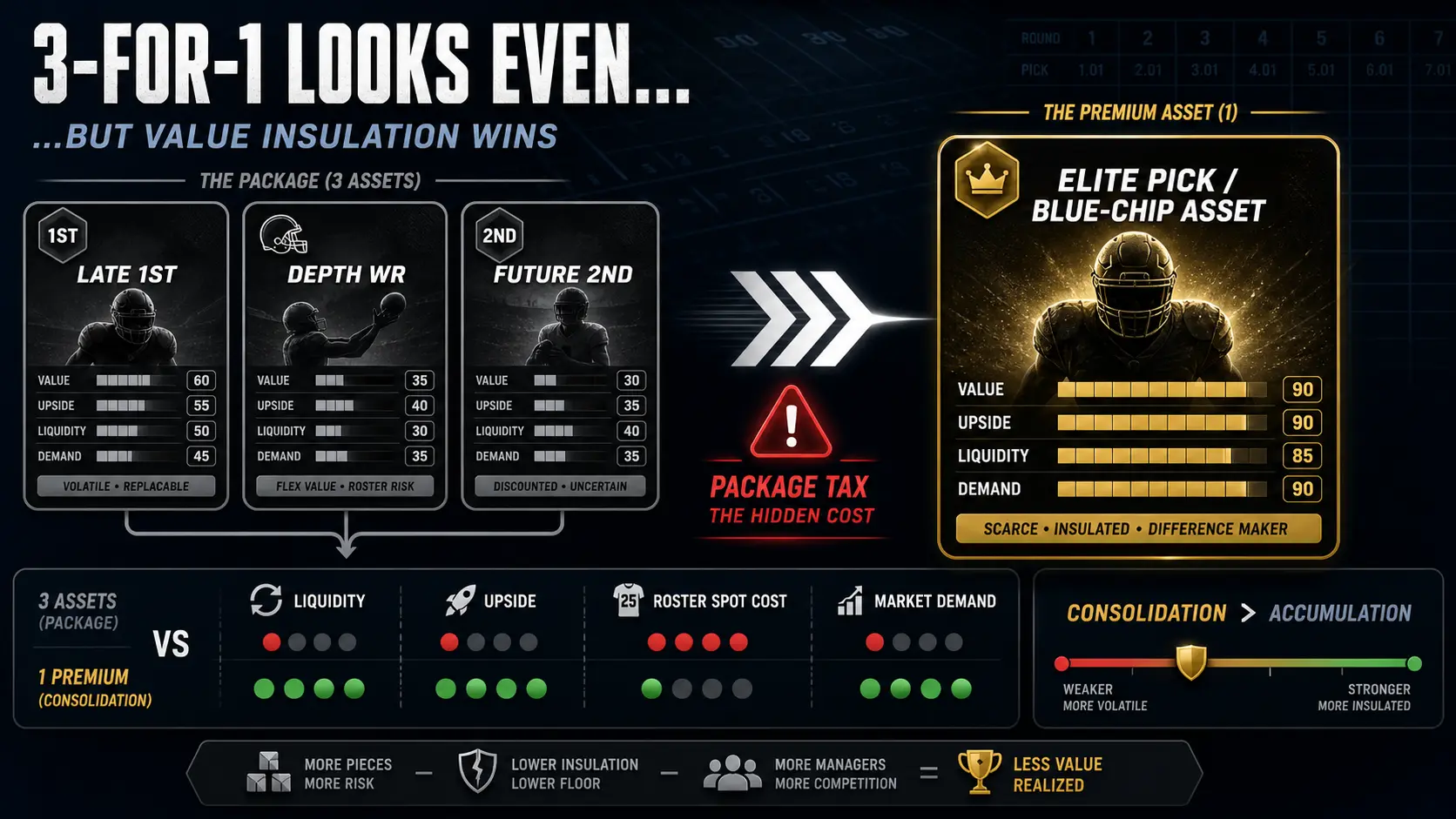
One of the biggest myths in dynasty football is that trade values are perfectly additive.
For example:
- Late 2nd = 15 points
- Late 2nd = 15 points
- Late 2nd = 15 points
Many trade calculators suggest:
15 + 15 + 15 = Early First
In real dynasty leagues, this rarely happens.
Managers value roster spots just as much as player value.
Three average prospects require:
- Three roster spots
- Three development years
- Three chances to bust
One elite rookie often produces significantly more fantasy value than multiple lottery tickets.
This hidden cost is known as the Package Deal Tax (or Consolidation Tax).
Real Example
Trade Offer
You Receive:
- 2.03
- 2.08
- 2027 2nd
You Give:
- 1.05
Most calculators may call this “fair.”
Most experienced dynasty managers decline.
Why?
Because Pick 1.05 offers access to a higher talent tier with greater trade liquidity. Elite assets are easier to move than several mid-tier pieces.
Rule of Thumb
When trading down:
- Demand an additional premium asset.
- Don’t accept equal calculator values.
- Charge a consolidation tax for giving up elite draft capital.
The Wedge Trade Framework
Many dynasty negotiations fail because the value gap between two assets is too large.
Instead of overpaying with another first-round pick, use second- and third-round selections as “wedges” to bridge the difference.
Example
Manager A
- Young WR1
Manager B
- Pick 1.07
- Pick 2.04
The manager with the WR1 wants slightly more value.
Instead of adding another first-rounder, include:
- 2027 3rd
- Depth player
- Backup quarterback
- Taxi squad prospect
Small additions often close negotiations without sacrificing premium assets.
Best Wedge Assets
- Early 2nd-round picks
- Future 2nds
- Productive depth veterans
- Young backup quarterbacks (Superflex)
- Upside wide receivers
This framework keeps your elite assets intact while improving trade flexibility.
Tier-Drop Exploitation Strategy
Elite dynasty managers rarely draft strictly by ADP.
Instead, they identify talent tiers.
Suppose your rookie board looks like this:
Tier One
- Prospect A
- Prospect B
- Prospect C
Tier Two
- Prospect D
- Prospect E
- Prospect F
- Prospect G
You’re holding Pick 1.04.
If every remaining player belongs to the same tier, why draft immediately?
Instead:
Trade Pick 1.04
↓
Receive Pick 1.07
Early 2nd
You still land a player from the same talent tier while adding another valuable asset.
This is one of the safest ways to increase long-term roster value.
Signs You Should Trade Back
✅ Several players share similar grades.
✅ Your favorite prospect is likely available later.
✅ Another manager desperately wants a specific player.
✅ Multiple quarterbacks create market inflation in Superflex.
Never trade back simply because you can.
Trade back because your draft board says the value remains the same.
The Psychology of Rookie Pick Negotiations
Dynasty trading isn’t just math.
It’s psychology.
Managers become emotionally attached to rookie picks especially after months of scouting, mock drafts, and NFL Combine hype.
Learning to recognize emotional bias gives you a significant advantage.
Common Psychological Traps
Draft Fever
Managers convince themselves that every rookie will become a star.
Counter by offering proven young veterans before the draft.
Fear of Missing Out (FOMO)
Someone worries another manager will draft “their guy.”
Leverage this urgency when you’re on the clock.
Loss Aversion
Managers hate losing first-round picks.
Instead of asking directly for a first, ask for:
- Player
- Second-round pick
Then negotiate upward.
Smaller requests often receive quicker acceptance.
Buying Rookie Picks at the Right Time
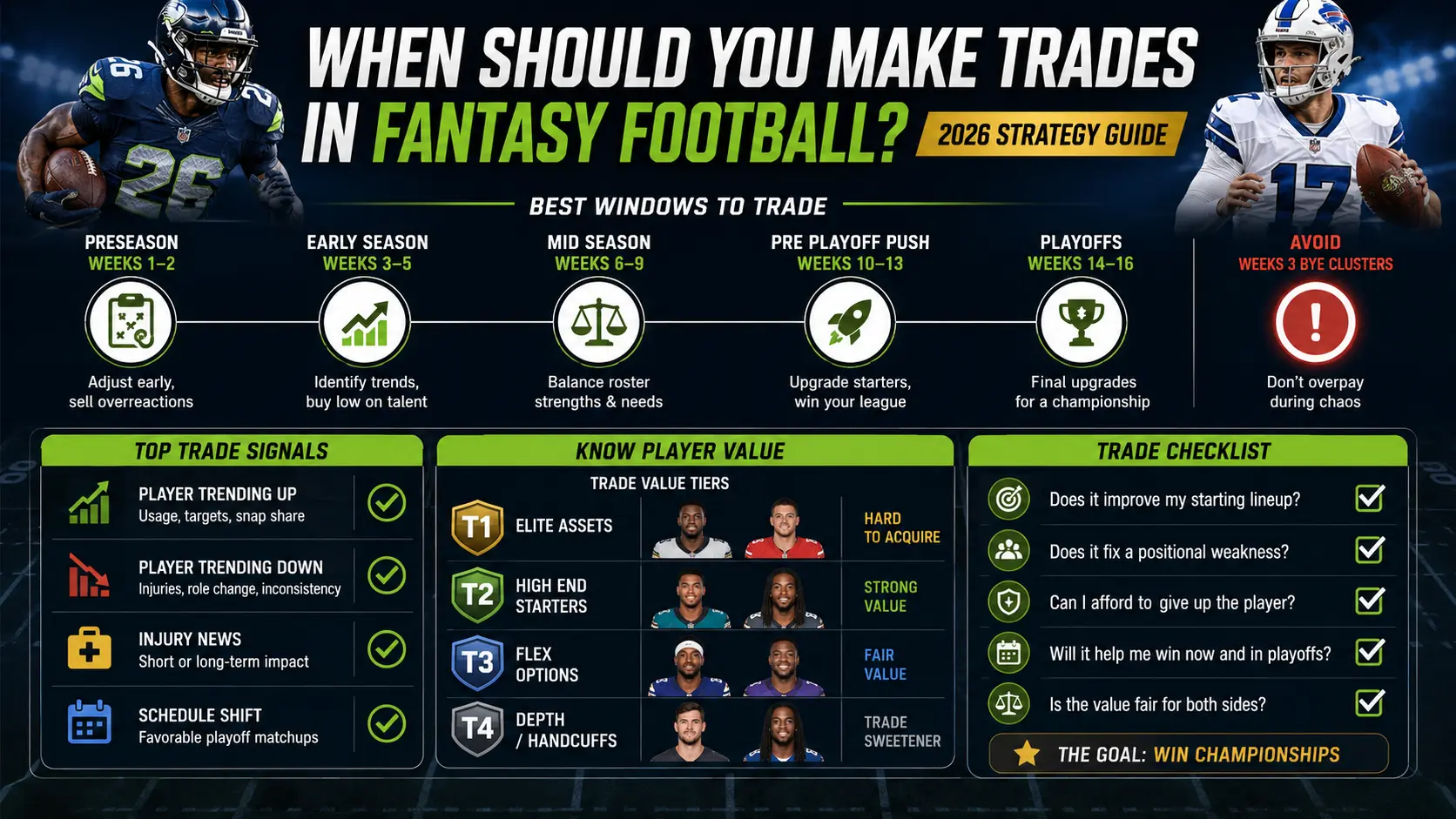
Timing is one of the biggest competitive edges in dynasty fantasy football.
Best Months to Buy Picks
| Month | Buying Opportunity |
| September | Excellent |
| October | Best |
| November | Very Good |
| December | Good |
| January | Average |
| February | Fair |
| March | Expensive |
| April | Very Expensive |
| NFL Draft | Peak Price |
During October, contenders often sacrifice future rookie picks to strengthen playoff rosters.
That creates buying opportunities for rebuilding teams.
Selling Rookie Picks for Maximum Return
Buying low is only half the strategy.
Selling at the right time matters just as much.
The best-selling window usually occurs:
- After the NFL Combine
- During rookie hype season
- Immediately before rookie drafts
- While you’re officially “on the clock”
Managers routinely pay more when they know exactly which prospect they can draft.
Waiting even a few months can increase the market value of your rookie selections.
The Perpetual Rebuild Trap
One mistake separates average rebuilders from successful dynasty managers:
They never stop collecting picks.
Year after year, they trade veterans for future selections.
Eventually they own:
- Five first-round picks
- Four second-round picks
- Zero championship-caliber lineup
That’s not rebuilding.
That’s permanent rebuilding.
Healthy Rebuild
Acquire picks
↓
Draft elite talent
↓
Develop a young core
↓
Trade excess picks for proven stars
↓
Compete
Never forget:
The goal of rookie picks isn’t collecting them.
The goal is winning championships.
Valuing Random Future Firsts
Many managers mistakenly value every future first-round pick equally.
Instead, evaluate the roster behind the pick.
Upgrade the Pick If
- Aging quarterback
- Weak offensive core
- Little roster depth
- No future flexibility
- Multiple expiring contracts
Downgrade the Pick If
- Young franchise QB
- Elite receivers
- Strong bench
- Multiple first-round talents
- Recent championship roster
This process helps estimate where the pick may land, making your dynasty rookie pick trade value guide more accurate than relying on a static chart.
Real Trade Example
Scenario
You are rebuilding.
You receive:
- Veteran RB (Age 29)
- 2027 2nd
You give:
- Pick 1.04
Should you accept?
Analysis
❌ No.
Reasons:
- Aging running backs lose dynasty value quickly.
- Pick 1.04 remains highly liquid.
- Elite rookie prospects retain market value even before producing.
- The second-round pick doesn’t offset the long-term value gap.
A better counteroffer would include:
- Younger player (under 25)
- Future first-round pick
- Productive wide receiver
- Additional upside asset
Always compare team timeline, asset liquidity, and long-term insulation before accepting.
Historical Hit Rates & Managing Risk
Every Dynasty Rookie Pick Trade Value Guide should acknowledge one important truth: rookie picks are probabilities, not guarantees. While first-round selections carry tremendous upside, they also come with uncertainty. Understanding historical hit rates helps you balance optimism with realistic expectations.
Historical Hit Rates by Draft Tier
Although every draft class is different, historical dynasty trends consistently show a steep drop-off after the early first round.
| Rookie Pick Tier | Estimated Fantasy Starter Hit Rate | Elite Player Hit Rate |
| 1.01–1.03 | Very High | High |
| 1.04–1.06 | High | Moderate to High |
| 1.07–1.12 | Moderate | Moderate |
| Early 2nd | Moderate | Low |
| Mid/Late 2nd | Low | Low |
| 3rd Round | Very Low | Rare |
The lesson isn’t that second- and third-round picks are worthless it’s that premium draft capital deserves a premium price. Treat early first-round picks as cornerstone assets and later selections as upside investments.
Rookie Picks vs. Veteran Players
Choosing between a rookie pick and a proven veteran depends on your team’s competitive timeline.
| Situation | Better Choice |
| Rebuilding | Rookie Picks |
| Contending | Proven Veterans |
| Balanced Team | Best Value Available |
| Aging Roster | Acquire Younger Assets |
| Weak Depth | Mix of Picks & Veterans |
A contender shouldn’t hesitate to trade a late first for a genuine difference-maker if it materially improves championship odds. A rebuilding team, however, should avoid sacrificing future flexibility for short-term production.
Managing Asset Volatility
One overlooked advantage of rookie picks is value insulation.
Players lose value due to:
- Injuries
- Poor performance
- Coaching changes
- Age
- Reduced opportunity
Rookie picks avoid most of these risks until they become players.
This is why experienced dynasty managers often compare rookie picks to investment options they maintain flexibility while preserving market value.
Diversify Your Dynasty Portfolio
Instead of concentrating all your value in one asset type:
- Hold cornerstone, young players.
- Keep future first-round picks.
- Maintain productive veterans if you’re competing.
- Use second-round picks to target upside prospects.
A diversified roster is better equipped to handle injuries, busts, and changing market conditions.
Common Dynasty Rookie Pick Valuation Mistakes
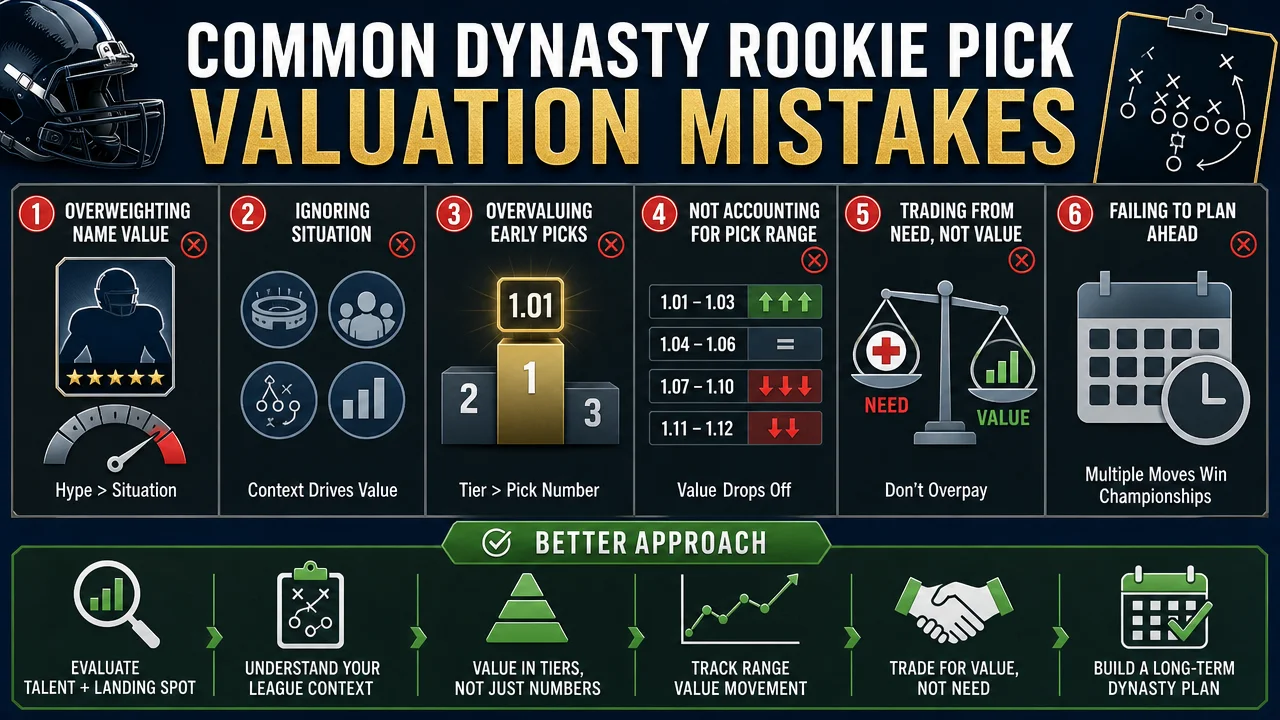
Even experienced managers make valuation errors. Avoid these common pitfalls to stay ahead of your league.
1. Using Only One Trade Calculator
No calculator perfectly reflects your league’s market.
Solution: Compare values across multiple sources and apply your own league context.
2. Ignoring League Settings
A pick in a 10-team 1QB league is not equal to the same pick in a 14-team Superflex league.
Solution: Adjust values for:
- League size
- Superflex
- Tight End Premium
- Starting lineup requirements
- Scoring system
3. Selling Picks Too Early
Managers often panic during the season and move future first-round picks for minimal upgrades.
Solution: If possible, wait until rookie hype peaks near the NFL Draft.
4. Hoarding Picks Forever
Draft picks are valuable because they can eventually become elite players or be traded for them.
Solution: Build toward contention instead of endlessly accumulating draft capital.
5. Ignoring Team Context
A rebuilding team and a contender should value the same rookie pick differently.
Always ask:
- Does this move fit my competitive window?
- Am I buying production or future value?
- Does this trade increase my chances of winning?
Advanced Tips from Experienced Dynasty Managers
If you’re already comfortable with basic trade values, these advanced strategies can help maximize long-term success.
Buy During Market Fear
Managers chasing a playoff spot often undervalue future picks during the season. This is one of the best opportunities to acquire draft capital at a discount.
Sell During Maximum Hype
Draft season creates emotional bidding wars. Use that demand to maximize returns for your rookie picks.
Exploit Positional Scarcity
In Superflex leagues, elite quarterbacks rarely lose value. In Tight End Premium formats, top receiving tight ends become long-term assets. Adjust your rookie pick values accordingly.
Target Future Firsts from Risky Teams
Not all future first-round picks are equal. A first-round pick from an aging, injury-prone roster has a higher chance of becoming an early selection than one from a perennial contender.
Think in Tiers, Not Individual Rankings
Grouping prospects into talent tiers makes it easier to identify trade-back opportunities without sacrificing player quality.
Recommended Tools & Resources
No single resource should dictate every trade decision. Combining multiple viewpoints gives you a more balanced evaluation.
Helpful Dynasty Tools
- KeepTradeCut (KTC) – Community-driven dynasty trade values.
- FantasyPros Dynasty Trade Value Chart – Expert consensus rankings and trade guidance.
- Dynasty League Football (DLF) – Premium dynasty analysis and rankings.
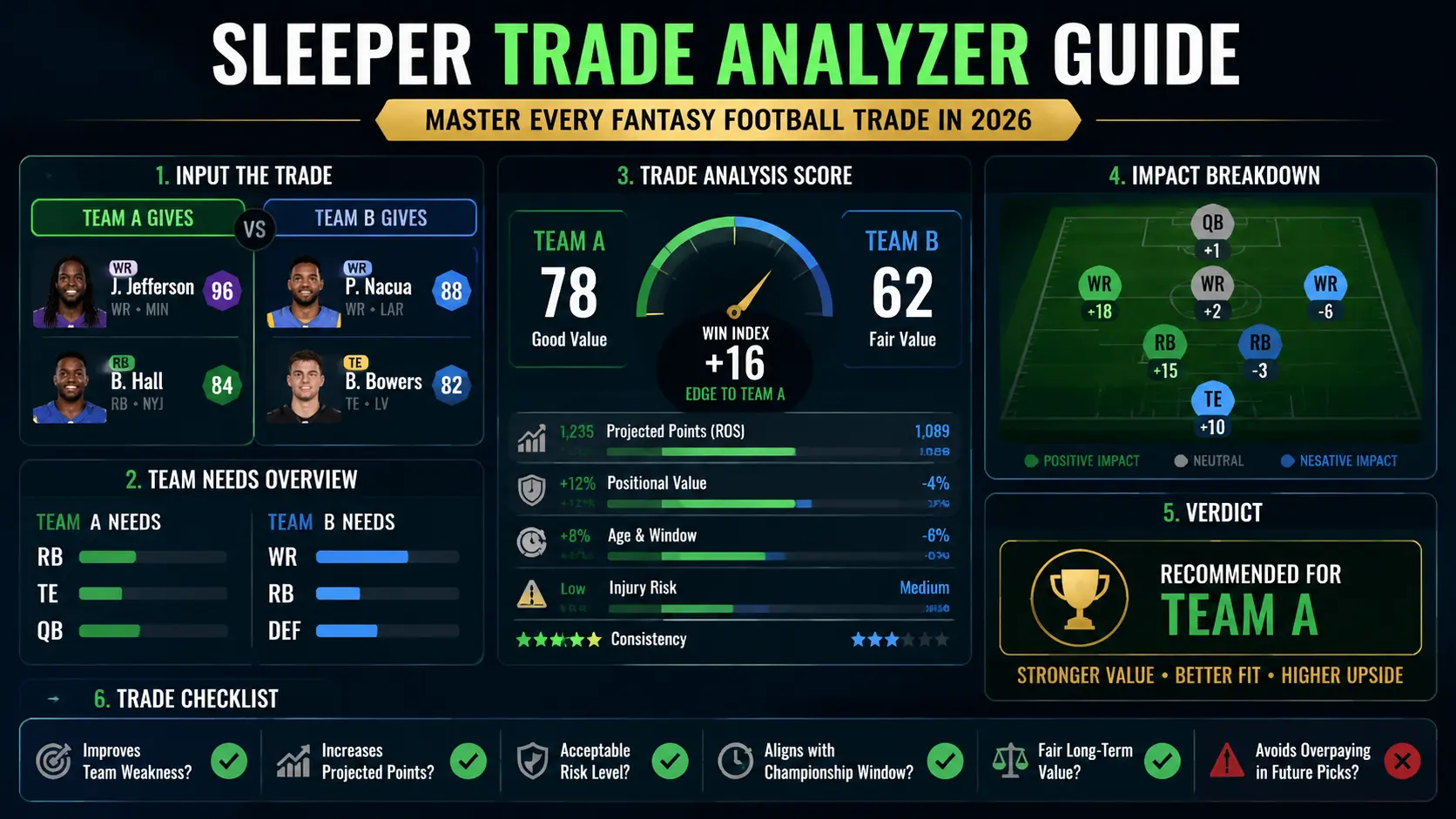
- Sleeper – League management with active dynasty communities and draft tools.
- Pro Football Reference – Historical NFL draft data for evaluating long-term trends.
Also Read:
- Dynasty Superflex Startup Guide
- Rookie Draft Strategy by Pick Position
- Dynasty Trade Calculator Comparison
- Historical Rookie Hit Rates Analysis
Future Trends in Dynasty Rookie Pick Values
Dynasty strategy continues to evolve, and rookie pick valuation is becoming more sophisticated each season.
Key trends to watch include:
- Greater emphasis on market timing rather than static trade charts.
- AI-powered trade calculators that incorporate league settings and roster context.
- Improved predictive models using historical draft capital, athletic testing, and production metrics.
- More dynamic rookie class adjustments, reflecting the perceived strength of each draft class.
- Increased focus on roster construction, balancing production, flexibility, and long-term asset appreciation.
Managers who adapt to these trends will gain an edge over those relying solely on outdated charts.
Conclusion
A Dynasty Rookie Pick Trade Value Guide is far more than a list of numbers. The most successful dynasty managers understand that rookie picks are dynamic assets whose value changes with timing, league format, roster construction, and market psychology.
Instead of blindly following a static dynasty rookie pick value chart, evaluate every trade through the lens of your team’s goals. Buy picks when demand is low, sell when excitement peaks, and always consider factors like Superflex premiums, league size, draft class strength, and historical hit rates before making a deal.
Whether you’re rebuilding with multiple first-round selections or making one final championship push, treating rookie picks as appreciating assets rather than fixed numbers will help you make smarter decisions year after year.
Master these principles, stay disciplined in negotiations, and you’ll consistently turn draft capital into championship-caliber rosters.
Frequently Asked Questions
1. How do I value rookie picks in dynasty fantasy football?
Start with a reliable dynasty rookie pick trade value guide, then adjust based on league format, roster size, scoring settings, draft class strength, and your team’s competitive window.
2. How valuable are rookie picks in dynasty leagues?
Rookie picks are among the most valuable dynasty assets because they retain flexibility, appreciate as the rookie draft approaches, and can be traded for proven players or used to draft future stars.
3. When is the best time to trade for rookie picks?
The best buying window is usually during the fantasy regular season especially October and November when contenders prioritize immediate production over future assets.
4. Should I trade a first-round rookie pick for a veteran player?
It depends on your roster. Contending teams can justify trading a late first for an elite producer, while rebuilding teams generally benefit more from keeping premium draft capital.
5. How should I value future first-round picks?
Treat unknown future firsts as mid-first-round selections initially, then adjust their value based on the projected strength of the other manager’s roster and the expected quality of the upcoming draft class.
6. Are dynasty trade calculators always accurate?
No. Trade calculators provide a useful starting point, but they can’t fully account for league-specific dynamics, market psychology, roster construction, or individual manager preferences.
7. Do Superflex leagues change rookie pick values?
Yes. Superflex formats significantly increase the value of early first-round picks because franchise quarterbacks become premium assets. Always adjust your dynasty rookie trade value chart for quarterback scarcity.
8. Are second- and third-round rookie picks worth holding?
Yes, but their value depends on league depth and roster construction. Early second-round picks can produce quality starters, while third-round selections are best viewed as high-upside lottery tickets or useful trade sweeteners.