Introduction
The fantasy football trade deadline is one of the most important turning points of your season. A single well-timed trade can transform a playoff contender into a championship favorite, while one poor decision can leave your roster short of elite talent when it matters most.
Unlike the early weeks of the season, the Fantasy Football Trade Deadline Strategy isn’t just about finding buy-low or sell-high candidates. It’s about understanding league dynamics, playoff schedules, roster construction, and the psychology of your opponents.
Whether you play on ESPN, Yahoo, Sleeper, or CBS, this guide will show you how to approach the deadline like an experienced fantasy manager, identify the best trade opportunities, and maximize your chances of winning a league title.
Table of Contents
- Why the Trade Deadline Matters
- Evaluate Your Team Before Trading
- The Best Fantasy Football Trade Deadline Strategy
- Target the Right Opponents
- Analyze Playoff Schedules
- Avoid Common Trade Mistakes
- Key Takeaways
TL;DR
- Know whether you’re buying for a championship or rebuilding.
- Focus on playoff matchups rather than recent performances.
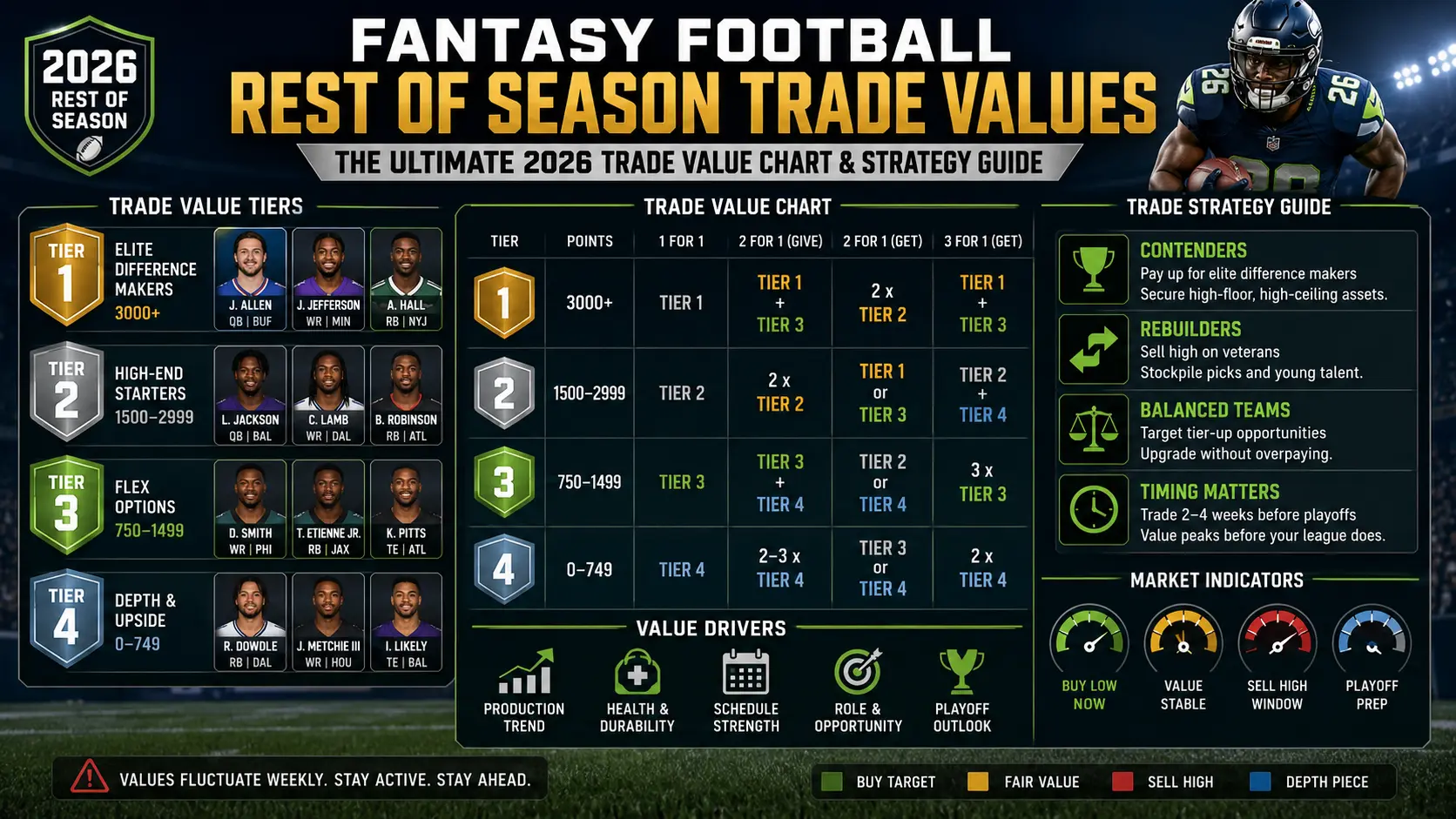
- Consolidate depth into elite starters through 2-for-1 trades.
- Target desperate managers fighting for playoff spots.
- Always understand your league’s trade deadline rules before making deals.
Why the Fantasy Football Trade Deadline Matters
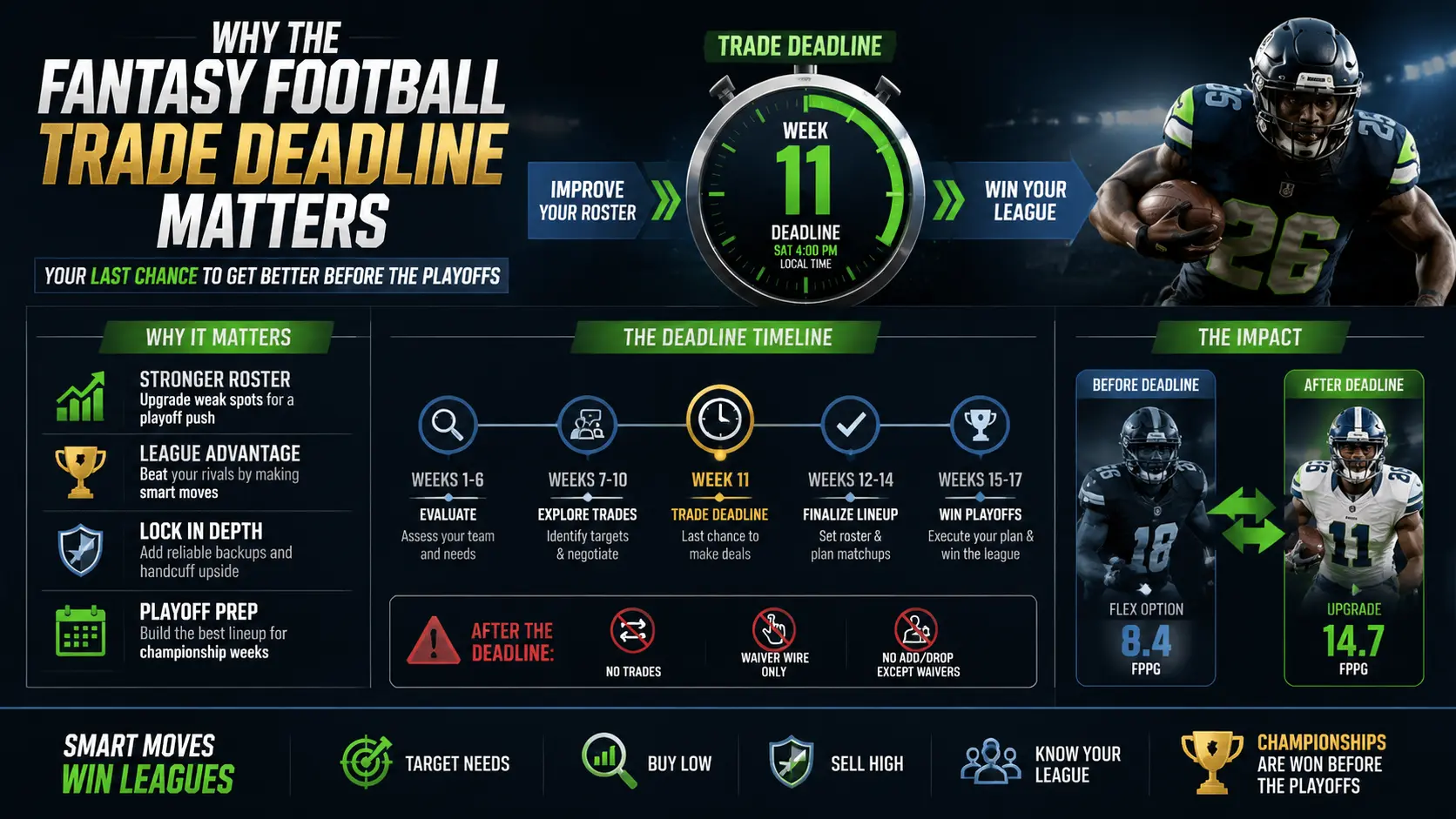
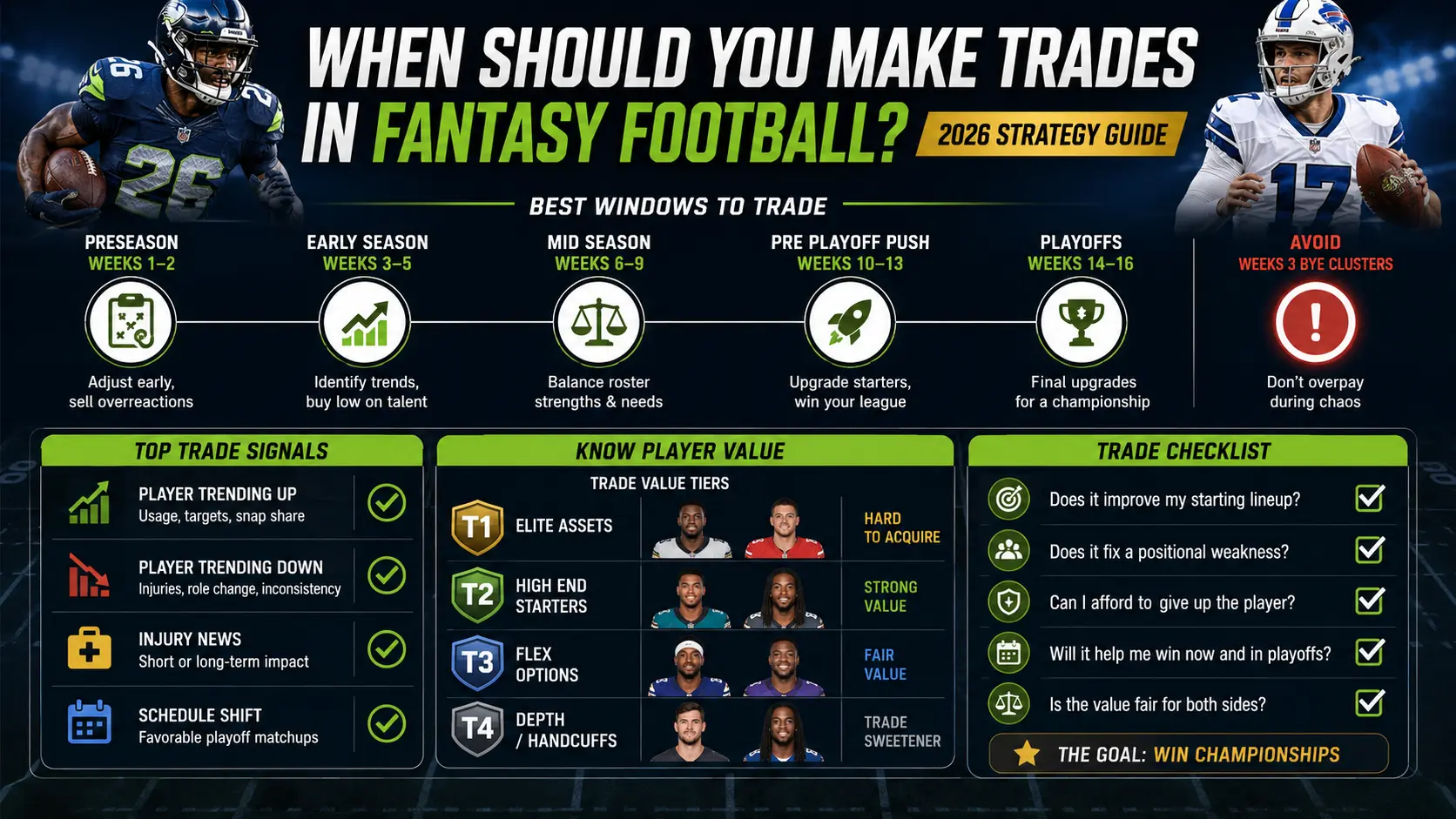
The trade deadline is your final opportunity to improve your roster before the fantasy playoffs. After the deadline passes, you’ll have to rely on waiver wire pickups and your existing lineup.
Successful fantasy managers treat the deadline as a chance to build the strongest possible starting lineup rather than simply collecting depth.
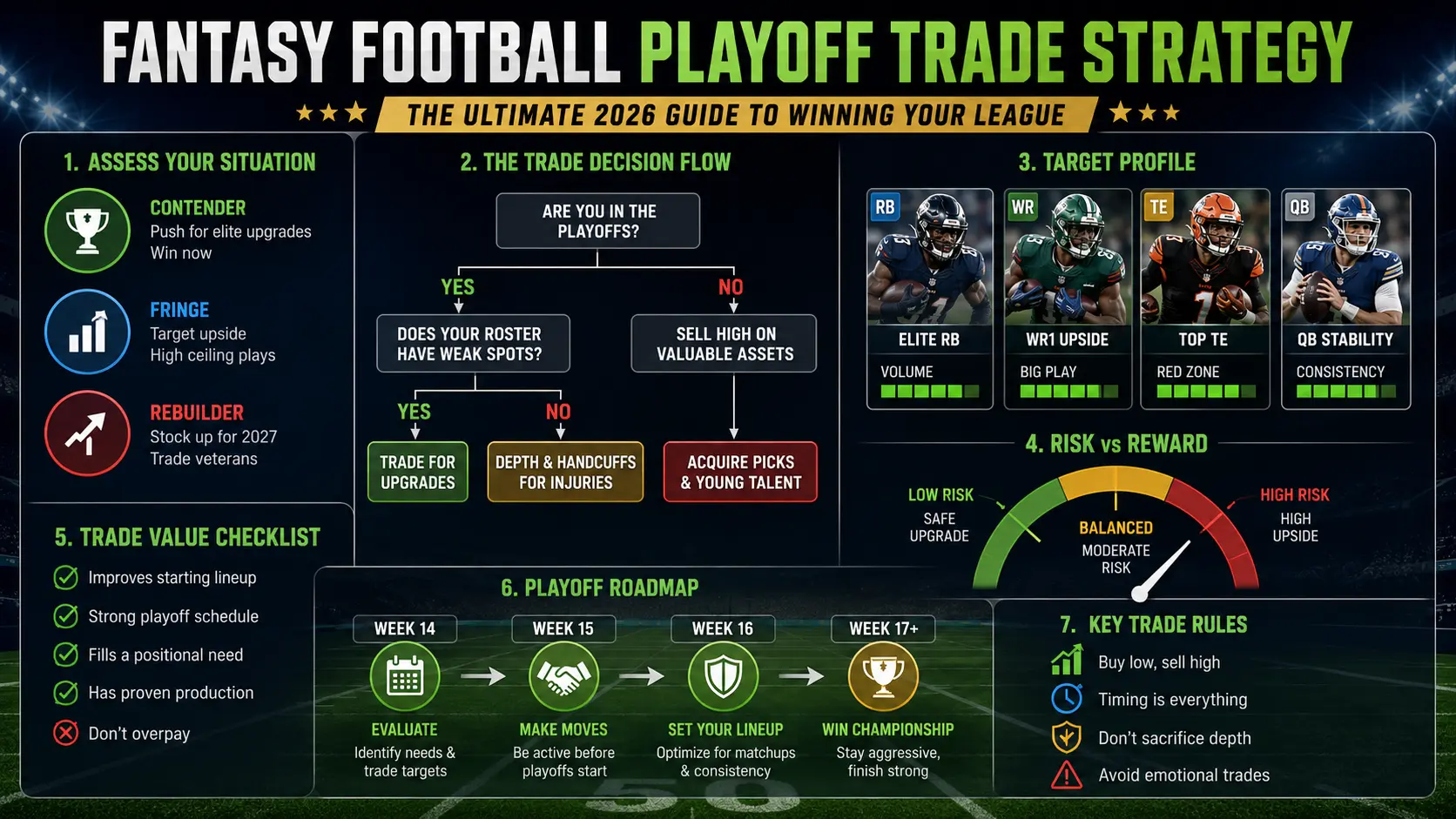
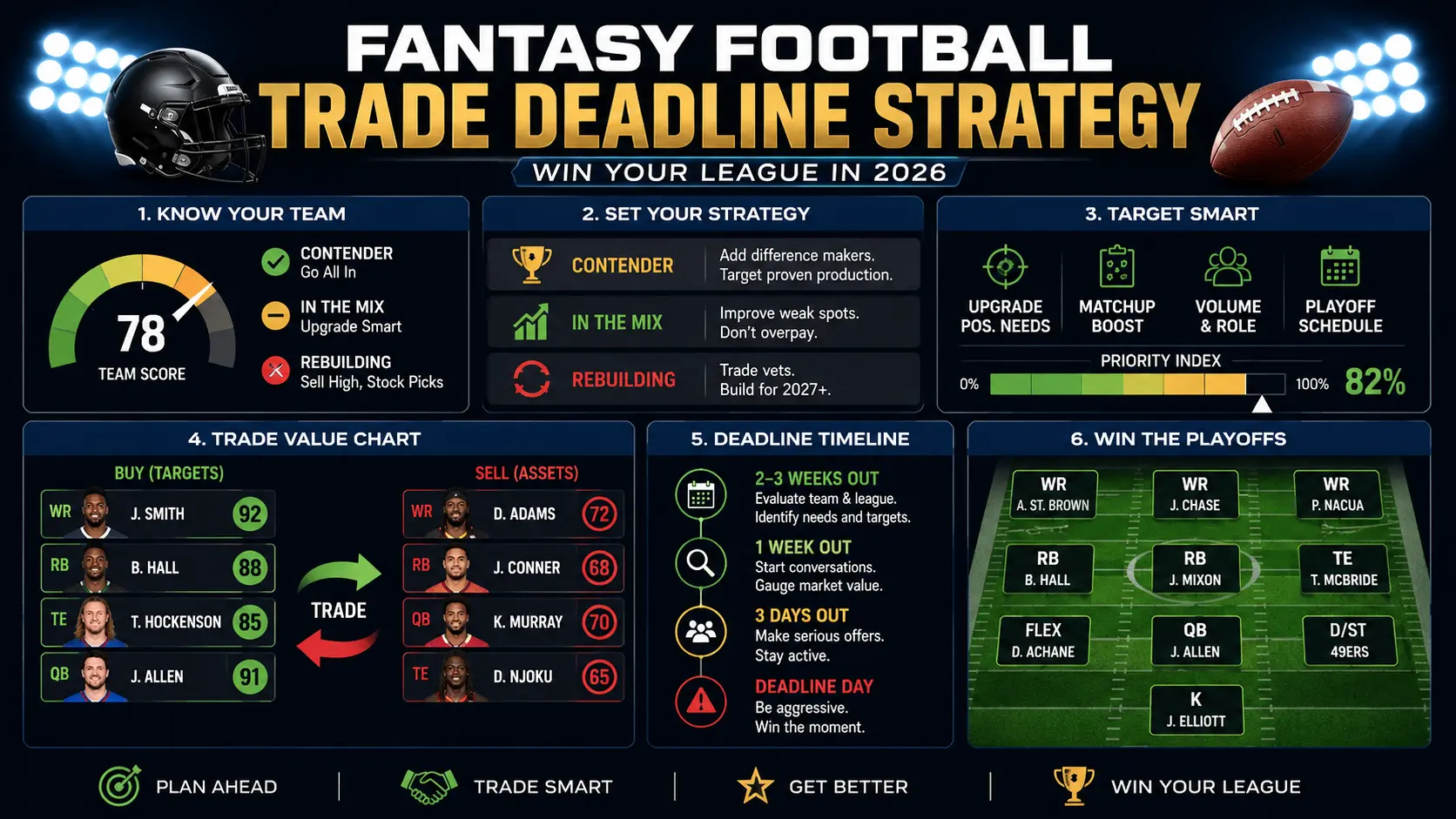
Your strategy should depend entirely on your current position.
| Team Situation | Recommended Strategy |
| Top playoff seed | Trade depth for elite stars |
| Playoff bubble | Focus on immediate weekly production |
| Rebuilding the dynasty team | Acquire future draft picks and young players |
| Eliminated the redraft team | Avoid unnecessary trades and maintain league integrity |
Understanding where your team stands is the foundation of every successful fantasy football trade deadline strategy.
Evaluate Your Team Before Making Any Trade
Before sending offers, honestly evaluate your roster.
Ask yourself:
- Am I likely to make the playoffs?
- Which positions consistently underperform?
- Do I have too much depth at one position?
- Can I afford to trade future production for immediate wins?
Many fantasy managers make the mistake of chasing the biggest names instead of addressing actual weaknesses.
For example, adding another elite wide receiver won’t help if your running backs score fewer than 15 points every week.
Instead, identify your weakest starting position and prioritize upgrading it.
The Best Fantasy Football Trade Deadline Strategy
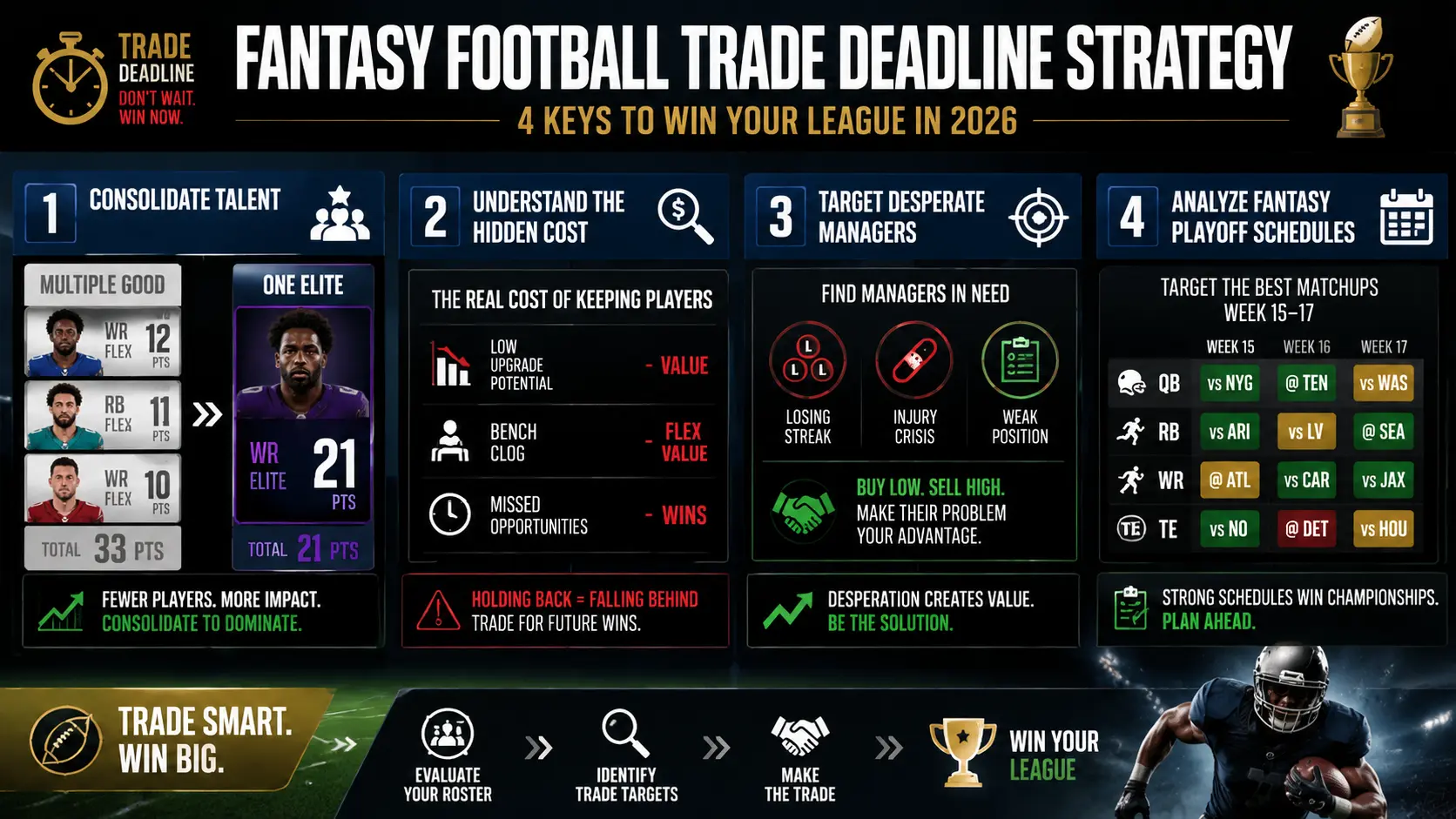
1. Consolidate Talent
One of the most effective deadline moves is turning two good players into one elite player.
For example:
Instead of starting:
- WR18
- RB22
Trade both for:
- WR5
Elite players provide higher weekly ceilings and greater consistency during the fantasy playoffs.
Understand the Hidden Cost
Before accepting a two-for-one deal, remember you’ll also need to drop a bench player.
The real value becomes:
Player A + Player B = Elite Player + Dropped Bench Player
If the player you’re dropping still has significant value, the trade may not be as favorable as it first appears.
Target Desperate Managers
One of the biggest competitive advantages comes from understanding league psychology.
Managers sitting at 4-6 or 5-5 often need immediate wins.
These teams frequently prioritize this week’s points over long-term playoff success.
Use this to your advantage.
Offer:
- Reliable starters
- Healthy players
- Immediate production
In exchange for:
- Elite players returning from injury
- Players with difficult short-term schedules but excellent playoff matchups
This strategy benefits both teams while improving your championship odds.
Analyze Fantasy Playoff Schedules
Many managers only look at season-long rankings.
Experienced fantasy players evaluate Weeks 15 17, when championships are decided.
Instead of asking:
“Who has scored the most points?”
Ask:
“Who has the easiest playoff schedule?”
Consider:
- Defensive matchups
- Weather conditions
- Dome games
- Offensive line health
- Quarterback stability
A player facing three bottom-10 defenses during the playoffs can outperform someone ranked ahead of them with significantly tougher matchups.
Understand League-Specific Trade Rules
Every fantasy platform handles deadlines differently.
ESPN Fantasy Football
- Commissioners can customize the trade deadline.
- Default settings vary by league.
- Pending trades accepted before the deadline are usually processed normally.
Yahoo Fantasy Football
Yahoo leagues allow commissioners to customize:
- Trade deadline date
- Trade review period
- Commissioner approval
Sleeper
Sleeper offers flexible trade deadlines with customizable commissioner settings and dynasty-friendly options.
Always verify your league settings before negotiating trades to avoid missing the deadline.
Key Takeaways
A successful Fantasy Football Trade Deadline Strategy isn’t about making the most trades; it’s about making the right ones.
Focus on improving your starting lineup, exploiting playoff schedules, understanding opponent psychology, and using your league’s rules to your advantage.
Managers who think strategically during the final weeks of the trade window consistently give themselves the best chance of lifting the fantasy championship trophy.
Dynasty, Keeper, and Superflex Trade Deadline Strategies
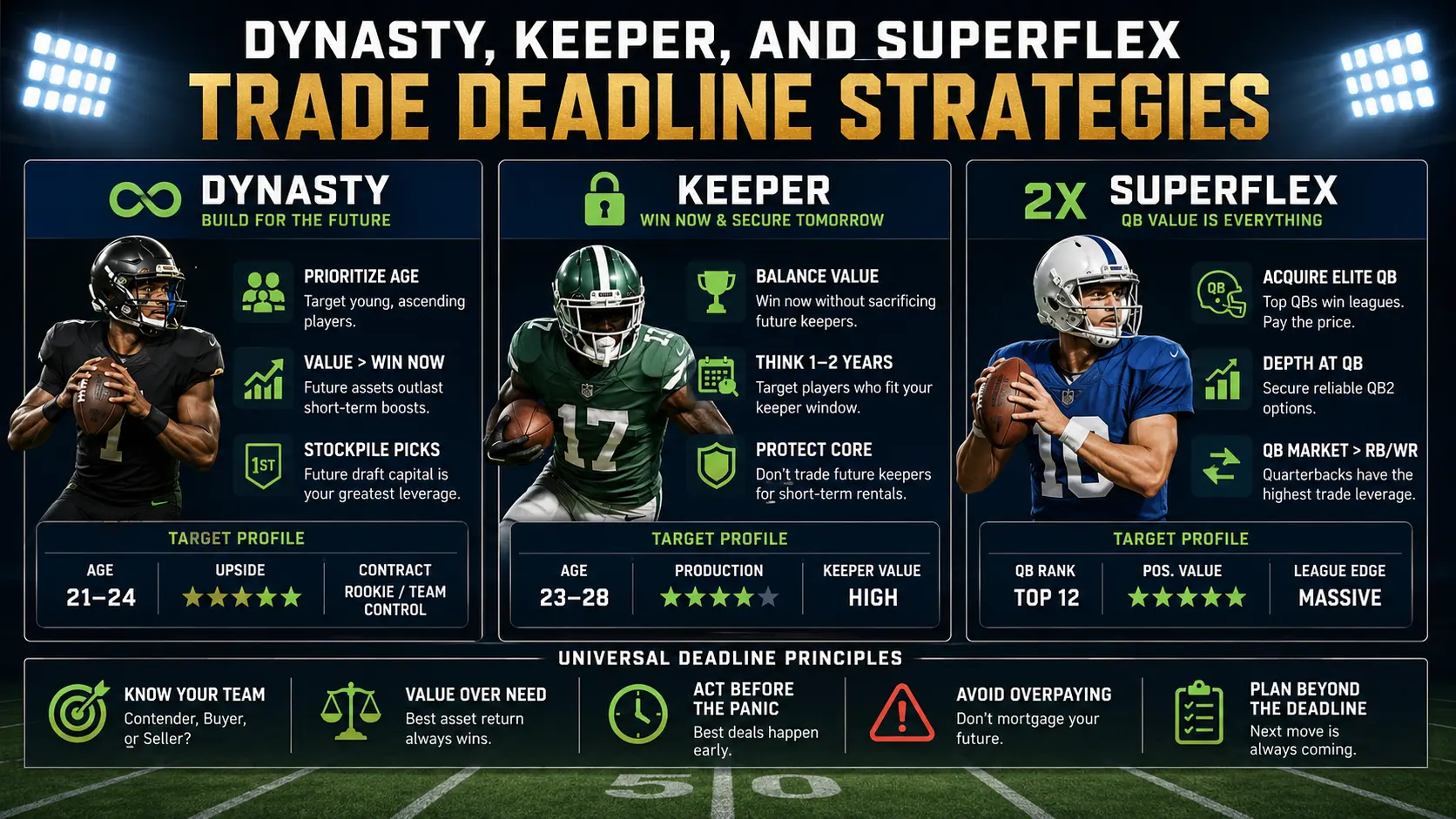
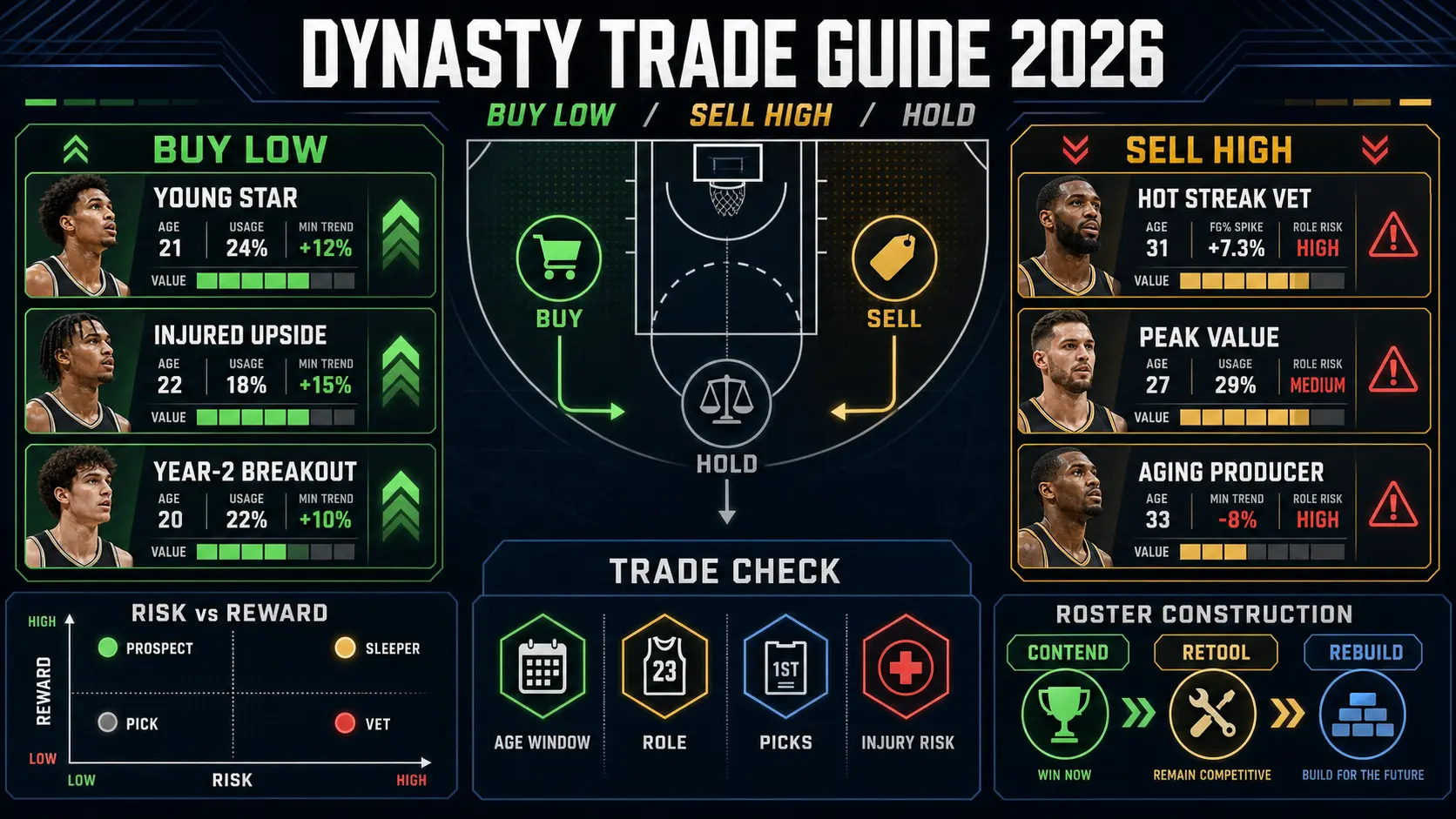
Not every fantasy football league operates the same way. While redraft leagues focus on winning the current season, dynasty, keeper, and Superflex leagues require a completely different Fantasy Football Trade Deadline Strategy. Understanding these differences can give you a significant edge over your competition.
Dynasty Leagues
In dynasty formats, every trade should align with your team’s competitive window.
If You’re a Contender
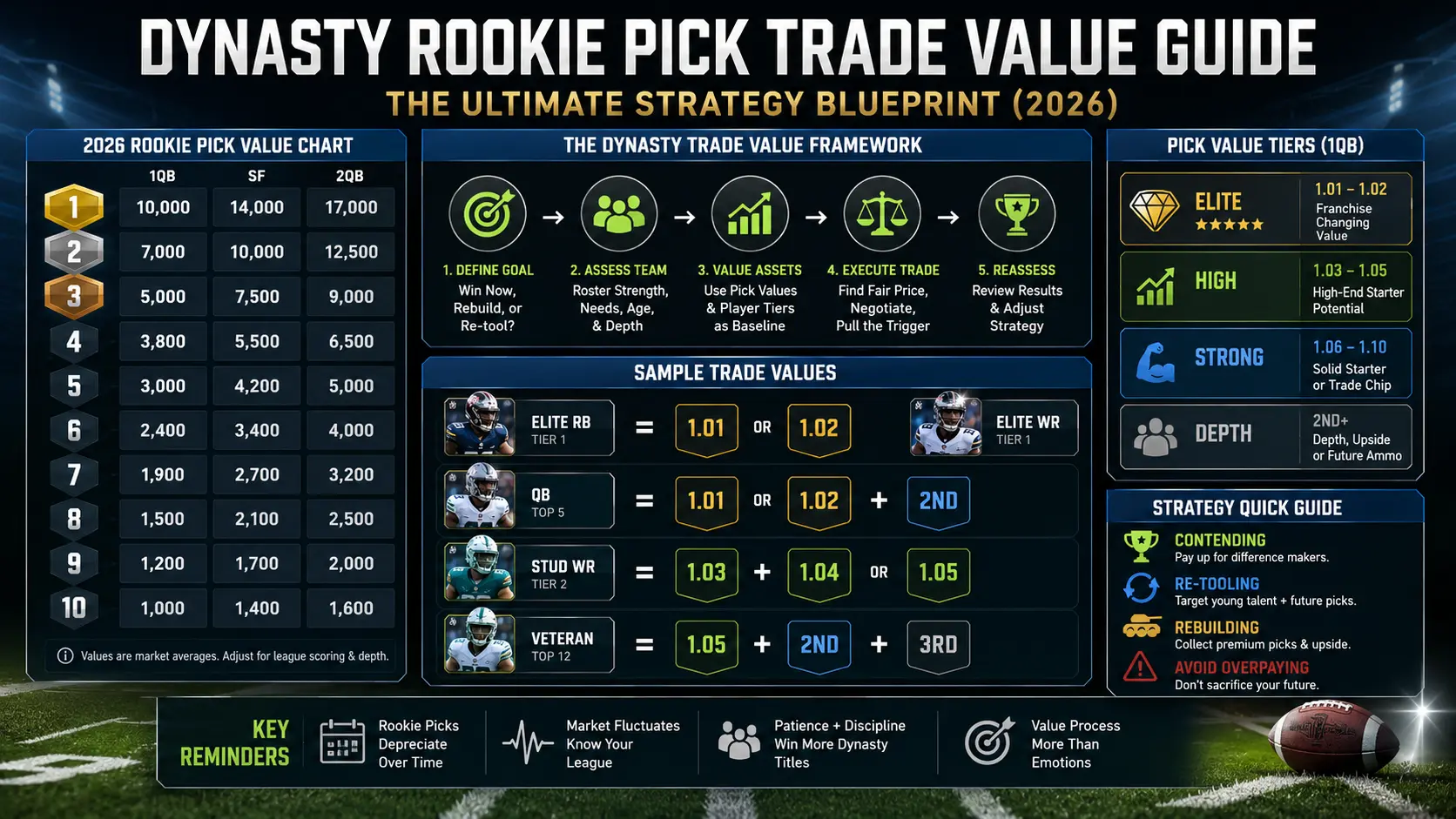
Your priority is winning now. Consider trading future rookie picks or young developmental players for proven veterans who can immediately strengthen your lineup.
Good trade targets often include:
- Reliable RB1s on playoff teams
- Veteran WRs with consistent target volume
- Elite tight ends
- Top quarterbacks in Superflex formats
If You’re Rebuilding
Don’t hold onto aging veterans who won’t help you in the future.
Instead:
- Collect future first- and second-round rookie picks.
- Acquire young breakout candidates.
- Sell productive veterans while their value is highest.
Keeper League Strategy
Keeper leagues reward long-term planning.
When evaluating trades, consider not only this season but also next year’s keeper value.
For example, a breakout receiver drafted in the 12th round may provide far greater future value than a veteran selected in Round 2.
Always ask:
- Can this player become a keeper?
- What draft cost will I pay next year?
- Does this trade improve both short-term and long-term value?
Superflex and Two-Quarterback Leagues
Quarterbacks are significantly more valuable in Superflex leagues.
Near the trade deadline:
- Starting quarterbacks become premium assets.
- Injuries can dramatically increase trade values.
- Managers desperate for a quarterback often overpay.
If you have quarterback depth, the deadline may be the best opportunity all season to acquire elite running backs or wide receivers.
Advanced Trade Negotiation Tips
Many fantasy managers fail because they only focus on player values.
Great managers focus on solving another team’s problems.
Study Your Opponent
Before sending an offer, examine:
- Current record
- Bye weeks
- Injuries
- Weakest starting position
- Remaining schedule
Tailor your trade to meet their immediate needs.
Start Conversations First
Instead of sending random trade offers, send a message.
Examples:
- “Would you consider moving your RB1?”
- “I’m looking for a wide receiver. Are you open to offers?”
- “I noticed you need a quarterback this week.”
Friendly discussions often lead to better negotiations and higher acceptance rates.
Sell Benefits, Not Players
Rather than saying:
“I want your star receiver.”
Explain why the trade helps them:
- Improves starting lineup depth
- Covers bye weeks
- Provides immediate points
- Reduces injury risk
Managers are more likely to accept trades that clearly benefit their team.
Common Fantasy Football Trade Deadline Mistakes
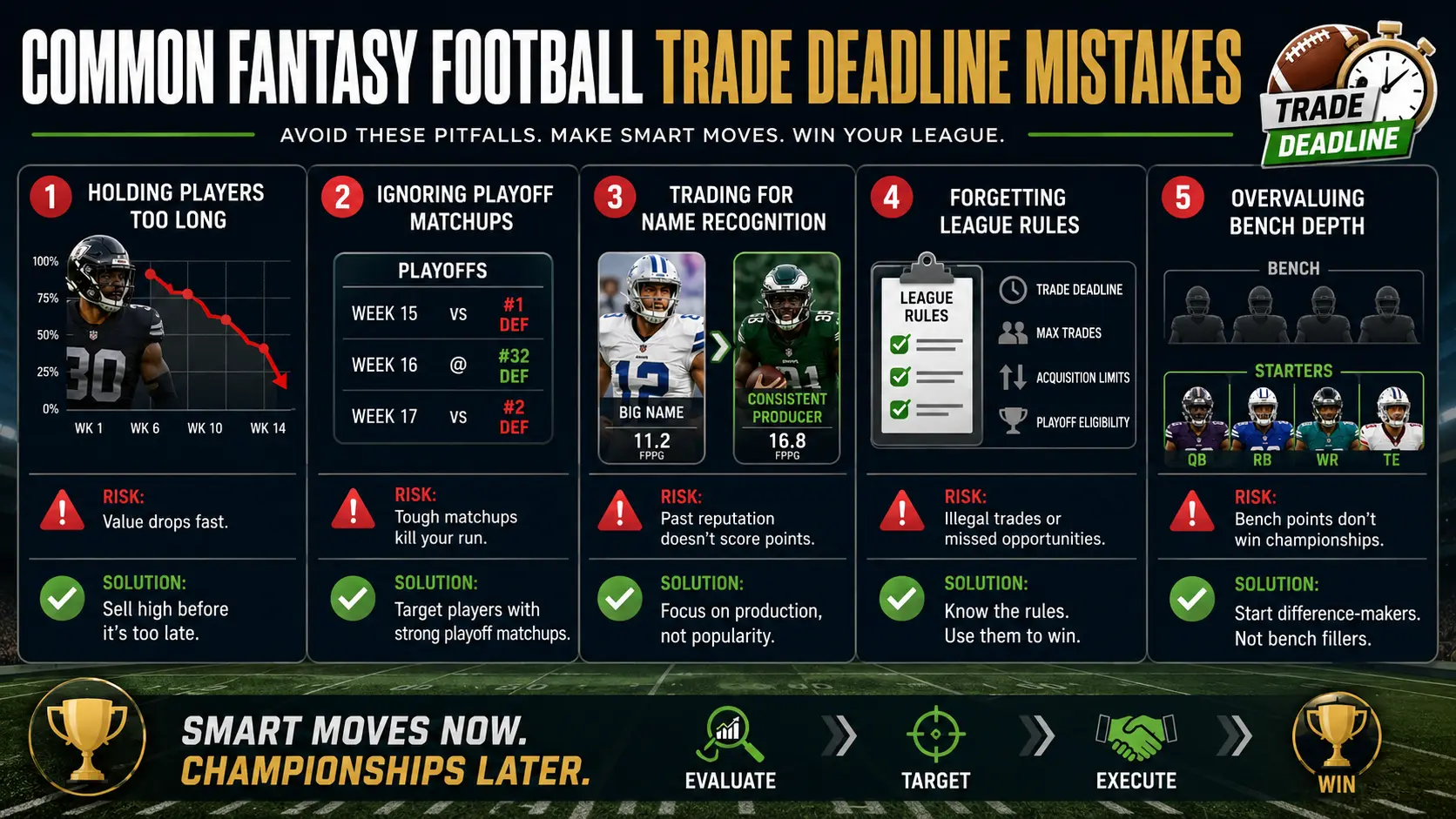
Avoid these costly errors:
Holding Players Too Long
Waiting until the final day can eliminate valuable opportunities.
Ignoring Playoff Matchups
A player with difficult Weeks 15 ,17 matchups may disappoint when championships are decided.
Trading for Name Recognition
Focus on future production instead of reputation.
Forgetting League Rules
Always confirm:
- Trade deadline date
- Review period
- Commissioner approval process
- Trade veto policies
Overvaluing Bench Depth
Once the playoffs begin, your starting lineup matters far more than having several average bench players.
Recommended Tools and Resources
These resources can help you make smarter deadline decisions:
| Tool | Purpose |
| Fantasy Trade Value Charts | Compare player values fairly |
| Rest-of-Season Rankings | Project future performance |
| Strength of Schedule Tools | Evaluate playoff matchups |
| Injury Reports | Track player availability |
| Waiver Wire Trackers | Find replacement options |
| League Message Boards | Monitor trade discussions |
Using multiple sources instead of relying on one expert can improve your decision-making.
Future Trends in Fantasy Football Trading
Fantasy football continues to evolve.
Expect future leagues to include:
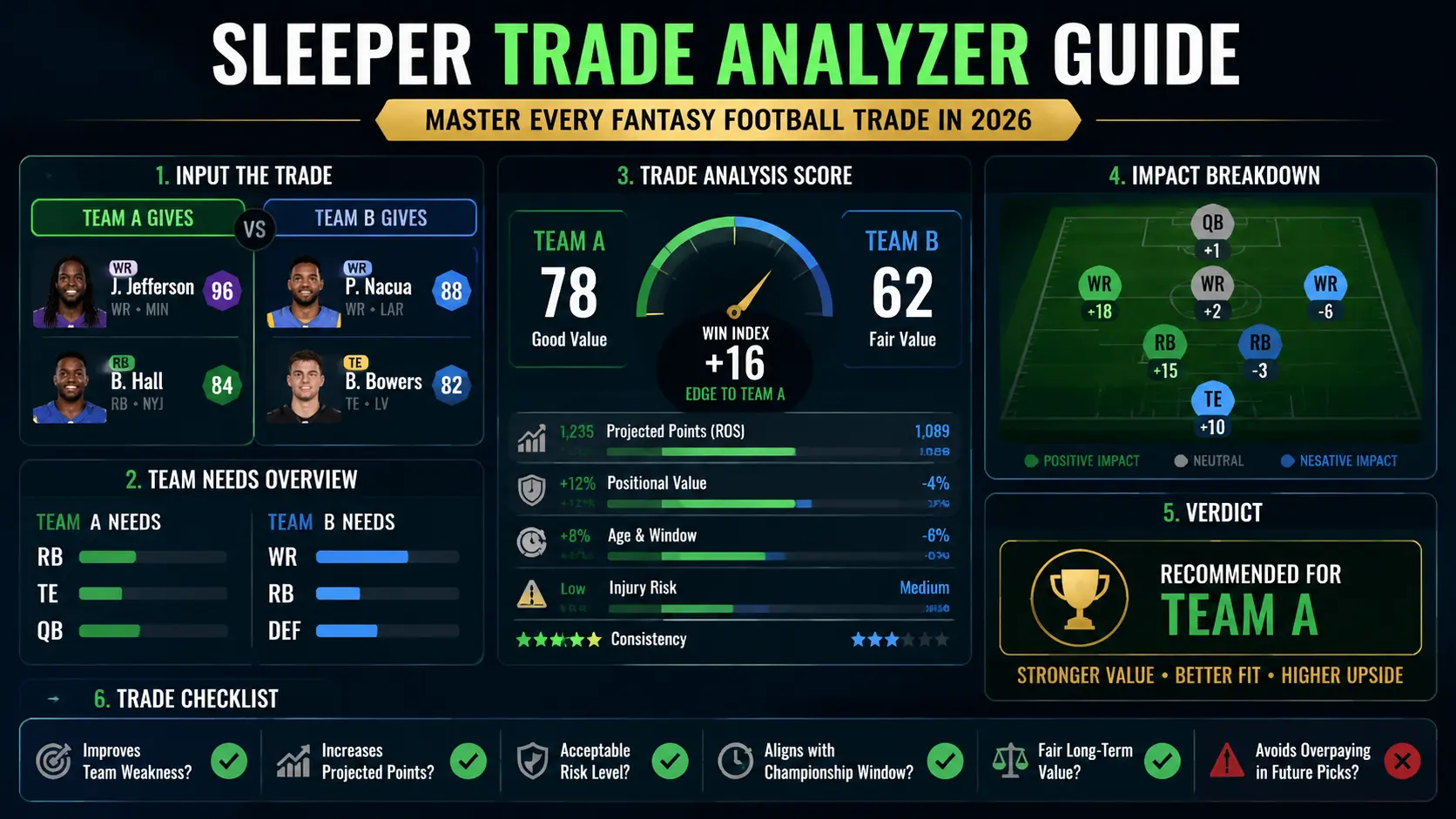
- AI-powered trade analyzers
- Real-time player value adjustments
- Advanced matchup projections
- More customizable trade deadlines
- Enhanced dynasty league features
Managers who embrace analytics while balancing risk and reward will have a competitive advantage.
Frequently Asked Questions
When is the fantasy football trade deadline?
The deadline varies by league and platform. Commissioners on ESPN, Yahoo, Sleeper, and CBS can customize the trade deadline, so always check your league settings.
How does the fantasy football trade deadline work?
Managers can trade players until the league’s deadline. Once it passes, no new trades can be accepted unless the commissioner changes the settings.
What happens to pending trades?
In most leagues, trades accepted before the deadline are still processed normally, even if the review period extends beyond the deadline.
Should I trade two players for one superstar?
Yes, if the superstar significantly improves your starting lineup and the players you’re giving up are unlikely to start during the playoffs.
Is bench depth important after the trade deadline?
Depth remains valuable for injury protection, but maximizing your starting lineup is generally the better strategy for playoff success.
Should eliminated teams continue trading?
Competitive leagues often discourage or restrict trades from eliminated teams to maintain fairness and prevent collusion.
What is the best fantasy football trade deadline strategy?
The best strategy is to evaluate your team’s playoff chances, target managers with different needs, consolidate depth into elite talent, and prioritize players with favorable fantasy playoff schedules.
Conclusion
A successful Fantasy Football Trade Deadline Strategy is built on preparation, timing, and smart decision-making rather than making the most trades. Assess your roster honestly, understand your league’s rules, and focus on acquiring players who can make the biggest impact during the fantasy playoffs.
Whether you’re competing in a redraft, dynasty, keeper, or Superflex league, the trade deadline is your final opportunity to shape a championship-caliber roster. By targeting favorable playoff schedules, negotiating with managers based on their needs, and avoiding common mistakes, you’ll put yourself in the best position to compete for the title.
Also Read: ” How to Evaluate Fantasy Football Trades Like an Expert in 2026 and Win More Leagues ” from ” Fantasy Trade Analyzers “